admin
admin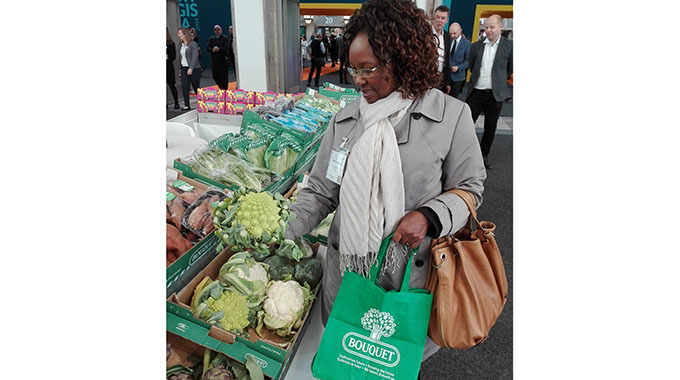
Princess Ncube
Zimbabwe exported $112 million worth of horticultural products in 2018 from $50,9 million in 2017, according to Zimstat statistics provided by ZimTrade.
The jump in horticulture exports, according to Zimtrade’s acting export development manager Tatenda Murume, was driven in part by the supply of produce that Zimbabwe was not previously exporting.
“Examples include blueberries, strawberries, passion fruit and stone fruits among others. Newer citrus, avocado, macadamia nuts plantations are maturing and have helped boost export volumes. This is a positive trend as we push to diversify our export basket,” said Murume.
In a written interview this week, Murume identified the low hanging fruits for the horticulture sector as passion fruit, fine beans, peas (mange tout and sugar snap, all berries (blueberries, blackberries, strawberries and raspberries), baby vegetables such as carrots, baby corn, baby marrow, courgettes, chillies namely the birds eye, serenade among others and broccoli.
The super-foods that are increasingly popular in developed markets are avocadoes, moringa, turmeric, berries and broccoli upon which he has advised farmers to target these crops for prospective markets.
‘These horticultural products present an opportunity for exporters since each has one or a combination of factors making it desirable. Factors include strong nutritional profile (e.g. berries), scope for value addition (e.g. passion fruit, chillies), favourable supply windows (e.g. berries, broccoli), and a reputation in Zimbabwe for that product on the international market (e.g. peas).’ said Marume.
He advised that exporters should take advantage of the demand of organic produce and the large markets.
Murume said there is huge opportunity in growing organic produce, which fetches a premium of up to 30 percent.
“Although there are technicalities and costs associated with meeting the stringent requirements for organic certification, this can be offset by the removal of some costs for example chemical fertilisers and pesticides and the higher prices,” said Murume.
Zimbabwe has been experiencing a huge increase of exports to the EU and Murume mentioned some of the new markets that they have been targeting for the year 2019 to expand on the exports saying, “we are also currently exploring potentially viable opportunities in the Middle East.”
“Dubai is of interest to us as we try to diversify our export markets as it is one of the biggest re-exporters of food in the world, and a gateway to the Middle-East region where fresh produce fetches premium prices.
He said Asia, especially China also presents an opportunity on the basis of the size of those markets and growing consumer demand in line with rising consumer spending power.
Exporters had previously expressed concern over the high costs of the export permit and other regulatory instruments that have been prohibitive to the industry.
Marume shared the same sentiments and has mentioned that as ZimTrade, they have been busy working around these prohibitive instruments and have engaged various stakeholders to find a resolve to encourage farmers not to despair.
“We are running with a rapid results initiative which identified 21 statutory reforms needed to improve the ease of doing export business. To date we have been successful in lobbying for eleven of these to change.
“An example is the removal of export permits by the Ministry of Industry and Commerce for a range of non-strategic products. Ministry of Agriculture has also revised downwards by 42 percent fees for exporters to use necessary services pertaining to the Plant Pests and Diseases Act following our intervention.
“We are lobbying the Ministry of Agriculture to remove export licences for non-strategic horticulture products. This will go some way in improving the competitiveness of our fresh produce on international markets,” said Murume.
A lot of initiatives have been done on a larger scale to return Zimbabwe to the status of best in horticulture and floriculture market as was the case during the years 1999-2000.
‘ZimTrade has engaged development co-operation partners to support our efforts to grow horticulture and floriculture exports. In 2018 we hosted more than 60 senior experts of which two thirds were focused on horticulture and added value at both a sectoral and business level.
“PUM of the Netherlands have been particularly invaluable as the European country is a world leader in terms of agricultural production and is famous for its flowers. It is also a gateway to the lucrative EU market where Zimbabwe benefits from supply windows for various produce.
“With support from PUM, we facilitate business, field, greenhouse and supply chain interventions based on international best practice. These consultations are highly practical and focused on reaching foreign markets as a priority.
“An ongoing project we are developing with PUM is the model farm initiative. After a thorough scoping exercise in 2018, in 2019 we will break ground at the chosen locations which will become training sites for farmers across the country to see and learn from.
“These centres will support a network of small scale out-growers as well as build their capacity to become fully fledged exporters.”
ZimTrade as the backbone of Zimbabwe’s horticulture exports business
has played an integral role towards restoring Zimbabwe horticulture, increasing exports and penetration of markets.
This year they have a crucial line-up for promoting Zimbabwean farmers and exporters through trade shows such as Fruit Logistica, Europe’s biggest fresh produce trade fair held in Berlin, Germany each year.



 Online Reporter