
Theseus Shambare-Herald Correspondent
ZIMBABWE is anticipating a larger and higher-quality tobacco harvest, with projections set at a record 360 million kilogrammes.
Last season, the country produced 355 million kilogrammes, surpassing the 300 million kg target under the National Development Strategy One (NDS1), generating substantial foreign currency for the economy.
Lands, Agriculture, Fisheries, Water and Rural Development Permanent Secretary Professor Obert Jiri said this during a tour of tobacco growing farms in the country.
“We have been doing rounds assessing where we are as a nation. What I have witnessed is that we are bound for a great harvest ahead.
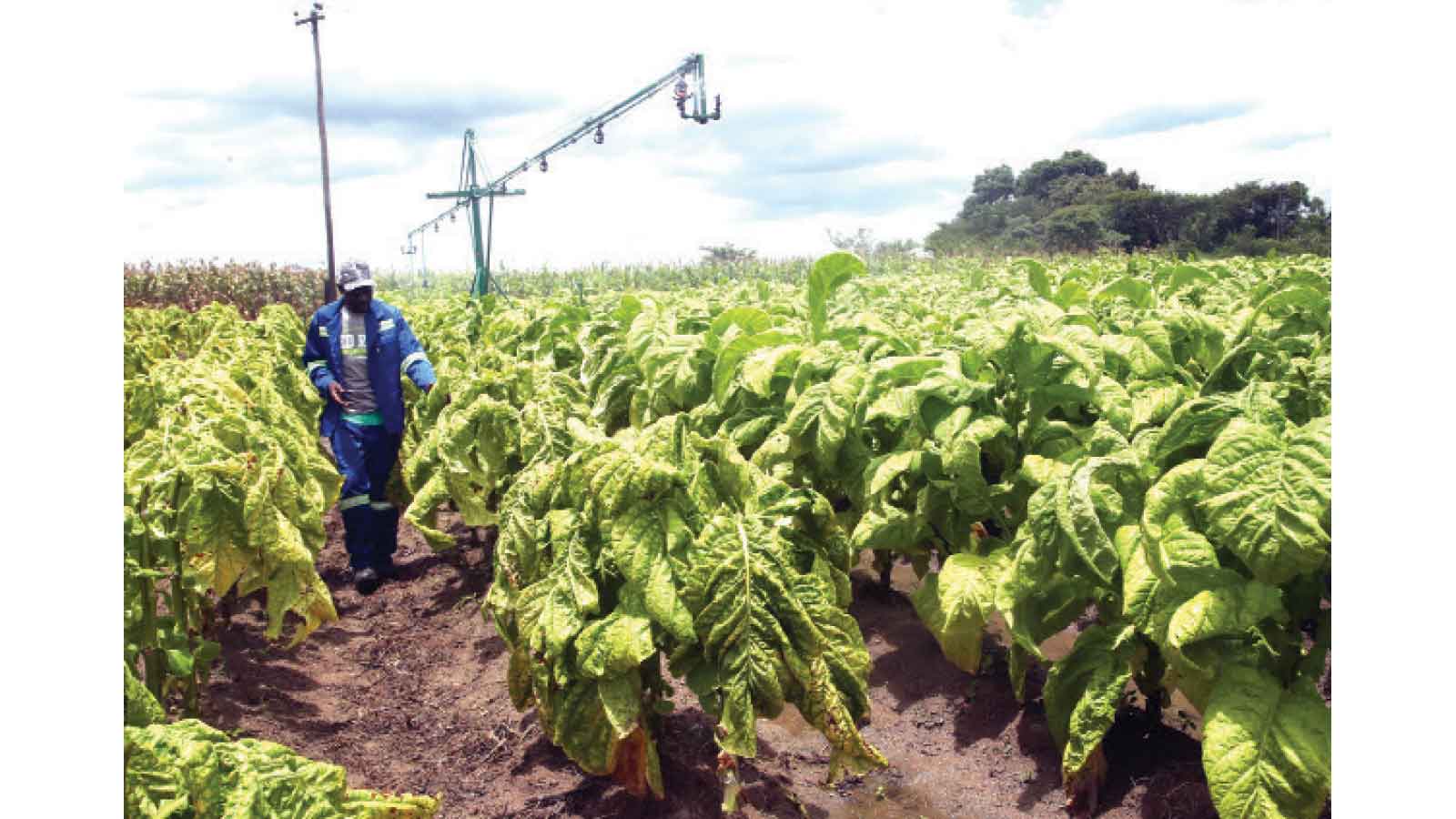
“We are expecting nothing less than 360 million kilogrammes of the golden leaf nationally,” he said soon after touring Woodcroff Farm in Ward 15, Umguza District last Friday.
An anticipated increase to 360 million kilogrammes of tobacco signals a historic milestone for the sector and reinforces the country’s position as Africa’s largest producer of the golden leaf.
In traditionally drier regions such as Matabeleland North and South, the expansion of tobacco farming is proving transformative.
Farmers in Matabeleland North planted 40 hectares of flue-cured tobacco, while 500 tonnes of air-cured tobacco are expected from Mangwe District under contract farming arrangements.
At a field day in Marondera District, Prof Jiri endorsed Smart Pfumvudza, a locally-developed irrigation system costing under US$2 000, which ensures early planting, supplements rainfall, and mitigates dry spells, guaranteeing production for both smallholders and larger investors.
The event, hosted at Mr Beren Stockhill’s farm, showcased tobacco and maize under irrigated Pfumvudza plots, featuring farmer-designed mini linear pivots.
The sector has also seen a dramatic shift towards local financing, now accounting for 67 percent of total tobacco sector funding.
Local banks, concessional facilities and the TianZe model under Zimbabwe–China cooperation have increased domestic confidence, while supporting smallholder and contract farmers.
“During NDS1, Zimbabwe not only surpassed production targets, but also significantly increased the localisation of tobacco financing,” said Prof Jiri.
The 2025–2026 season has seen a 42 percent increase in planted area, with farmers cultivating over 162 000 hectares, up from about 114 000 hectares last season, according to the Tobacco Industry and Marketing Board (TIMB).
TIMB chairperson Patrick Devenish attributed the surge to policy consistency, improved contract arrangements, and relative stability in the sector.
“The increase in planted area demonstrates renewed confidence by growers in the tobacco sector,” he said.
“Farmers are scaling up production as a result of improved planning, support systems, and stability across the industry.”
Favourable rainfall patterns, timely land preparation, and wider access to contract financing enabled more farmers to plant earlier and expand hectarage.
Prof Jiri said Zimbabwe has surpassed the Tobacco Value Chain Transformation Plan (TVCTP) 2025 target of 300 million kg, with the government setting an ambitious 400 million kg target by 2028 under NDS2.
“We need to interrogate the strategies and actions we had put in place to identify what we did not do according to plan and what else we can do to ensure we reach the 30 percent mark in value addition,” he said, noting that local beneficiation is currently at around 10 percent, up from 2 percent.
Prof Jiri highlighted the country’s unique selling point — the globally desired flavour of Zimbabwean tobacco, which owes its quality to geography and climate.
With drought-tolerant varieties developed by Kutsaga Research, such as T79, T80, and T81, yields of 2 500–5 000 kg per hectare are now achievable under proper agronomic practices, helping farmers mitigate climate risks.
Farmer organisations have welcomed these reforms. Dr Shadreck Makombe, Commercial Farmers’ Union president, said the focus on local financing strengthens productivity and confidence, while Mrs Monica Chinamasa, ZNFU president, noted it allows smallholders to maintain leaf quality under climate stress.
The tobacco marketing season is set to open on March 4.
The first round of assessments are now complete and most producers are already harvesting and curing.
Marketing preparations are underway to ensure orderly deliveries, fair pricing and quality standards, setting the stage for a record-breaking season in Zimbabwe’s tobacco history.