admin
admin
Zvamaida Murwira Senior Reporter
As the Second Republic’s Agriculture and Food Systems Transformation Strategy and other related policies continue to bear fruit, the country has received more than 350 000 tonnes of maize export requests and will start by moving 40 000 tonnes to Rwanda, while processing a request from the Democratic Republic of Congo.
Wheat exports are also being considered after Zimbabwe attained self-sufficiency driven by the Government’s agricultural policies that have deliberately supported communal, small to medium scale and commercial farmers with the aim of ensuring an upper-middle class income economy by 2030.
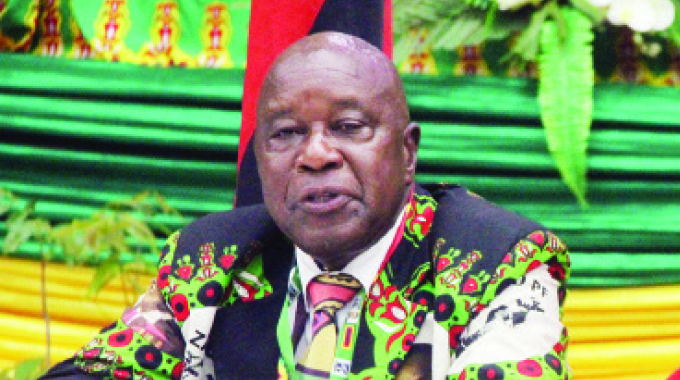
Lands, Agriculture, Fisheries, Water and Rural Development Minister, Dr Anxious Masuka, said this yesterday while responding to questions from journalists after a post-Cabinet briefing delivered by Information, Publicity and Broadcasting Services Minister, Monica Mutsvangwa in Harare.
Dr Masuka said the pending maize exports by the country were a milestone for Zimbabwe, which was recently a food importer owing to persistent droughts.
“This is a feat that the Second Republic has achieved in a short space of five years. Zimbabwe, perennially known as a food importer, has emerged on the stage to become self-sufficient first, which was the strategy,” he said.
“Now, we have surplus that we have considered for export. Yes, Cabinet approved the exportation of 40 000 tonnes of maize to Rwanda, tranched as 10 000 tonnes each month for the next four months. We have also received a request from Democratic Republic of Congo for export of maize; cumulatively we have received requests for 350 000 tonnes of maize. We are considering our options closely so that we can retain sufficient grain for our use.”
Dr Masuka said the process to export grain had commenced and GMB will oversee that process.
“There is also consideration for export of wheat, we anticipate that as we start the wheat intake season by end of next month, we will have 80 000 tonnes in our strategic grain reserves and since we have a record planting of 86 000 hectares, perhaps we will produce 200 000 tonnes (and) we will probably also consider exportation of wheat.
“This is a good position; we need to go beyond that. We do not want Zimbabwe to become a breadbasket, we want Zimbabwe to become an agro-processing hub,” he said.
A planning producer price has been introduced, and will be announced August 31, in addition to the pre-planting and the marketing producer price to allow farmers to make decisions in terms of what crops to grow, said Dr Masuka.
“We have introduced a third pricing element, that we need a planning price and ordinarily, we announce a pre-planting price by November and December, but we are saying it is too late for farmers that are doing irrigation, for example, to be able to switch to what Government may wish to direct in terms of incentivising production.
“So we need to give farmers more leeway in terms of making the business decision of which crops to grow,” he said.
The planning price, said Dr Masuka, would be based on the cost of production coupled with a 15 percent retention meant to incentivise farmers and the bulk of it would be paid in US dollars.
Earlier on, Minister Mutsvangwa said Cabinet had approved the 2023/24 summer cropping plan and state of preparedness on May 18.
The plan seeks to achieve national food, feed and edible oils self-sufficiency.
Zimbabwe is targeting 3 040 000 hectares for strategic crops with an expected yield of 3 782 658 tonnes.
“The nation is informed that Zimbabwe has adequate grains in stock for the next two seasons. However, the sensitivity analysis for the 2023/2024 season based on previous years’ analysis indicates reduced crop production,” said Minister Mutsvangwa.
“Accordingly, Cabinet has put in place robust measures encompassing irrigation and agricultural climate-proofing in order to maintain increased production. In line with Government priorities in the agricultural sector, the National Enhanced Agriculture Productivity Scheme will be expanded, with more banks contracting increased hectarages.
“Cabinet wishes to advise that the following additional measures have also been put in place to enhance production, enhanced climate-proofing through expanded moisture enhancer demonstrations, alignment of crops grown with agro-ecological regions, grain swaps whereby the GMB will continue to promote traditional grains production in regions 4 and 5; and providing weather-indexed and area/yield insurance for smallholder farmers under the Pfumvudza Programme.”
Minister Mutsvangwa said additional measures include Vision 2030 Agricultural Livelihoods Tracker (VALT), which will track the upliftment of households and livelihoods through agricultural and rural development programmes.
Through financial support from the African Development Bank in the 2023/2024 season, the Government will increase the percentage of traditional grains seed availability by ensuring that ARDA and GMB package standard traditional grains as seed for the 2023/2024 season.
Minister Mutsvangwa also outlined measures to incentivise the production of traditional grains, which include announcing planning prices and marketing modalities in August annually, and empowering farmers from 460 irrigation schemes by availing Presidential inputs in time.
“In terms of Rural Development, the strategy is to accelerate borehole drilling and the establishment of Village Business Units and veld management. These measures support the current positive production trends,” she said.



 Online Reporter