Online Reporter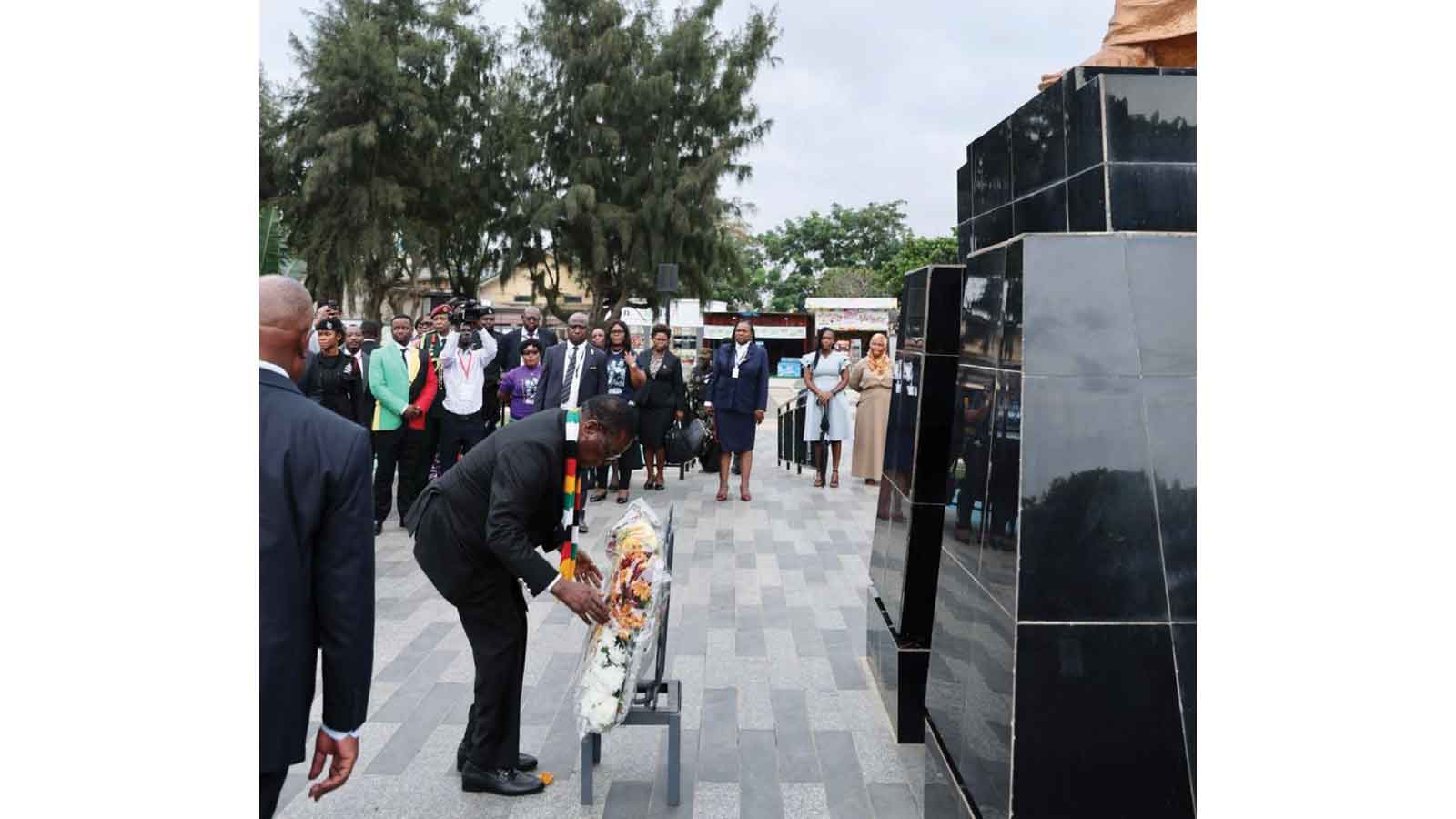
Fungi Kwaramba recently in ACCRA, Ghana
ZIMBABWE and Ghana have entered a new phase in their relations focused on economic emancipation, which is expected to accelerate Africa’s march towards economic transformation and industrialisation, President Mnangagwa has said.
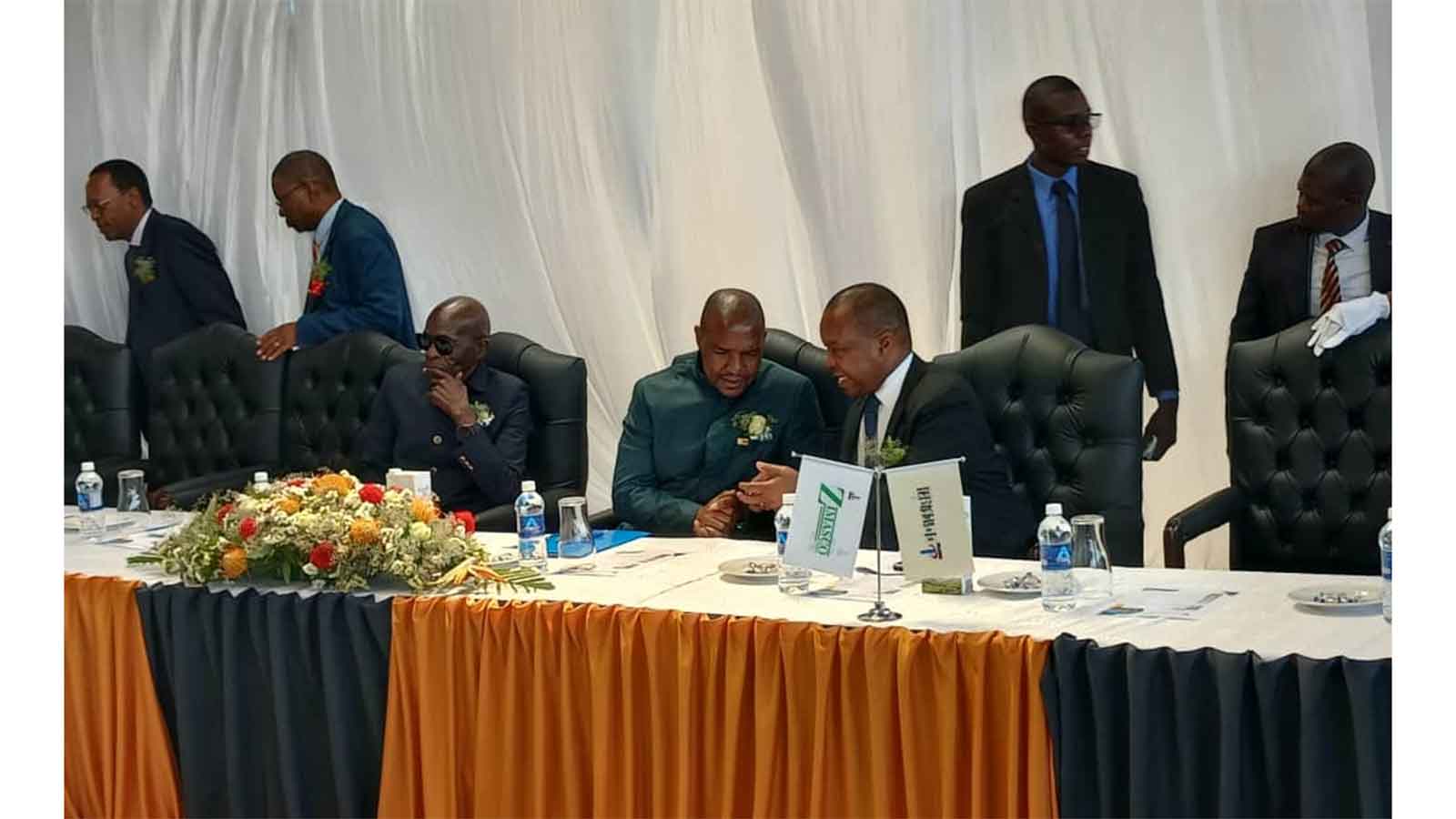
Speaking during a State visit that concluded on Friday, President Mnangagwa and his Ghanaian counterpart, President John Mahama, oversaw the signing of 10 memoranda of understanding (MoUs).
The deals will broaden cooperation in various areas, including energy, industrial cooperation and trade, labour and employment, tourism, archives and heritage.
One of the hallmarks of the Second Republic’s development philosophy is self-reliance.
Last week saw the inaugural session of the Zimbabwe-Ghana Joint Permanent Commission on Cooperation (JPCC), which now provides a structured framework to guide progressive bilateral relations between Harare and Accra.
“Our engagement is entering a new phase focused on economic emancipation,” President Mnangagwa said.
“The time has now come for Africa to accelerate its march towards economic transformation, industrialisation and shared prosperity. In this regard, President Mahama and I held productive and forward-looking discussions on how Zimbabwe and Ghana can deepen cooperation in trade, investment, agriculture, mining, energy, tourism, health, sports and education, among other strategic sectors.
“Our two sister Republics have signed a number of cooperation agreements and memoranda of understanding, and more will be signed, to strengthen institutional collaboration and unlock new opportunities for our two economies.”
To accelerate economic development, the President added, the two countries are determined to leverage opportunities presented by the African Continental Free Trade Area to expand intra-African trade.
“Zimbabwe and Ghana possess complementary economic strengths, and we are committed to promoting stronger commercial exchanges and building resilient African value chains,” he said.
Towards that goal, the two countries signed agreements in key sectors.
In education, Zimbabwe stands ready to share successes and achievements of the Heritage-based Education 5.0 philosophy, innovation and industrialisation.
“In the health sector, the proposal to pursue manpower exchange programmes for the deployment of medical professionals is a noble initiative. It is indeed critically important that we pool our strengths for improved access to affordable health delivery, innovation and the local manufacturing of medicines and medical supplies in our nations,” he said.
President Mnangagwa, who returned home on Friday, toured the Sweden Ghana Medical Centre to appreciate a facility that is globally renowned for specialist cancer treatment.
Apart from touring the medical centre, the President on Thursday also toured the Accra Compost and Recycling Plant, a facility similar to Zimbabwe’s Geo-Pomona Waste Management project.
The visit aimed to deepen cooperation in sustainable waste management and advance environmental sustainability through homegrown solutions across Africa.
During the tour, President Mnangagwa observed first-hand the plant’s recycling and composting processes, gaining insight into how waste is efficiently processed into reusable materials.
“The importance of private sector collaboration cannot be over-emphasised. The joint ventures to enhance best practices on environmental waste management are commendable,” added the President.
“In the agriculture sector, projects driven by entities from our respective jurisdictions, which aim to improve food security through the introduction of resilient seed varieties for Ghana and West African markets, deserve our support.
“In line with our mantra, Zimbabwe is Open for Business, we are committed to improving our bilateral trade. Our trade promotion entities are challenged to enlarge our cooperation and business-to-business engagements.”
During his visit, the President oversaw the signing of a MOU on tourism cooperation that resulted in a twinning agreement between the city of Victoria Falls — home to the majestic and world-famous Victoria Falls — and the city of Cape Coast in Ghana, a premier tourism hub renowned for its profound “Door of No Return” history.
“Tourism and people-to-people exchanges, spurred by visa-free policies, can spur further growth of this sector,” he said.
President Mnangagwa also said his administration welcomes collaboration with Ghana in the heritage sector, given the Pan-African background of the two nations.
“In March 2023, I dispatched my special envoy to deliver a message and invite Ghana to participate in the Museum of African Liberation project in Harare. We are on track to complete this ambitious project by 2027. The one acre of space offered to Ghana at the museum site will serve to tell the story of Ghana’s historic contribution to the African liberation agenda and Pan-Africanism. The importance of telling our own stories as Africans, through our own lenses and narratives, must continue to be emphasised.”
President Mnangagwa also used his three-day State visit to drum up support for Zimbabwe’s bid for a non-permanent seat on the United Nations Security Council for the 2027-2028 term.
On his part, President Mahama underscored the urgency of deepening intra-African collaboration, noting that the meeting comes at a critical time as the continent advances the implementation of the African Continental Free Trade Area (AfCFTA).
He emphasised the need for African countries to strengthen trade, investment and cooperation to unlock the full potential of the agreement.
Highlighting Ghana’s role as host of the AfCFTA Secretariat, President Mahama reaffirmed the country’s commitment to promoting economic integration.
He noted that Ghana’s strategic position within ECOWAS, alongside Zimbabwe’s role within SADC, present a unique opportunity to strengthen linkages between West and Southern Africa.
He further identified key sectors for enhanced collaboration, including mining and agriculture.
In agriculture, he acknowledged Zimbabwe’s experience as valuable in supporting Ghana’s efforts to build resilient systems, strengthen food security and modernise the sector.
Meanwhile, speaking after arrival at the Robert Gabriel Mugabe International Airport on Friday, President Mnangagwa said Zimbabwe continues to regard Ghana as a champion of Africa’s liberation story, especially for the support it gave to many Southern African nations in their struggles against colonial rule.
As Zimbabwe prepares to mark its 46th independence anniversary, he added, it was fitting to acknowledge Accra’s assistance to Harare and other countries in the region.
“We are aware that Ghana was one of the first African countries to become independent on the African continent. And under (Kwame) Nkrumah, it was a nationalist country which supported the independence, the liberation of various countries, in particular those in Southern Africa,” he said.
He described the late former Ghanaian President and statesman, Dr Kwame Nkrumah, as Africa’s “liberator”.
During his State visit, the President visited the Kwame Nkrumah Memorial Park, where the remains of the Ghanaian founding father are interred.
“We looked at Nkrumah as our liberator and we continue to regard Ghana as one of the most leading African liberators of the continent,” he said.
On major takeaways from the State visit, President Mnangagwa said Ghana intended to pursue a broad partnership with Zimbabwe, highlighting agricultural cooperation as a key focus area.
“In particular, in agriculture, they emphasised cooperation in agriculture. I think they are very good in agriculture, I think our agricultural sector can benefit and perhaps collaborate with their sector. That’s the area they talked about the most,” he said.
President Mnangagwa and President Mahama jointly oversaw the signing of 10 memoranda of understanding following the inaugural session of the Zimbabwe-Ghana JPCC.
President Mnangagwa described the State visit as warm and successful, and even shared a lighter moment about it with the press.
“We were well-received by our in-laws (Ghanaian President and government) and they wanted to find out whether we needed more of their sisters . . . I asked George (Deputy Chief Secretary in charge of Presidential Communications in the Office of the President and Cabinet), George was not ready . . . ,” said the President with a chuckle.