

 Online Reporter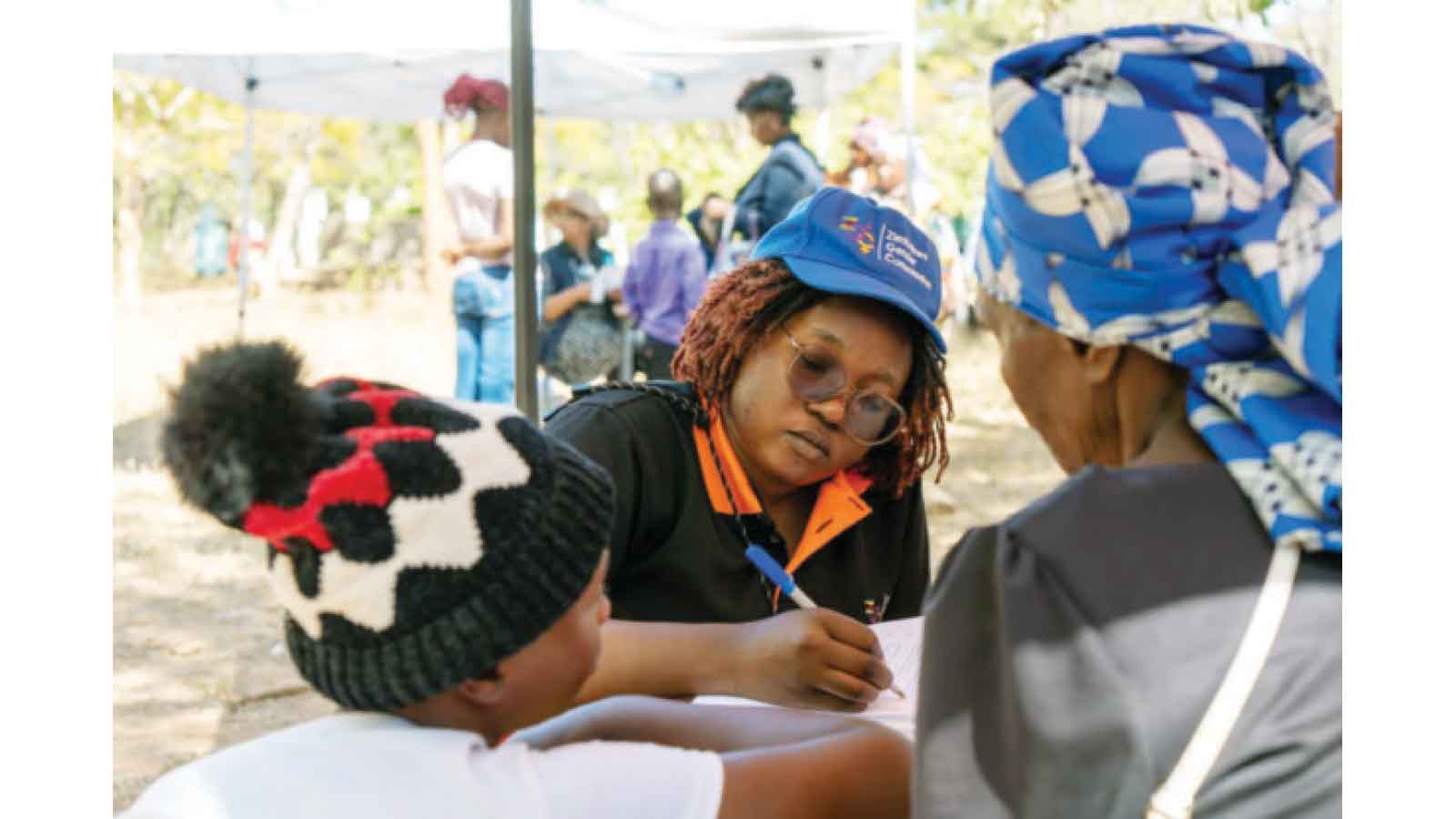
Theseus Shambare-Features Writer
AT dawn in Epworth, on the outskirts of Harare, 28‑year‑old Rudo Tutani (not her real name) sweeps the dusty yard in front of her two‑roomed home, moving slowly as though measured by the years she has learnt to cry silently.
For a long time, mornings like this were not just the start of a new day. They were the beginning of a negotiation with fear.
Rudo learnt to anticipate tension, control and a silence that often said more than raised voices ever could. Her heartbreak, she explained, came in a form she never expected.
The man she had once trusted, her sweetheart, the one who publicly vowed his commitment in a white gown ceremony, slowly turned sour. Promises whispered before family and friends gave way to control, intimidation and emotional cruelty.
Leaving was not simple; the public vows made her feel trapped and ashamed.
She worried that stepping away would bring judgment, disbelief or worse, retaliation.
“It was like living inside a storm no one else could see,” she said in an interview recently, eyes downcast. “You begin to believe maybe it is you, maybe you are the problem.”
For years, she spoke to no one — not neighbours, not family, not even herself. Shame, fear and stigma held her voice hostage.
What changed, she said, was not just her situation — but her voice.
A few months ago, she joined a community dialogue group in Epworth, where women gather in a “safe space” to talk openly about gender‑based violence (GBV), a subject long buried beneath silence.
“It was the first time I heard other women describe what I was going through.
“That is when I realised, I was not alone and that speaking up could be a form of strength, not shame,” she said.
Rudo’s story reflects the lived reality behind troubling national statistics.
According to the 2023–24 Zimbabwe Demographic and Health Survey (ZDHS), 27 percent of women aged 15‑49 reported experiencing physical violence since age 15, while 13 percent experienced physical violence in the past 12 months.
In addition, at least nine percent reported sexual violence in their lifetime.
Experts caution that these figures likely under-represent the true prevalence, as stigma and fear often deter reporting.
Gender inequality and domestic violence remain deeply rooted in societal attitudes.
Earlier surveys have shown that a significant portion of the population still believes that under certain circumstances a husband might be justified in physically disciplining his wife — attitudes that undermine women’s safety and rights.
Against this backdrop, the Government, development partners, civil society and traditional leaders have rallied behind a national commitment to end gender-based violence.
In 2021, President Mnangagwa signed the High‑Level Political Compact (HLPC), a pledge bringing together multiple sectors to address gender inequality and violence.
The compact pledges improved coordination, stronger accountability and community engagement.
Not long ago, at the launch of the 16 Days of Activism against Gender‑Based Violence, President Mnangagwa described GBV as a national emergency, emphasising that no woman or girl should live in fear.
“When women are safe, communities thrive,” he said, highlighting that GBV undermines not just individual dignity but national development.
The European Union, a key development partner, has reaffirmed its support for Zimbabwe’s efforts to translate policy into practice.
In an interview recently, EU Ambassador Katrin Hagemann, said while legislative frameworks are important, ensuring action at community level is critical to improving lives and safety for women and girls.
“We must ensure that commitments made at the highest level reach every village, every town and every home,” Amb Hagemann said.
Similarly, highlighting the significance of a coordinated national response, the United Nations Resident Coordinator, Edward Kallon, praised Zimbabwe’s approach, emphasising that tackling gender-based violence is crucial not only for protecting individuals but also for advancing development across sectors.
“Gender-based violence is not only a violation of human rights, it erodes the very foundations of sustainable development.
“Through the High-Level Political Compact and initiatives like Sustaining the Gains, Zimbabwe is taking critical steps to strengthen institutions, ensure accountability and provide survivors with the comprehensive support they need, from legal aid to medical and psychosocial services,” he said.
Despite these efforts, social challenges persist. A recent surge in divorce applications provides a related lens on changing social dynamics and the burden of marital breakdown.
According to statistics from the Judicial Service Commission, the High Court of Zimbabwe received 3 989 divorce applications in 2025 — a 27 percent increase from 2024.
Completed divorces actually fell by 15 percent, underscoring pressure on the legal system.
Grounds for divorce under the Matrimonial Causes Act include irretrievable breakdown of marriage, adultery, abuse or prolonged separation; factors that often intersect with experiences of emotional or physical violence.
Legal experts said the official numbers capture only cases that reach the courts.
Many more informal separations occur outside formal processes, especially in customary or cohabiting unions, suggesting the real extent of marital breakdown linked to abuse and other stresses could be significantly higher.
“Access to justice and legal awareness has improved, enabling more people, particularly women, to seek redress,” said Mr Steven Malota, a lawyer who operates in Mashonaland East. “But we know many cases never enter the legal system.”
Zimbabwe’s legal and institutional reforms go beyond collective pledges.
The country’s Constitution and legal framework outlaw violence against women and specialised police units and one‑stop centres have been established to support survivors, offering medical, legal and psychological services under one roof.
Community organisations play a central role in breaking the silence around GBV.
Women’s groups, local leaders and NGOs work together to raise awareness, challenge harmful norms and provide safe spaces for survivors to share experiences and access help.
“Policy matters, but what transforms lives is when these policies are felt at the grassroots,” said Shamwari Yemwanasikana, a local young women and girls’ rights organisation’s director, Ms Ekenia Chifamba.
For Rudo, the journey out of fear is ongoing.
With support from her “safe space” dialogue group and local counsellors, she has begun rebuilding her life and pursuing economic independence through skills training.
“I still have scars,” she said quietly, “but now I know I am not alone. I know there are paths forward.”
Her story is a powerful reminder that behind every statistic is a human life touched by pain, resilience and, with growing support systems, hope.
As Zimbabwe marks Women’s Month, survivors, policymakers and communities are calling for sustained action, not just pledges, to ensure that every woman and girl can live free from fear and violence.



