Online Reporter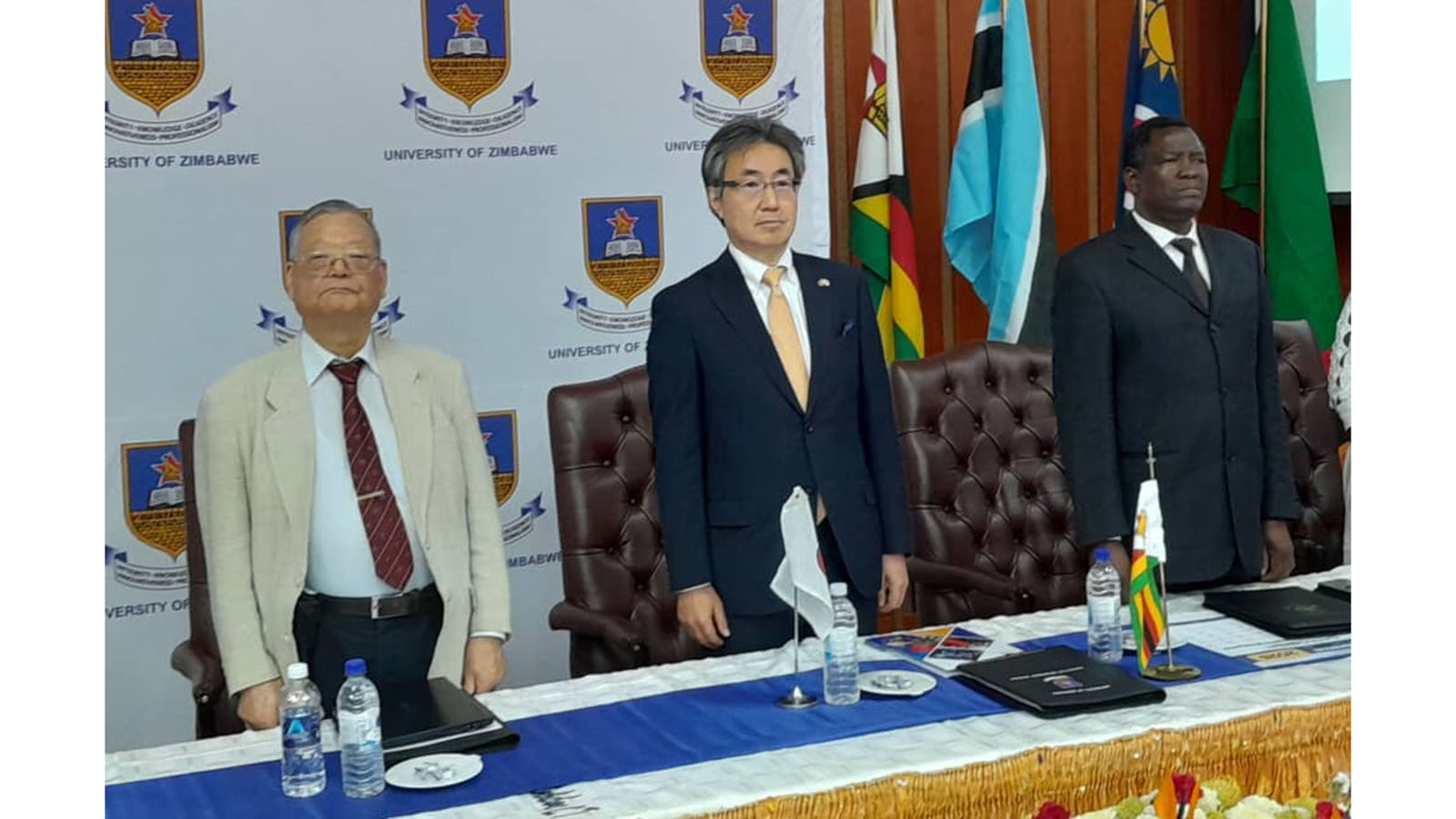
Trust Freddy
Herald Correspondent
RELATIONS between Zimbabwe and Japan continue to deepen, with both nations exploring opportunities in the mining sector, bolstered by Japan’s decision to dispatch an expert to share its extensive development experience.
The latest exchange saw Dr Yoshitaka Hosoi, Special Advisor for Natural Resources for the Japan International Cooperation Agency (JICA), deliver an intensive three-day public lecture at the University of Zimbabwe (UZ) last week.
The lectures, part of the JICA Chair Programme, ran under the theme “Japan’s Experience in Mining Sector: Promoting Mining Industry and Environmental Protection”, drawing parallels between Japan’s modernisation journey and Zimbabwe’s current challenges.
Speaking during his day-two interactive engagement on Thursday, Dr Hosoi, a renowned engineer and economist, acknowledged Zimbabwe’s high potential but stressed that its success hinges on stable, long-term policy and robust regulation.
“All the investors come in, they are looking for the long-term plans in 20 years for mine development and regulations,” Dr Hosoi said.
“They are afraid of changes to policy and regulations, especially financial regulations. Clarifying these would be essential for foreign investment.”
He also urged the Government to strengthen its regulatory framework, specifically in how it “grants shared exploration and mining rights, and controls development”, as well as addressing environmental issues.
To modernise operations, the Japanese expert advocated for greater adoption of technology, citing the utility of Artificial Intelligence (AI) for remote operation and autonomous equipment to enhance safety and efficiency in mines.
On the environmental front, Dr Hosoi revealed that Japan successfully combatted mining-related pollution through a system of financial subsidies for prevention works, a process that has made the nation “world-renowned for its environmentally friendly mining and development”.
Japanese Ambassador to Zimbabwe, Mr Satoshi Tanaka, echoed similar sentiments in his keynote address, acknowledging Zimbabwe’s mineral wealth.
“Let me reiterate that Zimbabwe possesses abundant resources such as gold, platinum, and lithium, making it an important mining hub in Africa,” Ambassador Tanaka said.
While recognising mining as a pillar of foreign currency earnings and job creation, he also acknowledged the accompanying environmental challenges.
“Therefore, rather than simply importing Japan’s experience, it is important to consider together how to apply it in ways suited to Zimbabwe’s current situation and needs,” he added.
JICA Resident Representative, Mr Shigeki Furuta, confirmed that the public lecture marked the beginning of sustained Japanese support to address mining-related pollution.
“We are very much fortunate that we had JICA chair with a topic of Japanese history in the mining sector, this time together with the University of Zimbabwe,” Mr Furuta said.
“We are lucky to have this opportunity because we are implementing a technical cooperation project spanning Zimbabwe, Botswana, Namibia, and Zambia in which we try to promote the technology for detecting pollution from mines.”
Professor Attwell Mamvuto, UZ Pro Vice Chancellor, hailed the programme as a valuable gesture that aligns with the nation’s focus on “innovation and industrialisation” and the advancement of sustainable mining in the country.
This programme is a Japanese Government initiative, implemented through its aid arm JICA, that partners with leading universities in developing nations.
The initiative aims to share Japan’s modernisation and development experiences by dispatching experts to conduct studies and deliver short, focused lectures on relevant subjects.