Online Reporter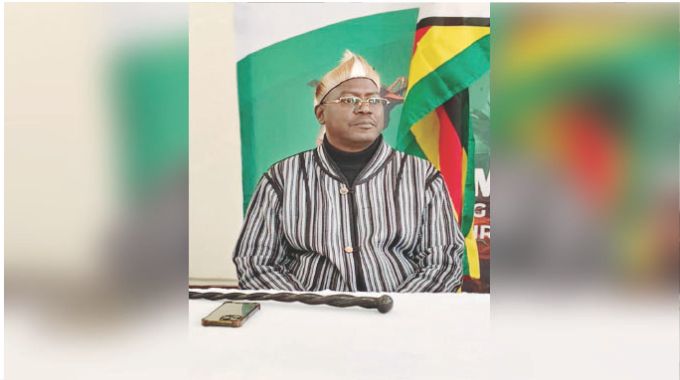
Vincent Gono, Day Editor
IN the dynamic landscape of global cultural industries, film production stands out as a vital conduit for expressing and shaping national identity.
Central to this process is the narratives that a country weaves into its cinematic creations. These stories serve not only as entertainment but also as powerful tools for cultural preservation, soft power projection and international perception management.
These can be leveraged to create opportunities for ancillary industries such as tourism, fashion and gastronomy, further amplifying a country’s cultural footprint.
A country’s narratives in film reflect its history, traditions and social values. By showcasing local stories, folklore and historical events, films become repositories of cultural heritage.
An example that quickly comes to mind is that of Bollywood’s focus on family values and Indian mythology that helps preserve cultural identity amid globalisation.
Such narratives foster a sense of pride and continuity among citizens, ensuring that cultural nuances are passed down through generations.
Films often serve as mirrors of society, for, when a country invests in storytelling that resonates with its people, it reinforces a collective identity.
National narratives in film also function as instruments of soft power where countries that produce compelling stories gain cultural influence worldwide that exemplify perceptions of culture, values and lifestyle.
Narratives drive audience engagement, which translates into box office revenues, international sales and cultural tourism.
It is against this background that Zimbabwe has made conscious efforts to support local filmmakers, invest in culturally specific content and preserve indigenous storytelling traditions while embracing digital platforms and international co-productions to amplify a country’s narratives and reach wider audiences.
Our Day Editor, Vincent Gono (VG) explores the strides that Zimbabwe has so far made in reasserting its cultural footprint by engaging in cinematic decoloniality in an interview with Permanent Secretary in the Ministry of Sport, Arts and Culture Mr Nicholas Moyo.
Excerpts of the interview are below:
VG: What do you think Zimbabwe should do to decolonise its own film industry and start telling its own stories to the world?
Mr Moyo: Decolonisation of our film industry is a practical, strategic imperative that the Government is pursuing with deliberate speed. The first and most foundational step has already been taken is the development and launch of the Zimbabwe Film Strategy 2025–2030. This strategy, developed in consultation with filmmakers, stakeholders and international partners, is anchored on nine pillars that directly address the structural barriers that have historically kept our industry dependent on foreign narratives and external control.
To tell our own stories, we must first create the conditions for them to be told. This requires:
n Funding that prioritises local content: Through the Short Film Grant, launched by the NACZ in partnership with Lotteries and Gaming Board, we are actively investing in storytellers who reflect Zimbabwean narratives through Zimbabwean lenses. The grant, initially US$6 000 funded by the Lotteries and Gaming Board, has already supported three outstanding productions by Jonathan Samukange, Bridget Paradza and Tatenda Hove. I am pleased to announce that the Lotteries and Gaming Board has increased its contribution for 2026.
n Infrastructure that enables local production: We are investing in state-of-the-art film infrastructure, including the construction of film studios and a modern film lab. Resources have been allocated in the 2025 National Budget for the establishment and equipping of public film studios in Harare and Bulawayo.
n Legislative and fiscal measures that favour local production: We already have a duty-free facility on the importation of recording and filming equipment. We are working closely with the Ministry of Finance to also introduce tax incentives for film.
• Education and training: The Zimbabwe Film and Television School of Southern Africa is being positioned as a key institution to transform the industry under the Second Republic. We are building a pipeline of skilled Zimbabwean filmmakers who will not need to look elsewhere for technical expertise.
VG: What efforts are needed to unshackle communities from Western hegemonic narratives so that the country start propping its own narratives that speak to its identity and what it stands for, its vision?
Mr Moyo: This question correctly identifies that the battle for narratives is as important as the battle for markets. Our communities have for too long been consumers of stories that do not reflect their realities, their histories or their aspirations. The efforts required are multi-pronged:
First, we must create a critical mass of Zimbabwean content that is accessible and compelling. The Government has already taken a significant step in this direction through the ZBC allocation of ZiG10 million towards local content production.
This is a deliberate intervention to ensure that our public broadcaster becomes a vehicle for Zimbabwean stories, not a repeater of foreign narratives.
Second, we must build distribution channels that take our stories to our people and to the world. The Film Strategy prioritises markets and distribution channels as one of its nine pillars. Third, we must engage in deliberate cultural diplomacy. We are deepening cultural exchanges with partners such as China and we are engaging with international filmmakers who respect our narratives. The key condition is always that these collaborations must amplify, not overwrite, our own voices.
Fourth, we must educate our communities — and ourselves — about the importance of narrative sovereignty. This is why the Film Strategy includes film education and training as a pillar. We need a generation of Zimbabweans who are not only critical consumers of media but also confident producers of their own stories.
Fifth, we must actively counter misrepresentation. For too long, our stories have been told by others, often leading to distortions and misrepresentations.
VG: What support is the Government rendering to the arts sector for such productions that promote the country’s narratives both current and historical and do you think it is enough?
Mr Moyo: The Government has demonstrated an unprecedented commitment to the arts sector and specifically to film, through a combination of policy, funding and institutional support. We are actively following up on the critical gaps identified in the Zimbabwe Film Strategy. Apart from availing dedicated funding for locally generated content, the widened media landscape which include ZTN, 3KTV and NRTV broadens the distribution networks that showcase authentic Zimbabwean narratives.
The Short Film Grant which was administered by NACZ explicitly requires that narratives “resonate with the Zimbabwean scenario, narrating the Zimbabwean story through the lens of a Zimbabwean filmmaker”.
In May this year, the Government facilitated for a delegation from Zimbabwe to attend the Cannes Film Festival in France, utilising the event to foster cultural diplomacy, secure international film financing and explore global collaboration opportunities.
In addition to this, we have also assisted in getting local films submitted for Festivals in Indonesia and Japan. In 2025 NACZ led a delegation that participated at the Durban Film Mart with the objective of appreciating global standards and using them on our own stories.
NACZ also encourages the growth of private film festivals like ZIFFT and BIOSKOP. This ensures that even private players are brought into the fold, all working under the shared objective of telling our story the way we want it told.
Looking ahead, we are actively scouting for more resources so that we can graduate to producing high-budget films that are not just locally relevant, but competent and competitive on the global market.
Now, to address your second question:
Do I think it is enough? Frankly, support can never be enough in the arts. The creative appetite and the financial demands of world-class filmmaking will always outpace current State resources. However, what I can say is that we are making the right and strategic steps. We are prioritizing, diversifying our platforms and aggressively seeking partnerships. While we are not yet where we want to be, we are committed to expanding our fiscal support so that our filmmakers never have to compromise on the quality of our national narrative. The journey is ongoing and the trajectory is upward.