Online Reporter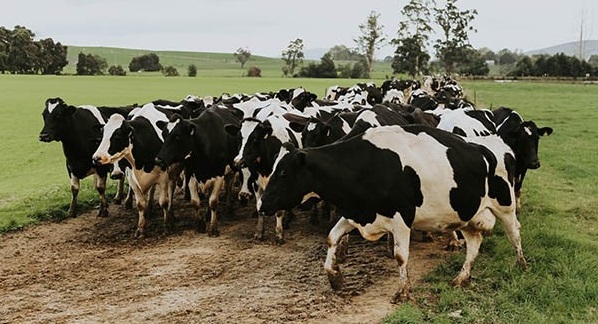
Tapiwanashe Mangwiro
MILK production in the quarter ending March 2025 saw a 2,6 percent rise to 28 million litres due to improved pastures and a growing dairy herd, the Ministry of Lands, Agriculture, Fisheries, Water and Rural Development has said.
“In the first quarter of 2025, output rose to 28 million litres, up from 27,30 million litres in the same quarter of 2024.
“This 2,6 percent uplift reflects the combined impact of improved pasture growth following unusually generous rains in late 2024,” the dairy department in the ministry said.
The improvement is also a result of a deliberate expansion of the national herd, which rose by 8,7 percent, from 60 398 head of cows in 2023 to 65 659 last year, with Government-European Union partnership schemes providing in-calf heifers and subsidised veterinary services.
The month-on-month figures for March further illustrate the positive effect of enhanced grazing conditions.
Milk deliveries reached 9,57 million litres in March 2025, compared to 8,96 million litres in March 2024, a 6,8 percent increase, enabling many smallholder and commercial operations to boost yields without resorting to expensive bought-in feeds.
Producers in traditionally drought-prone regions reported the most dramatic improvements, with some cooperatives citing double digit percentage gains in daily farm output as pastures regenerated rapidly under favourable weather.
Nevertheless, the seasonal rhythm of the dairy sector remains unmistakable.
Production in the first quarter of 2025 was 5,5 percent below the last quarter of 2024, when milk output stood at 29,64 million litres.
The drop from the fourth quarter to the first is consistent with historical patterns of dry-season fodder stocks and crop by-products such as maize husks that typically bolster the fourth quarter yields, while the quarter under review relies on nascent pastures that take weeks to reach peak nutritive value.
Stakeholders are already exploring strategies such as enhanced silage production, improved fodder conservation and targeted feed supplementation to narrow the gap between lean and flush seasons, thereby stabilise supplies year-round.
Commenting on the performance, agronomist Thembalani Kunene said: “Behind the headline numbers lie three intertwined drivers of growth — weather, herd size and technical support. Above-average rainfall between December 2024 and February 2025 created abundant grazing, easing feed costs by an estimated 15 percent for smallholders.
“The 8,7 percent expansion of the national dairy herd, now numbering 65 659 head, provided a larger milk-producing base due to Government and European Union initiatives that delivered high-quality heifers, extended veterinary outreach and subsidised artificial insemination.”
Complementing these initiatives, a series of farmer training programmes in modern dairy husbandry, feed formulation and herd health management has raised per-cow productivity by roughly 4 percent over the past year.
These improvements come at a crucial time for the country, which is targeting 120 million litres of annual milk production in 2025, up from 114 million litres in 2024, as part of its broader strategy to achieve self-sufficiency and reduce dairy import bills that have weighed on foreign exchange reserves.
Already, imports fell by approxi-mately 20 percent in 2024, signalling that locally produced milk and dairy products are steadily replacing foreign-supplied alternatives.
To sustain this momentum, policymakers have cut tariffs on milking machinery and feed inputs, and are investing in milk-cooling infrastructure and fodder-storage facilities designed to buffer producers against seasonal swings.
However, challenges remain.
Many smallholder farms still lack reliable access to affordable credit, limiting their ability to invest in equipment and inputs that could further raise yields.
Transport and power supply constraints add to operational costs, while occasional dry spells continue to expose the vulnerability of rain-fed grazing systems.
Industry leaders are pressing for a rollout of decentralised cooling hubs, particularly in remote provinces, and for microfinance schemes tailored to dairy farmers’ cash-flow cycles.
They argue that such measures would help to lock in the gains achieved through recent weather-related windfalls and herd expansion.
Despite these hurdles, confidence is high.
Agronomist Pamela Macheka points to the sector’s structural improvements, crediting enhanced farming techniques, better livestock nutrition and ongoing farmer training programmes for the upward trend.
“Key initiatives such as sourcing in-calf heifers from neighbouring countries, improving livestock feed and training farmers in modern dairy husbandry have significantly enhanced productivity, especially among smallholder farmers,” she said.
She emphasised the role of dairy genetics.
“The introduction of high yield breeds has helped farmers achieve higher productivity levels, aligning with the Government’s goal of modernising agriculture to enhance food security and economic stability,” she said.
Government financial support and technical assistance have been pivotal, reducing production costs and easing import restrictions on essential raw materials on the part of farmers.
A Mutare-based dairy farmer, Mr Simon Zimunya, praised State-backed programmes and private sector partnerships for his own farm’s turnaround.
“The funding and technical support we have received have been instrumental. Access to information on modern dairy practices and the right breeds has significantly improved our yields,” he said.
“With continued support, I believe Zimbabwe’s dairy sector can reach self-sufficiency and even become an exporter in the region.”
The Zimbabwe Dairy Industry Trust has set an ambitious target of surpassing 120 million litres in 2025, up from 114 million litres in 2024, a milestone seen as a stepping stone towards the national requirement of 130 million litres and eventual self-sufficiency.
Buy Zimbabwe general manager Alois Burutsa noted that since 2018, locally manufactured dairy products have increasingly displaced imports, strengthening the country’s balance of payments.
“There has been an improved availability of locally produced dairy commodities, leading to reduced dairy imports,” he said. “The trend shows that Zimbabwe is on track to reach a point where dairy imports are no longer necessary.”
As the country pushes towards its 2025 production goal of 120 million litres, continued investment, both public and private, will be essential.
Strategic policies, improved farming practices and sustained collaboration between the Government, donors and the private sector have already delivered tangible gains.
The challenge now is to entrench the advances in infrastructure, finance and training, creating a dairy industry that can withstand seasonal fluctuations, meet domestic demand and ultimately generate export earnings.
With the right mix of support and innovation, Zimbabwe appears well placed to turn its dairying potential into a pillar of agricultural growth and food security.



 Online Reporter