Online Reporter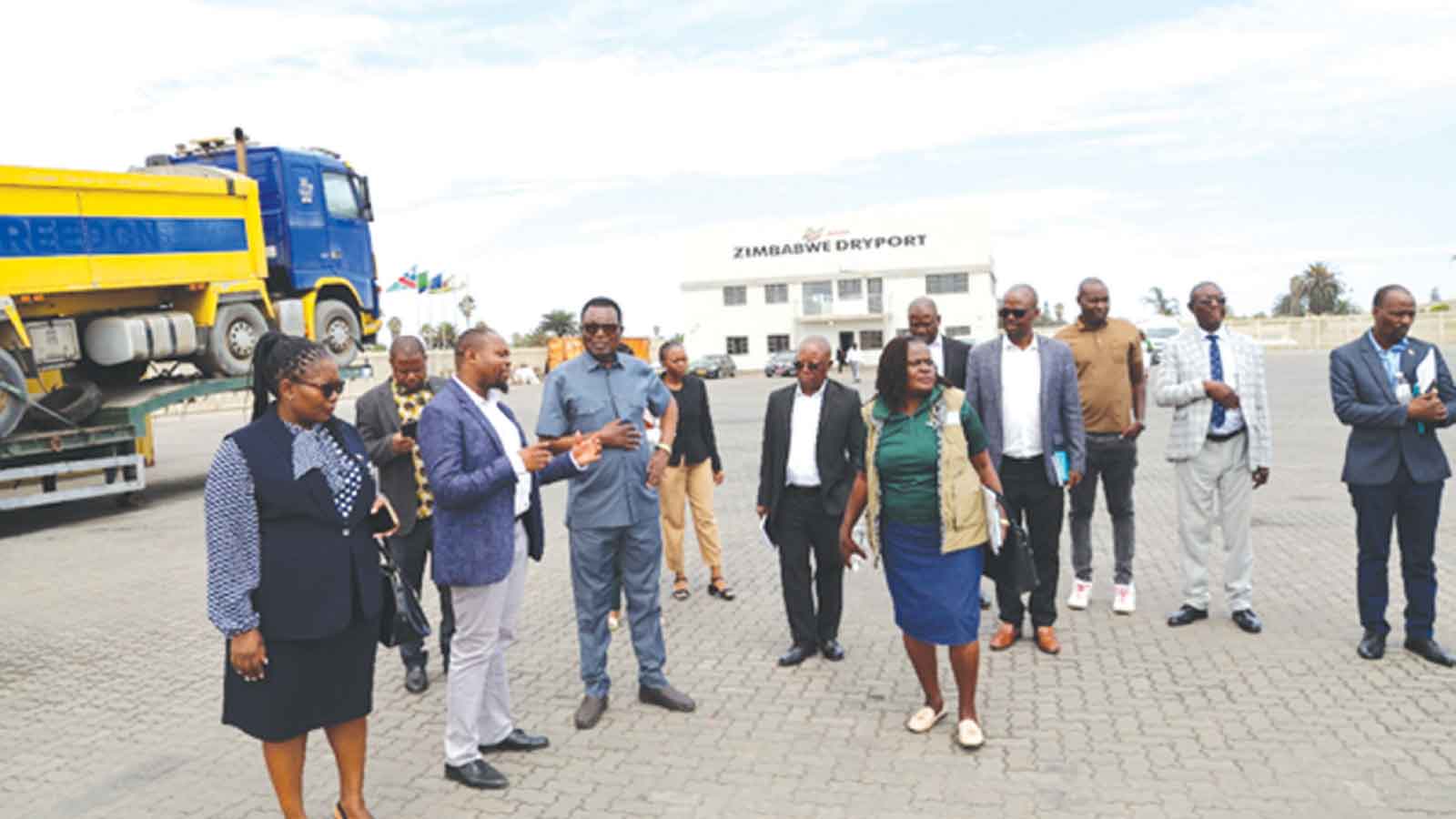
Sithabile Nyaningwe recently in WALVIS BAY, Namibia
THE Second Republic remains firmly committed to ensuring that all strategic national assets are optimally utilised to drive inclusive economic growth, create employment and position Zimbabwe as a key player in regional and international trade.
In line with this vision, Zimbabwe is accelerating its transformation into a land-linked economic hub through renewed momentum at the Zimbabwe Dry Port in Walvis Bay, Namibia — one of the Second Republic’s flagship strategic investments designed to unlock global trade access via the Atlantic Ocean.
Commissioned in 2019 by President Mnangagwa under a long-term bilateral framework between Zimbabwe and Namibia, the Dry Port is strategically located along the Walvis Bay Corridor, offering a faster, safer and more efficient route to key markets in Europe, West Africa, and the Americas.
A high-level post-commissioning impact harvesting and performance assessment mission to the facility led by the Special Advisor to the President on Monitoring Implementation of Government Programmes and Projects, Dr Joram Gumbo, has re-affirmed the Dry Port’s strategic value and central role in advancing Zimbabwe’s export-led growth agenda, regional integration and economic diplomacy.
The assessment highlighted the Dry Port’s significant potential to serve not as a gateway for Zimbabwean exports and imports, but also as a regional logistics hub for neighbouring landlocked countries.
Dr Gumbo was received by Zimbabwe’s Ambassador to Namibia, Her Excellency, Melody Chaurura with the mission comprising multi-sectoral delegation drawn from key Government ministries and agencies.
With growing demand for Zimbabwean products, including horticulture, tobacco, processed foods and manufactured goods, across West and Central Africa presents a strategic opportunity to connect domestic production to expanding international markets.
Its location provides a compelling alternative to traditional trade routes, reducing transit times, improving supply chain reliability, while positioning Zimbabwean exporters to compete more effectively on the global stage.
Encouragingly, the visit renewed impetus for the Second Republic to pursue a targeted programme aimed at enhancing the operational capacity of the facility.
Planned investments in modern cargo handling equipment, cold chain infrastructure, warehousing, and integrated logistics systems are expected to significantly improve efficiency, turnaround times, and service delivery.
These interventions will enable the Dry Port to handle a broader range of cargo, including perishable goods, thereby unlocking new market opportunities and strengthening value chain across key sectors of the economy.
“The Zimbabwe Dry Port represents a strategic national asset with the capacity to transform our trade architecture and position Zimbabwe as a key logistics hub in the region.
“The focus of the impact harvesting mission was to ensure that the facility delivers maximum economic value and fully supports our national development agenda. This visit has strengthened the business case for the Dry Port’s rapid capacitation and operational expansion”, said Dr Gumbo during the tour.
In parallel, enhanced coordination among Government ministries, agencies, and trade promotion agencies is expected to drive greater utilisation of the facility.
Focused awareness campaigns and stakeholder engagement initiatives will further ensure that Zimbabwean businesses fully leverage the Dry Port as their preferred gateway to Atlantic markets.
This coordinated approach will not only increase cargo throughput, but also firmly anchor the Dry Port as a central pillar of Zimbabwe’s trade and logistics ecosystem.
Beyond its economic significance, the revitalisation of the Dry Port is being viewed as a major diplomatic and strategic milestone, as it carries important diplomatic and strategic value.
It stands as a symbol of deepening bilateral cooperation between Zimbabwe and Namibia, reflecting a shared commitment to regional development, infrastructure integration, and mutually beneficial trade.
The facility also reinforces Zimbabwe’s positioning as a reliable and forward-looking partner within the framework of the African Continental Free Trade Area, demonstrating its readiness to actively participate in and contribute to intra-African trade.
Ambassador Chaurura said the project reflected the growing strength of cooperation between the two countries.
“The Dry Port reflects the strengthening of bilateral relations between the Republic of Zimbabwe and the Republic of Namibia, anchored on shared political and economic interests as well as collective commitment to regional integration,” she said.
The renewed focus on the Dry Port forms part of a broader policy shift by the Second Republic, towards maximising the performance of strategic national assets.
By prioritising targeted investments in cargo handling, warehousing, and cold chain infrastructure, Government is expected to unlock operational efficiency, enhance strategic utilisation of the facility, and decisively transform the Dry Port into a high impact economic asset capable of driving business growth, reducing logistics costs and improving foreign currency inflows thereby stimulating industrial expansion and broader economic transformation.
Dr Gumbo also had an opportunity to assess and appreciate key logistics infrastructure at NAMPORT and the Botswana Dry Port in Walvis Bay, as a benchmarking effort to strengthen operational performance and strategic utilisation of the Zimbabwe Dry Port.
As these initiatives gather momentum, the Zimbabwe Dry Port in Walvis Bay is poised to emerge as a fully functional, high-impact trade gateway — connecting Zimbabwe to global markets, strengthening regional linkages and reinforcing the country’s “Open for Business” agenda.
The progress being recorded signals a clear commitment to delivering results, unlocking opportunity, and positioning Zimbabwe as a competitive player in international trade.