

 admin
admin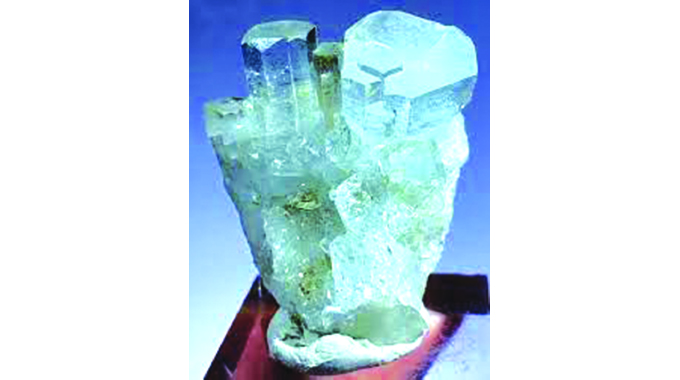
Oliver Kazunga Senior Business Reporter
ZIMBABWE is planning to craft a gemstones development policy to improve the production of semi-precious and coloured stones whose (unmined) value in the country is estimated at U$2 billion annually.
Of late, there have been reports of semi-precious stones being discovered in some parts of the country like Hurungwe and Karoi in Mashonaland West Province where villagers extracted the stones without going through the normal processes that ensure Zimbabwe benefits as a country.
After extraction, the gemstones were reportedly illegally sold to unscrupulous dealers that smuggle and export the semi-precious and coloured stones in raw form.
According to the Minerals Marketing Corporation of Zimbabwe (MMCZ), last year a total of 1 386 million kilogrammes of semi-precious and coloured stones were sold through the formal system, raking in US$215 650 million.
In his address at the inaugural Gemstones Conference organised by the Zimbabwe School of Mines in Harare yesterday, guest of honour Mines and Mining Development Minister Winston Chitando implored stakeholders in the mining industry to come up with recommendations for input into the proposed policy.
“Over and above the training aspect, l really want to urge you, possibly not conclusive today, to come up with a gemstones development policy.
“At the moment, we are in the process of amendments to the Mines and Minerals Act, the amendments were gazetted and there is a process which is taking place in terms of the consultations and rollout of the amendments for eventual discussion in Parliament and coming up with amendments to the Bill.
“It’s not too late for us as players in the gemstones sector, we believe that there are some legal interventions which are required, but there are some policy interventions which need to be put into law, let’s have it today,” he said.
Minister Chitando said as the consultation process takes place, representatives of the gemstones sector should give input to the amendments to the Mines and Minerals Act.
Examples of semi-precious and coloured stones dotted across the country include amethyst, antimony, aquamarine, aventurine, beryl and talc. The semi-precious minerals are largely used for jewellery manufacturing and decorative purposes.
Minister Chitando reiterated that the whole thrust of Vision 2030 is to grow production hence as part of the mining industry’s contribution towards the national vision, the Government in 2019 launched the US$12 billion milestone by next year with the diamond and gemstones sector expected to contribute US$1 billion.
Delegates at the inaugural gemstones conference included representatives from the Minerals Marketing Corporation of Zimbabwe (MMCZ), Government officials, and the Zimbabwe Miners Federation—the mother body of small-scale miners in the country.
ZMF president Ms Henrieta Rushwaya said artisanal and small-scale miners dominate the extraction of gemstones and coloured stones in Zimbabwe but lots of revenue has been lost through illicit trade.
“Semi-precious stones being discovered in some parts of the country like Karoi and Hurungwe have been done informally and consequently lots of revenue have been lost to illicit trade and thus disenfranchising the country the much-needed gemstone revenue, as individuals have been selling to cartels,” she said.
ZMF, MMCZ and the Government through the Ministry of Mines and Mining, Ms Rushwaya said have made frantic efforts to formalise the gemstones sector.
In 2019, the Government promulgated Statutory Instrument 256 of 2019 which regularises the mining of semi-precious stones across the value chain to benefit the local communities from which the resources are being extracted.
It is against this backdrop that ZMF has initiated the formation of the National Gemstones Miners Association to which all the other existing associations would report their activities.
“However, full beneficiation is being hampered by widespread illegal activity as many miners and traders operate outside the formal sector in Hurungwe and Karoi.
“While the cutting, polishing and processing of gemstones and their manufacture into jewellery is in existence, only a small fraction in the country sees the significance of this activity,” she said.
The mining industry is one of Zimbabwe’s economic sectors accounting for over 75 per cent of annual export receipts and contributing about 16 percent to the gross domestic product.
Last year, the mining sector generated over US$5 billion keeping the country on course towards the attainment of a US$12 billion mining economy by next year.



 Online Reporter