

 admin
admin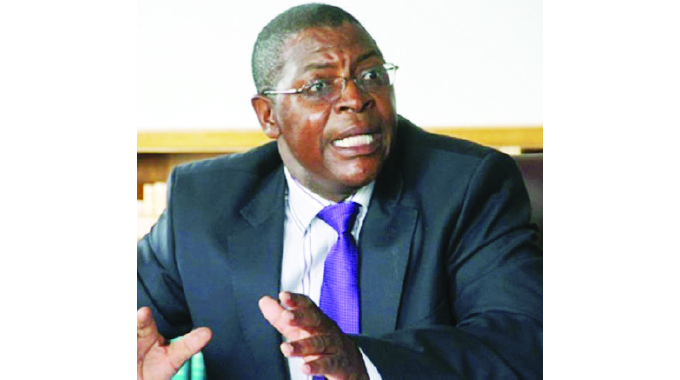
said this week.
Industry and Commerce Minister Professor Welshman Ncube said Government had created the ideal conditions for exploitation of the numerous trade and investment opportunities in the country.
He made the remarks at the one-day Zimbabwe Business Conference that sought to highlight opportunities and challenges for investors of Indian origin.
India is a US$1,6 trillion economy and the fourth largest in the world after the US, China and Japan. Its economy is forecast to grow by 8 percent this year. India has pledged to support Zimbabwe’s economic turnaround efforts.
Minister Ncube said agriculture, manufacturing, mining, tourism, construction, energy, infrastructure development, ICT and services sectors were laden with opportunities. He also said opportunities were also abundant in the motor, electronic and pharmaceutical sectors, which were affected by a decade of economic instability.
Minister Ncube said the introduction of the multi-currency system after consummation of the inclusive Government in February 2009 wiped out hyperinflation.
Annual inflation had, officially, peaked at 231 million percent in September 2008 compared to the 3,3 percent inflation rate as of July 2011.
The Government has also relaxed foreign exchange regulations allowing for repatriation of foreign funds invested and profits earned in Zimbabwe.
Immigration laws have also been slackened to ensure that qualifying investors can stay in the country and conduct their business without hindrance.
There is abundant skilled labour in Zimbabwe and huge potential for ensuring a well-trained human resource base supported by a 97 percent literacy rate.
Minister Ncube contends that successive growth of the economy over the last two years provided potential investors with demand for their products.
Zimbabwe’s gross domestic product which registered a 6,3 percent growth in 2009, grew by 8,1 percent in 2010 and is forecast to expand by 9,3 percent this year.
The Industry and Commerce Minister said the formation of the inclusive Government went some way in restoring investor confidence in Zimbabwe.
“It is pleasing to note that the formation of the inclusive Government resulted in the removal of perceived country risk through restoration of political stability and implementation of consistent investment policies,” he said.
But challenges to Zimbabwe’s economic growth ambitions lie in tight liquidity, expensive and elusive capital, power shortage and antiquated machinery and equipment.
Minister Ncube said the recent Bilateral Investment Protection and Promotion Agreements with Botswana and South Africa bore testimony to the fact that Zimbabwe was committed to attracting foreign direct investment.
The country has targeted savings and FDI ratios of at least 20 percent of gross domestic product over the course of the Medium Term Plan 2011-2015.
India and Zimbabwe enjoy cordial political and economic ties dating back to Zimbabwe’s struggle for independence, but the trade and investment figures have not grown to reach their full potential over the last few decades.
Zimbabwe and India share some common objectives and interests though, particularly on agricultural issues in the World Trade Organisation.


 Online Reporter