

 Online Reporter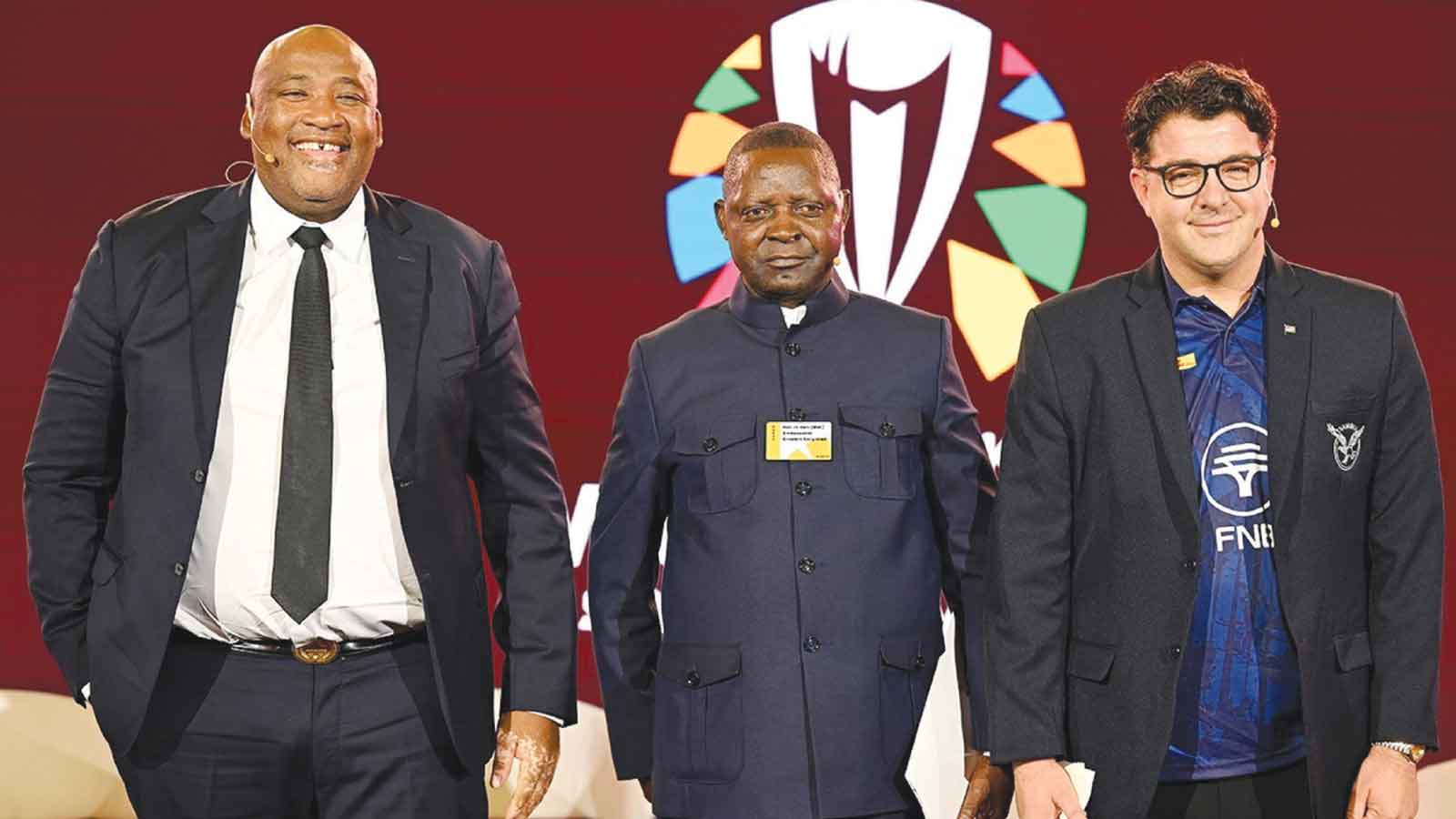
Petros Kausiyo in JOHANNESBURG, South Africa
SOUTHERN Africa’s host nations rolled out the red carpet for the 2027 ICC Men’s Cricket World Cup with the Minister of Sport, Recreation, Arts and Culture Anselem Sanyatwe declaring Zimbabwe more than ready to showcase its storied warmth and hospitality to the global sporting family.
Sanyatwe headlined the Zimbabwe delegation at a glittering function in Johannesburg on Thursday night where the host cities and the brand for the 2027 Cricket World Cup were revealed.
He assured all visitors to Zimbabwe of their safety, security, smooth movement and warm hospitality, which the nation is renowned for.
South Africa, Zimbabwe and Namibia are preparing to host the tournament in October and November next year.
The pinnacle white-ball tournament returns to Africa after 24 years when the world’s top 14 teams converge for what promises to be the most exciting tournament of its kind for fans around the globe who will either be travelling for the event or following the matches on broadcast and digital channels.
A spirit of unity, diversity and community is integral to the tournament’s positioning, as the three host nations prepare to stage a global celebration of cricket inspired by the African philosophy of Ubuntu – “I am, because we are”.
Rooted in the belief that Africa’s shared humanity is defined by compassion, kindness and our connection to one another, Ubuntu embodies the inclusive spirit that will welcome the world to Africa.
This unique expression of togetherness will make the ICC Men’s Cricket World Cup 2027 a tournament unlike any that has come before.
And Sanyatwe said Zimbabwe who will stage their portion of the games in Bulawayo, Harare and Victoria Falls stands ready to deliver a masterpiece.
“First and foremost, I must say as a country we are very proud of our cricket team’s performances throughout their competitions hence the nation has all the reasons to be proud of our team.
“It is a privilege and an honour within the Southern Region for Zimbabwe to picked as a co-host of this tournament between ourselves Namibia and South Africa,’’ Sanyatwe said.
“The message I pass back home is that we are extremely happy, very inspired and it is a platform for our young generation to take a leaf and where possible interest themselves in cricket.
“Cricket has shown to the world that we as a country, other than restricting ourselves to soccer, cricket is emerging as one of the most famous games being played in Zimbabwe and as a country, as a Ministry should and where possible facilitate the promotion of our youngsters across the districts to participate in cricket.
“The country will stand to benefit as we host this tournament, it will also enable growth of cricket that then would inspire the nation as we march towards the attainment of an Upper Middleclass economy by 2030’’.
The Minister also reflected on the impact that Zimbabwe’s co-hosting of the Cricket Under-19 World Cup with Namibia made on the country and spurred the growth of the game in the country. Zimbabwe Cricket chairman Tavengwa Mukuhlani and ZC managing director Givemore Makoni led the association’s entourage as they top cricket officials, current cricketers and legends of the game converged for the spectacular event.
According to the organisers: “Sitting at the heart of the ICC Men’s Cricket World Cup 2027 brand is the circular African bowl. Across Southern Africa, these distinct, circular and culturally symbolic woven bowls and baskets have played a role in daily life and tradition, historically used to present harvests, gifts and offerings.
“They represent inclusivity, community and hospitality, welcoming the world into the circle to celebrate cricket through the lens of Southern African identity and passion, in 2027, the ICC Men’s Cricket World Cup aims to “Make the Circle Bigger” by inviting the world to experience the absolute best cricket in Africa has to offer.
The brand reflects the tournament’s 12 host venues that were revealed on Thursday night which are: Wanderers Stadium (Johannesburg), Centurion (Tshwane), Newlands Cricket Ground (Cape Town), Kingsmead Cricket Ground (Durban), St George’s Park (Gqeberha), Mangaung Oval (Bloemfontein), Boland Park (Paarl), and Buffalo Park (KuGompo City, formerly known as East London) in South Africa; Harare Sports Club (Harare), Queens Sports Club (Bulawayo), and the newly constructed Fale Mosi-oa-Tunya International Cricket Stadium (Victoria Falls) in Zimbabwe and Namibia Cricket Ground (Windhoek) in Namibia.
ICC chairman Jay Shah said the unveiling ceremony marked the start of the journey to staging the World Cup in Southern Africa.
“This marks an exciting milestone on the road to the ICC Men’s Cricket World Cup 2027.
“The unveiling of the host cities and the tournament brand signals the start of a journey that will unite fans around the world and build anticipation for one of our sport’s biggest global events.
“The return of this prestigious tournament to Africa after 24 years is a landmark moment for cricket. We are confident that South Africa, Zimbabwe and Namibia will deliver an unforgettable event, showcasing the warmth, passion and rich diversity that make this region truly unique,’’ Shah said.
The event united cricketers from the three co-host nations in a celebration of the “Three Nations, One Heartbeat” theme.
South Africa were represented by cricket icons Graeme Smith, Makhaya Ntini, Hashim Amla, Temba Bavuma and Kagiso Rabada, alongside Zimbabwe’s Hamilton Masakadza and Namibia’s Rudolf Jansen van Vuuren.
As one of the most culturally diverse regions ever to host the Men’s Cricket World Cup, the “Make the circle bigger” brand reflects the host nations’ rich tapestry of cultures, 29 officially recognised languages and the vast mosaic of identities that unite the region.
The visual anchor of the ICC Men’s Cricket World Cup 2027 is derived from a single geometric form inspired by the African wire bowl. It features colours such as Zimbabwe Chilli, the African Root, Fynbos pop, Namib Dune, Harare Dawn and Two Oceans.
The ICC Men’s Cricket World Cup 2027 will feature 57 matches in a new format that creates greater context, competitiveness and consequence with a three-stage format that will deliver more competitive cricket and enhance the fan experience.
A Super Series will see the three teams ranked from 12 to 14 play a round-robin format, with the winning team moving on to the next stage.
A 30-match round will feature 12 teams with sides divided into two groups of six playing a round-robin format with the top three teams from each group along with the next best-placed team from both groups advancing to the Super 7 stage.
The Super Seven will consist of 21 round-robin matches with the top four teams progressing to the semi-finals. The side that tops the Super Seven will play the fourth-placed side and the second-placed team will take on the third-placed side.



 Bongani Ndlovu