


 Online Reporter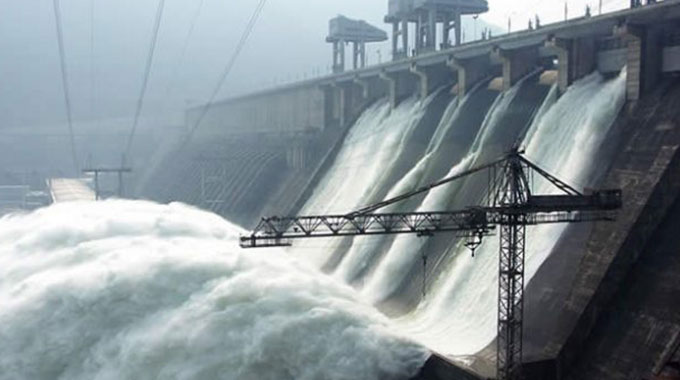
Remember Deketeke
FOR the first time in nearly two decades, Zimbabwe has made it through winter — the season that was often characterised by increased load-shedding — while enjoying uninterrupted power supplies, raising hopes that the country will be able to sustain productive economic activities throughout the year.
The milestone is set to strengthen the Government’s resolve to double the country’s installed generation capacity from the current 2 950 megawatts (MW) to 6 000MW in the next four years.
Zimbabwe Electricity Transmission and Distribution Company (ZETDC) managing director Mr Howard Choga said improved power supplies were largely driven by performance at Hwange and Kariba power stations.
“Hwange and Kariba are contributing an average of about 1 600MW,” Mr Choga said.
Imports, which mainly augment supplies during morning and evening peak demand periods, are contributing about 150MW.
Independent Power Producers (IPPs) add roughly 175MW, while rooftop solar setups now supply slightly more than 100MW through net-metering.
Zimbabwe’s current situation represents a dramatic recovery from recent seasons where the gap between demand and supply widened during winter.
Better electricity tariffs have helped fund previously deferred statutory maintenance at both stations and restore plant availability, while repairs to Hwange’s heat-recovery equipment — air heaters, economisers, milling plant — have enabled the facility to consistently make an average of four units available.
Hwange Power Station’s Unit 6, taken offline on January 22 for statutory maintenance, returned to service on July 3, while Units 7 and 8, commissioned in May and October 2023, respectively, have performed “extremely reliably”, Mr Choga added.
At Kariba, an increased water allocation of 18 billion cubic metres from the Zambezi River Authority, a corporation jointly owned by Zimbabwe and Zambia to manage the Kariba Dam and sustainably harness the Zambezi River’s shared water resources for industrial and socio-economic development, has lifted generation to about 500MW, up sharply from drought-year lows.
Zimbabwe has also maintained steady funding for purchases on the Southern African Power Pool’s market, while Mozambique’s Cahora Bassa has periodically supplied more than its contracted 50MW.
Private companies have separately built about 260MW of captive capacity.
Rising demand
Electricity demand has progressively increased from 1 841MW in August 2024 to 1 901MW on July 14 this year despite expanding rooftop solar and efficiency measures.
“Industrial capacity utilisation is on the increase, and mining industry demand is also evidently on the increase,” Mr Choga said.
The Government has already received new and expansion load applications totalling 2 500MW.
“The new demand means that the Zimbabwe capacity developed over more than 50 years has to be doubled in five years.”
The Government has since come up with a new legal framework that is meant to ensure efficiencies and promote investment in both power generation and distribution.
Under the Electricity (Provision of Backbone Infrastructure) Regulations, 2026 (Statutory Instrument 128 of 2026), gazetted on Friday, land developers must now finance and build backbone infrastructure — distribution lines, transformers, mini-substations and service connections — as a condition of any new development.
Once inspected and certified, it transfers the infrastructure to the power utility, backed by a five-year developer warranty.
Non-compliant developers face suspension or revocation of permits, and no stand may be sold until compliance is shown.
Under the new framework, private companies can now bid for a renewable 25-year licence to reticulate unserved areas, building and billing their own local networks, buying power in bulk from ZETDC or IPPs, or generating their own.
However, they remain bound by the existing distribution code and are barred from charging above ZETDC’s standard tariffs, with the Zimbabwe Energy Regulatory Authority approving costs.


 Bongani Ndlovu