In the lead-up to the third Russia-Africa Summit, scheduled for October 28-29 in Moscow, the question of how to translate the potential of Russian-Zimbabwean relations into concrete deals is becoming increasingly important.
Bilateral trade between the two countries was estimated at approximately US$80 million in 2025 — a figure both Moscow and Harare consider modest, but one they believe could grow significantly, particularly in energy, geological exploration and agriculture.
This year, positive developments have been recorded, with direct agricultural exports from Zimbabwe to Russia increasing fivefold compared to the same period last year.
In February, the two countries celebrated 45 years of diplomatic relations, making it an opportune time to discuss barriers to cooperation and opportunities for growth.
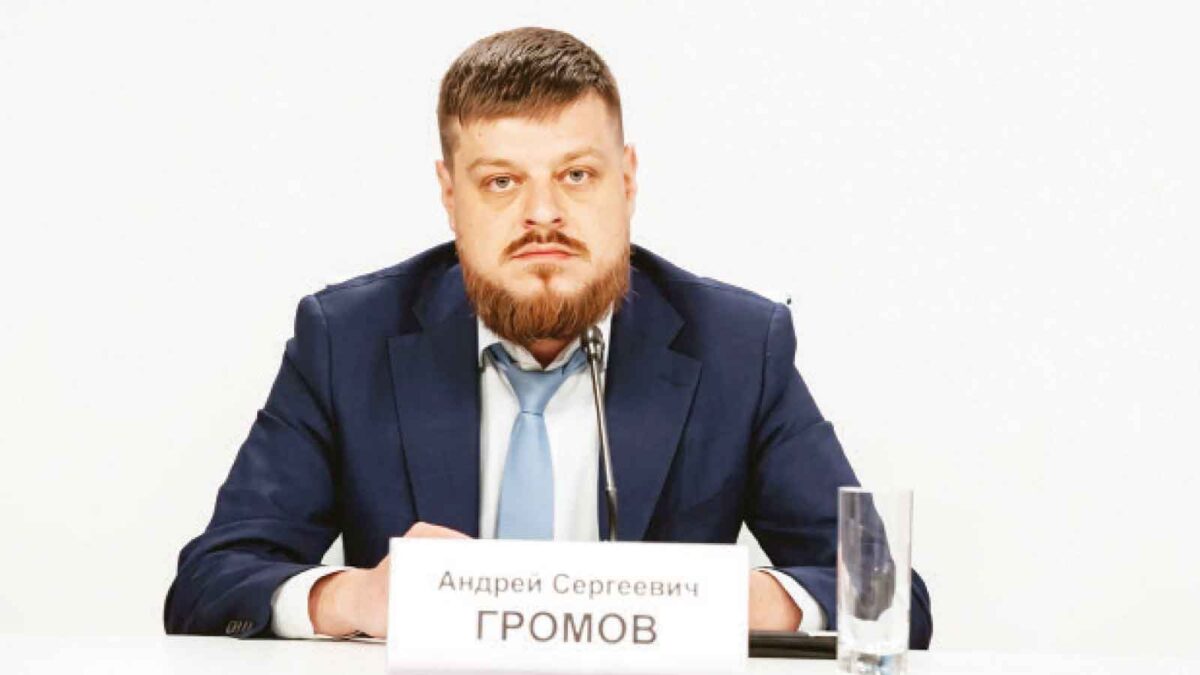
In an interview with the International Association GlobUs, African-Russian Energy Association (AREA) executive secretary and GR-Group founder Mr Andrey Gromov discussed the measures needed to boost trade and investment between the two countries.
Q: Russia and Zimbabwe have repeatedly highlighted the enormous potential of their relations. What needs to be done to achieve a significant increase in trade and investment?
A: At the current stage, both sides are highlighting extensive opportunities. It is fair to speak of the high potential of our relations. However, practical steps are needed to bring concrete deals closer. Clearly defined projects must emerge, with a specific understanding of each party’s participation and the benefits for both sides.
Q: Are there tools that can facilitate these processes?
A: There are tools, and we are constantly updating them. First and foremost, these include the extensive network of summits and other events we host. They are specifically designed to facilitate business networking.
Entrepreneurs from our countries meet annually at the Russia-Africa Summit and related business forums. We need to attract even more businesses and private initiatives to this process. Governments can only establish a framework for this dialogue, while actual decisions on private equity deals are made by individuals.
In business, it is not just potential or profit margins that matter. There is another crucial component: trust between participants. Such trust can only be built through dialogue. We need more meetings and more communication, and then relations will develop much more intensively.
For example, the International Business Promotion Centre and the GlobUs Association have held thematic discussions at several major platforms, including engagements involving the African-Russian Energy Association and the State Duma Expert Council.
A comprehensive concept — a socioeconomic development strategy — is currently being developed, outlining specific steps and approaches for each African country. These are not yet specific projects, but rather a clearly defined direction identifying areas of potential cooperation.
Importantly, Russia was not the only party involved in drafting the document. It is based on extensive research conducted across the African continent and expert dialogues with representatives of individual African countries.
Q: Zimbabwe’s exports to Russia are showing positive growth, but their volumes are still not comparable to imports from Russia. What needs to change for Zimbabwe to significantly increase its supplies to the Russian market?
A: International trade relations are primarily a question of balance. We offer various options for such relations, including cooperation in national currencies. This could strengthen both the Zimbabwean economy and its independent currency if Harare were to participate more in such transactions.
The Russian Federation offers many mechanisms for this. But, again, the trade balance is important. We supply, and we receive supplies.
Q: What does Russia already supply to Zimbabwe?
A: We have a fairly good understanding of the Zimbabwean market’s capabilities and what is in demand. Currently, this primarily includes fuel, fertilisers and some agricultural products, including grains.
Q: What can Harare offer Moscow at present?
A: The product groups that are most developed in Zimbabwe. There are agricultural products in demand here, too. However, the market structure is quite complex.
For example, agricultural produce is most often produced under pre-purchase agreements. This means that the owner, or end consumer, already pays for the sowing. Therefore, entering the market for products such as tobacco, as well as other exchange-traded agricultural commodities, is quite difficult.
Furthermore, Zimbabwe experiences occasional dry seasons. We saw this in 2024, and now, in 2026, there are also concerns about a possible drought.
Q: How can cooperation with Russia help Zimbabwe strengthen food security through the supply of fertilisers, agricultural technologies, mechanisation and irrigation, rather than just through imports of finished products?
A: Of course. We offer various export schemes for our agricultural products to Zimbabwe. And we are not just talking about fertiliser supplies; we are ready to create entire production clusters.
We take a comprehensive approach. For example, hundreds of Zimbabwean students are already studying in Russia, and we supply agricultural machinery, including excellent equipment manufactured at facilities such as the Kirov Plant in St Petersburg.
This is not just trade; it is also a transfer of skills and assistance in creating a foundation for domestic production.
Q: What about mineral resources? Zimbabwe is rich in resources, after all.
A: It is a matter of long-term investment. Production cycles in this sector extend over 10, 15 or 20 years. Furthermore, it requires comprehensive development.
Mining any ore, including gold, requires substantial energy supplies and beneficiation capacity. This essentially involves creating production clusters. Therefore, it is important to understand that these are long-term undertakings.
For its part, Russia is making significant efforts to build long-term strategic relationships, unlike Western countries, which are engaged in uncontrolled resource extraction.
Q: Returning to the importance of dialogue and trust, we live in an era of challenges when political factors often take precedence over economics. What is most important for developing relations under these conditions?
A: What is truly important now is to create a political foundation for interaction between our countries. This can only be based on close ties between our peoples.
We need to develop dialogue. The more we communicate and hold ordinary meetings — even when they are not about business or do not involve businesspeople, but ordinary citizens — the deeper our connections become. These connections will, in turn, give rise to joint projects, initiatives and scientific solutions.
Russia, for its part, provides platforms, training and major joint events to facilitate this process.
The main indicator of the development of relations is the number of contacts between people. Yes, we live in difficult times, but this allows us to develop that very human foundation and strengthen the principles on which our relations are based.
The values we uphold in the Russian Federation are precisely what will help create the foundation for future development.