Prosper Ndlovu
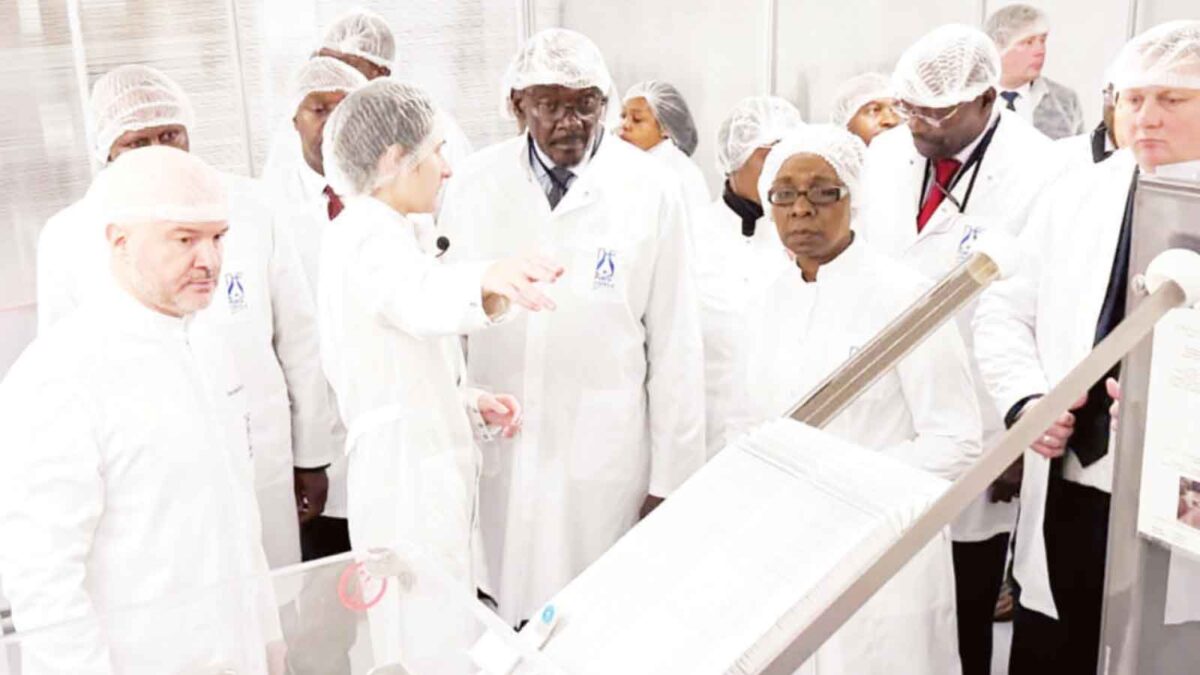
Vice President Kembo Mohadi’s recent tour of a high-tech manufacturing facility in St Petersburg and a medical imaging centre in Moscow has confirmed Zimbabwe’s commitment to moving from signed agreements to tangible implementation.
THIS offers a promising lifeline for improved healthcare access across the nation.
From pharmaceutical production lines to centralised radiology hubs where specialists diagnose patients thousands of kilometres away, Zimbabwe has witnessed its health future in action — economic diplomacy realised, exactly as President Mnangagwa has demanded of all Zimbabwe’s diplomatic missions.
The working visit by VP Mohadi — accompanied by Health and Child Care Deputy Minister Sleiman Kwidini, Zimbabwe’s Ambassador to Russia Mark Grey Marongwe and technical experts from the Ministry of Health — follows President Mnangagwa’s strategic engagement at the recent Russia-Africa Summit, where he emphasised Zimbabwe’s pursuit of partnerships delivering tangible transformation rather than mere political solidarity.
The health sector has emerged as the new frontier of that solidarity. For years, Zimbabwe and Russia have maintained excellent political relations rooted in liberation history.
VP Mohadi’s mission sought to translate that political capital into social and economic capital.
A working model at scale
Zimbabwe is already modernising its health system through an ambitious telemedicine rollout aimed at connecting remote clinics to central hospitals.
What the delegation observed in Moscow is a working model at scale.
Russia’s unified radiology network links dozens of medical facilities, enables images taken in remote regions to be read instantly by specialists in Moscow and utilises artificial intelligence (AI) to prioritise urgent cases.
It is a model that directly addresses Zimbabwe’s challenges — shortages of specialists in rural areas, long distances to referral hospitals and the need to reduce diagnostic delays.
VP Mohadi, who toured both the pharmaceutical plant in St Petersburg and the imaging centre in Moscow, described the visit as focused on practical learning and localising modern systems for sustainable impact.
He reiterated that Zimbabwe and Russia are not just political friends but partners seeking mutual learning.
Russia has demonstrated that world-class healthcare technology can serve even the most remote citizen. Zimbabwe is particularly focused on domesticating production of critical drugs, embracing Russian technology, decentralising key health services and reducing medical tourism costs.
Vision 2030 envisages health cooperation delivering results for ordinary Zimbabweans through services such as the already operational HeliDrive air ambulance model, implemented through Russian support.
The service has reduced critical patient transfer delays by 90 percent.
Improving access for all
In essence, health collaboration with Russia aims to ensure that a mother in Binga, Murambinda or Ndolwane in Bulilima can have a scan read by a specialist in Harare or Bulawayo, and that hospitals have affordable medicines produced through joint ventures.
The focus on implementing agreed deals resonates with President Mnangagwa’s recent directive to all diplomats — that embassies must be economic hubs with set targets for investment, trade and technology transfer, not merely ceremonial outposts.
During the recent Russia-Africa Summit, Zimbabwe emphasised the importance of partnerships in building capacity and industrialising economies. The health sector fits perfectly into that broader vision.
Reducing import dependence
A joint venture in pharmaceutical manufacturing with Russia would reduce Zimbabwe’s significant drug import bill, save foreign currency, create skilled jobs and position Zimbabwe as a pharmaceutical hub for the region.
Although Zimbabwe has begun telemedicine on a smaller scale by connecting several clinics with hospitals, the Russian visit has demonstrated how to scale this up with a centralised command centre, AI-supported diagnosis and full integration of imaging.
This will drastically reduce referrals and allow Zimbabwe to manage patients from their current locations.
““The most important thing that was discussed was knowledge exchange. We don’t want the situation as a country to keep on buying, buying without having us producing locally,” said Deputy Minister Kwidini.
“We have agreed that in those areas where they are good, we can send our own people to come and learn as knowledge transfer.”
Russia has already donated mobile laboratory equipment to support diagnostic services pending construction of local facilities.
Discussions also covered prospects for Russian firms to manufacture in Zimbabwe, regulatory alignment with the Medicines Control Authority of Zimbabwe and direct procurement linkages. The engagement with Russian authorities is expected to positively impact the entire healthcare ecosystem — from software and radiographer training to maintenance systems and data protection.
The ultimate aim is that full implementation will significantly advance universal health coverage.
Experts believe Zimbabwe’s strong base of qualified health professionals makes technology absorption easier.
Furthermore, the Russian system addresses the exact challenge Zimbabwe faces — how to give a rural district hospital the diagnostic power of a quaternary hospital. With Zimbabwe accelerating its fibre optic cable rollout and digitalisation agenda, the country has the foundation to replicate this model. What makes the Zimbabwe-Russia health collaboration crucial is that it provides a template for broader economic diplomacy.
The Vision 2030 agenda focuses on improving Zimbabweans’ quality of life, human capital development and achieving sovereignty in critical sectors like health.
Covid-19 taught Zimbabwe and all of Africa the cost of over-reliance on imported medicines and diagnostics.
By anchoring health cooperation in a partnership with a global technology leader like Russia, Zimbabwe is investing in health security, which is economic security.
While President Mnangagwa attended the Russia-Africa Summit to set strategic direction, VP Mohadi’s follow-up mission sought to operationalise those commitments.
This demonstrates that economic diplomacy is not a slogan but a delivery system.
For the villager who will soon receive an X-ray at their district hospital and have it read instantly by some specialist hundreds of kilometres away, the friendship between Harare and Moscow will no longer be history in textbooks, but a contributor to a healthy and prosperous future.