Nunurai Ndawana
Correspondent
ZIMBABWE’S economic recovery, growing diplomatic influence and increasingly assertive control over strategic minerals are drawing fresh attention from investors. The country is seeking to turn political rehabilitation and resource wealth into a more durable investment proposition. Whether the stock-market gains can be sustained will depend on what happens next.
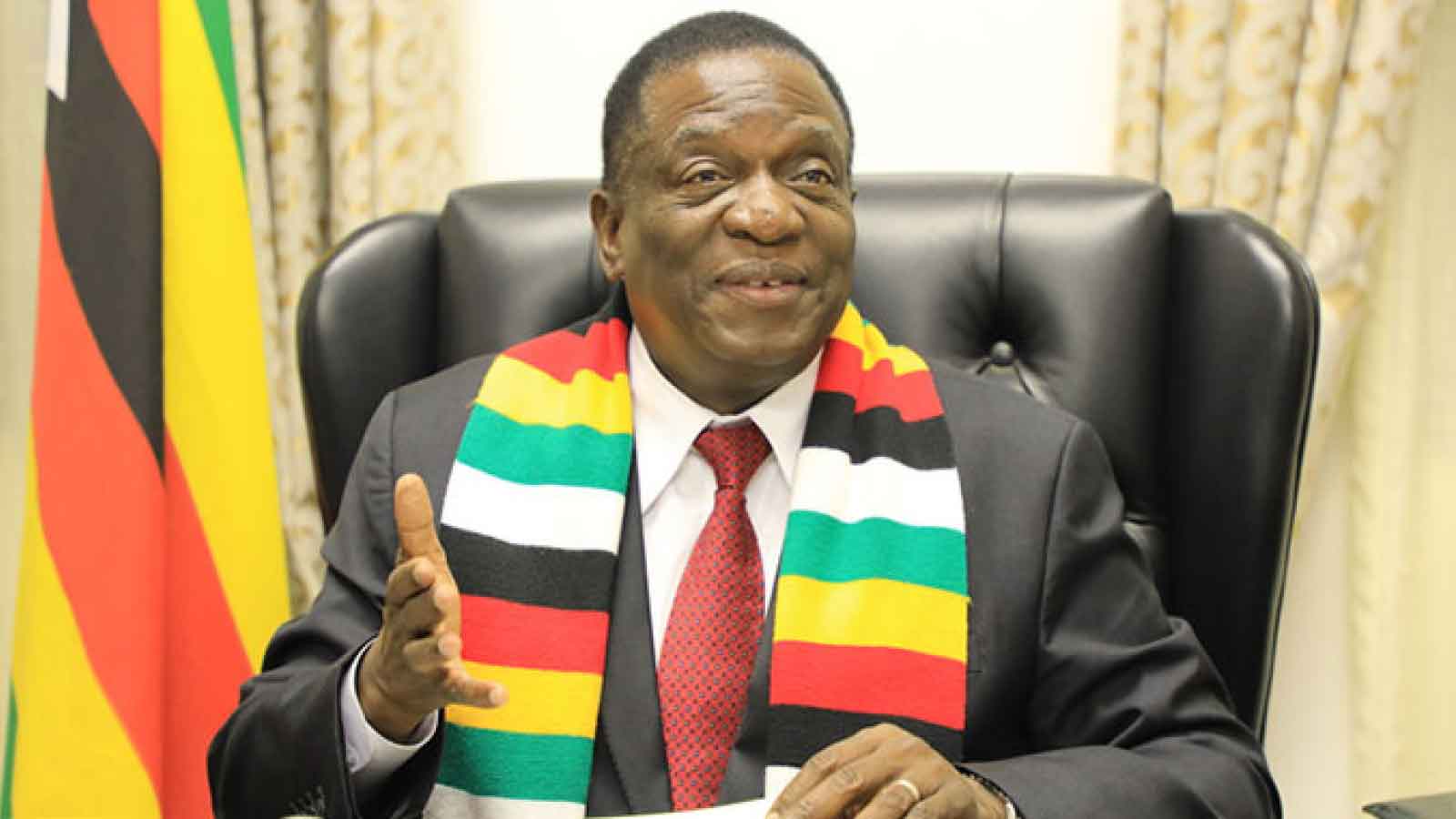
Under President Mnangagwa, Zimbabwe is becoming harder for international investors to ignore.
After years of economic challenges defined its international reputation, the country is presenting a different proposition. Economic growth has rebounded, gold production has reached record levels, the Government has tightened its approach to strategic mineral exports, and Harare has secured a more prominent position in regional and international institutions.
The developments are not unrelated. Together, they suggest an attempt to reposition Zimbabwe from a resource-rich economy struggling with credibility into a regional investment destination with greater diplomatic reach.
There is, however, a distinction between a country attracting attention and one attracting sustainable capital.
Zimbabwe’s diplomatic influence is expanding. Its mineral resources are increasingly valuable to the global economy. Its stock markets offer investors exposure to businesses operating in an economy with substantial growth potential. But the durability of the investment case will depend on monetary stability, regulatory predictability, corporate profitability and the government’s willingness to maintain economic discipline.
For investors, Zimbabwe is becoming an interesting proposition again. It is certainly one that investors are warming up towards.
Diplomacy becomes an economic asset
Zimbabwe’s foreign policy is increasingly being measured by its potential economic returns.
Its election to the United Nations Security Council for the 2027–2028 term gives Harare a seat at one of the world’s most influential diplomatic institutions. The position provides international visibility and an opportunity to participate in discussions on peace, security and development.
For a country seeking to rebuild relationships with international partners, the appointment carries reputational value. It does not automatically translate into foreign investment, but it creates opportunities for engagement with governments, multilateral institutions and international businesses. Something that Harare has been unable to achieve in the past two decades.
Regional diplomacy has been equally important. Zimbabwe’s chairmanship of the SADC in 2024–2025 placed Harare at the centre of regional discussions on trade, infrastructure, energy and security. Its subsequent assumption of the Common Market for Eastern and Southern Africa (COMESA) chairmanship in October 2026 has strengthened that position.
COMESA’s 21-member market offers opportunities for Zimbabwean manufacturers, agricultural producers and service providers. The commercial prize lies in reducing barriers to trade, improving regional logistics and expanding access to neighbouring markets.
Diplomacy, in this context, is not simply about international recognition. It is about improving the conditions under which businesses trade and invest.
Humanitarian diplomacy builds regional influence
Zimbabwe has also used humanitarian assistance to strengthen its regional relationships. Through Zimbabwe’s aid arm, ZimAid, the country has provided assistance to Mozambique, including food aid for communities affected by insecurity in Cabo Delgado.
In January 2026, Zimbabwe dispatched grain and other relief supplies to Malawi following devastating floods. Further grain assistance was also provided to Mozambique and Malawi.
Its assistance to Botswana during an antiretroviral drug supply disruption in 2025 demonstrated another dimension of regional cooperation. Zimbabwe supplied locally manufactured antiretroviral drugs through an arrangement combining a donation with a replenishment loan.
These interventions have economic relevance. Food security and pharmaceutical supply chains are key to regional resilience, and the aid shows that Zimbabwe has productive capacity it can mobilise beyond its borders.
For Harare, the diplomatic payoff is clear: practical help in a neighbour’s time of need builds influence as surely as summits and agreements do.
Growth returns, but the quality of the recovery matters
Zimbabwe’s economic recovery has attracted attention.
Real GDP growth was approximately 5.3% in 2023. The World Bank estimated Zimbabwe’s growth at 8.3% in 2025. The increase reflects improved agricultural conditions, mining activity and favourable commodity prices. It is an encouraging development, steered by President Mnangagwa’s economic expansion through his Vision 2030 programme.
In his 2026 State of the Nation Address, the President said, “Zimbabwe is open for business.” The President also highlighted foreign currency inflows and improving macroeconomic conditions as evidence of economic progress.
Finance Minister Professor Mthuli Ncube has similarly pointed to stronger-than-anticipated growth. Following the upward revision of economic projections in 2026, he remarked, “We did better than the 6,6 percent for sure.”
These statements reflect the Government’s confidence in the recovery. For investors, however, the more important question is whether growth can be sustained through higher productivity, industrial investment and employment rather than favourable weather and commodity prices.
South African President Cyril Ramaphosa has also expressed optimism about Zimbabwe’s economic prospects. Speaking at the South Africa–Zimbabwe Bi-National Commission (BNC) Business Forum in 2026, he said, “We remain optimistic about the prospects of the Zimbabwean economy.”
His remarks are significant given South Africa’s position as Zimbabwe’s principal regional trading partner. South African businesses have exposure to Zimbabwe across mining, manufacturing, retail, financial services and infrastructure.
But optimism is not the same as a capital commitment. Investors will continue to examine the operating environment before making substantial long-term investments. Based on the activities in 2026, investors are buying Zimbabwean stocks.
Lithium: Zimbabwe rewrites the bargain
Nowhere is Zimbabwe’s economic strategy bolder than in lithium, where it is Africa’s largest producer. On February 25, 2026, the Ministry of Mines banned, with immediate effect, all exports of raw minerals and lithium concentrates, including shipments already in transit. The Government cited malpractice and revenue leakages as the reason.
The ban accelerated a policy already in motion. A 2022 order had prohibited exports of raw lithium ore while still allowing semi-processed concentrate, and a complete ban on concentrate had been expected from 2027. Officials signalled it could come sooner because they were dissatisfied with the pace of investment in domestic processing. Markets took notice; lithium prices jumped after the announcement.
Within weeks, Harare moved from prohibition to a managed regime. An April letter from the mines ministry set individual export quotas for each producer and a 10% export tax on lithium concentrate, which stays in place until a full ban takes effect. Industry reports say quotas are contingent on firm, capital-backed commitments to build lithium sulphate processing capacity. The logic is simple, the price of continued access to Zimbabwe’s ore is capital sunk locally. The aim is to capture the refining margin, the gap between selling raw rock and selling high-purity chemicals.
The strategy rests on a question of leverage. Chinese companies dominate Zimbabwe’s lithium sector, and Harare’s bargaining position is stronger than its rhetoric. Zimbabwe depends heavily on Chinese demand, and other source markets are lining up for Zimbabwean resources. A seller with several customers can dictate terms.
Investors should, therefore, judge the policy by outcomes rather than intentions. Three tests matter: whether refineries are built on schedule, with reliable power and infrastructure; whether quotas and taxes are applied consistently rather than renegotiated mid-year; and whether the processing margin ends up in Zimbabwe rather than being absorbed by the producers. Beneficiation is a legitimate ambition. Success depends on whether Harare can make domestic processing commercially attractive. Harare is certainly determined to deliver.
Gold provides the immediate returns
While lithium represents a longer-term industrial opportunity, gold remains a critical source of foreign currency.
Zimbabwe produced approximately 46.7 tonnes of gold in 2025, a record for the country. Export receipts from the mineral were reported at approximately US$4.61 billion.
The performance reflects higher international gold prices, increased production from established mining operations and the contribution of small-scale producers.
Gold’s importance extends beyond mining companies. Its foreign currency earnings support imports, financial liquidity and broader economic activity. The sector is also attracting investment into exploration, mine development and processing.
The Government’s ambition to expand production is therefore economically significant. However, the challenge is to ensure that increased output translates into formal economic activity, tax revenue, employment and domestic industrial capacity.
Gold can provide an important source of foreign currency. As Zimbabwe’s economic fortunes turn a corner, gold has been the driving force.
Financial discipline is the real investment test
Zimbabwe’s investment story has historically been undermined by monetary instability.
For international businesses, currency volatility, inflation and uncertainty over the repatriation of profits have often been more significant barriers than the country’s lack of natural resources.
The Government’s renewed emphasis on fiscal restraint and monetary discipline is, therefore, important. Recently, the International Monetary Fund has acknowledged improvements in macroeconomic stability, while continuing to identify debt sustainability, public financial management and structural reform as areas requiring attention.
The country’s external debt and arrears remain significant obstacles to Zimbabwe’s full reintegration into international capital markets. President Mnangagwa has been consistent in labelling the debt as a challenge for his administration and committed to working through rather than avoiding. Speaking earlier this year, President Mnangagwa said that Zimbabwe’s talks with international financial institutions under the arrears clearance and debt resolution process were “progressing well”. The process is built around a structured dialogue platform with creditors, which he established in 2022, and an IMF staff-monitored programme meant to anchor further reforms.
The removal of Zimbabwe from the World Bank’s fragile and conflict-affected classifications for the 2027 fiscal year is a positive reputational development. It reflects changes in the Bank’s classification framework and Zimbabwe’s absence from its new lists.
It should not be interpreted as an automatic clearance of the country’s economic vulnerabilities or a restoration of conventional multilateral lending.
Nevertheless, perceptions influence investment decisions. A country moving away from the classifications associated with institutional fragility has an opportunity to improve its standing with lenders and investors.
Harare positions itself as a continental trade centre
Zimbabwe’s growing diplomatic profile is also being translated into a more prominent role in African commerce.
The decision to establish the Afreximbank Trade Centre (AATC) Southern Africa headquarters in Harare is an important institutional development. The organisation supports the implementation of the African Continental Free Trade Area, which seeks to create a more integrated African market.
Zimbabwe is also scheduled to host the Intra-African Trade Fair during the 2029–2033 hosting period. For Harare, the opportunity extends beyond the exhibition itself.
International trade events attract investors, manufacturers, exporters, financiers and service providers. They also create demand for hotels, transport, logistics, conference facilities and professional services. The permanent headquarters could generate more sustained commercial activity.
This is an important vote of confidence in Harare’s ability to serve as a regional business destination.
But international events create expectations. Transport infrastructure, accommodation, connectivity and institutional efficiency must match the ambitions associated with hosting continental trade institutions. Zimbabwe has responded with investments and modernisation of roads, airports and construction of new hotels across Harare.
The opportunity is to make Harare more than a venue for trade exhibitions. It is to establish the city as a place where African businesses meet, transact and invest.
The scramble for Zimbabwe’s resources
The competition for Zimbabwe’s mineral wealth is intensifying.
Lithium, gold, platinum group metals, chrome and other strategic resources are attracting interest from economies seeking secure supplies for industrial production, energy transition technologies and manufacturing.
China has established a significant position in Zimbabwe’s lithium industry. Other international investors are also examining opportunities across mining, infrastructure and related sectors.
The changing diplomatic environment is adding another dimension to the investment landscape. Countries that previously maintained strained relationships with Harare are increasingly recognising the commercial importance of engagement with Zimbabwe. Economic incentives for engagement are becoming stronger.
Zimbabwe has resources that international markets need. It also has an opportunity to use its diplomatic relationships to attract investment on more favourable terms.
The Government must now demonstrate that the changing investment climate offers more than access to mineral concessions. Investors will want predictable rules, reliable infrastructure, transparent taxation and confidence that agreements will be honoured.
For Zimbabwe, the challenge is to turn resource interest into productive investment.
The test ahead
Zimbabwe has made progress in changing the international conversation about its economy.
Its diplomatic influence is expanding. Its gold industry is generating substantial export revenue. Its lithium policy is signaling a more assertive approach to resource management. Its economic growth has rebounded, while its role in African trade institutions is becoming more prominent.
The question is whether these developments can reinforce one another.
Zimbabwe’s diplomatic currency is appreciating. Its mineral wealth is attracting renewed competition. The real test will be whether the country can convert both into lasting economic value.
About the author: Nunurai Ndawana is a Zimbabwean business commentator writing on international diplomacy, aviation, financial markets, investments and African economic development. His analysis explores how geopolitics, aeropolitics, corporate strategy and national reputation influence markets, shape investment decisions and determine Africa’s position in the global economy.
About the author: Nunurai Ndawana is a Zimbabwean business commentator writing on international diplomacy, aviation, financial markets, investments and African economic development. His analysis explores how geopolitics, aeropolitics, corporate strategy and national reputation influence markets, shape investment decisions and determine Africa’s position in the global economy.