Online Reporter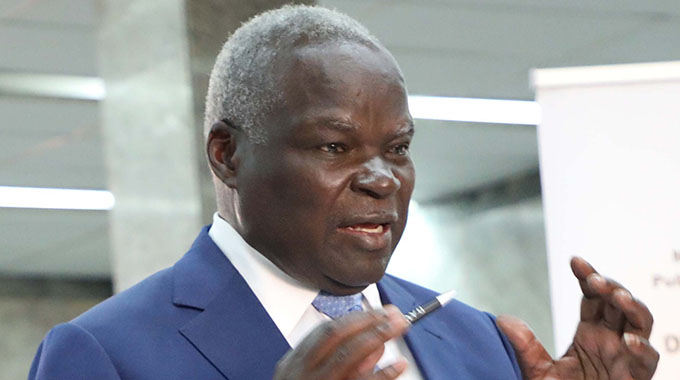
Rutendo Nyeve-Victoria Falls Reporter
THE Government has submitted the National Energy Compact to the World Bank, marking a significant milestone in Zimbabwe’s journey towards achieving universal access to clean, reliable and affordable energy by 2030.
The compact, which aligns with the country’s Vision 2030 and the global Sustainable Development Goal 7, sets out an ambitious roadmap to transform Zimbabwe’s energy sector. It focuses on increasing private sector participation, modernising infrastructure, and making a decisive shift towards renewable energy.
In an interview, Minister of Energy and Power Development July Moyo outlined the extensive consultative process that shaped the final version of the compact.
“We were in Dar es Salaam this year as we began initiating a process to get our compact accepted domestically and to gather feedback from the international community. As soon as we had our first draft, we convened a meeting in Harare with key stakeholders, including the private sector and Government entities. Over 200 participants attended our initial engagement, where we presented what our President had committed to in Dar es Salaam and outlined our intended course of action,” said Minister Moyo.
He emphasised that the process was defined by a spirit of collaboration.
“We actively sought stakeholder views, and those perspectives were shared with us. The World Bank, African Development Bank, and UN agencies in Zimbabwe all participated meaningfully in those discussions,” Moyo said.
This collaborative foundation led to the formation of an inter-ministerial committee, which secured Cabinet approval by March this year. Following this, the Government embarked on an international “roadshow” to refine the compact and attract global financiers.
“In April, we met with the World Bank during mid-term consultations and received valuable feedback. In June, we presented to a panel in London and were pleased with the input from British participants and development finance institutions,” he said.
Global engagement extended to Japan, where discussions focused on integrated power pools, and to Perth, Australia, for the Australian Down Under forum. A key highlight of these engagements, said the Minister, was showcasing Zimbabwe’s progress in de-risking energy investments, a critical factor in attracting foreign capital.
“One of our major investors from Australia, Invictus, who has conducted extensive oil and gas exploration, spoke to other investors about de-risking. This was a central theme for us, especially given the known volatility in our financial markets. However, we are operating under a multi-currency regime, which has provided us with some stability and operational space,” said Minister Moyo.
To further reassure investors, the Government has introduced concrete measures.
“The Minister of Finance, Economic Development and Investment Promotion and I have signed what we call a ‘Government Project Support Agreement’. This is now standard. Anyone looking to invest, whether in generation, transmission, or distribution, will benefit from our de-risking framework,” he said.
In a transformative policy shift, the Government has also opened the last mile of electricity distribution to private investment. This allows private companies to operate as mini-utility providers, purchasing power in bulk from the national utility and distributing it within designated zones, while integrating renewable sources such as solar and gas.
“We have opened up to the private sector to become mini-utility companies, entities that can take on specific areas and buy bulk from the national utility. The regulatory framework, which was previously limited to the public sector, is now accessible to private players,” he said.
Immediate benefits anticipated include the accelerated rollout of solar power projects, modernisation of the national grid, and a more resilient and diversified energy mix so reducing reliance on hydroelectric power and imports. For the ordinary Zimbabwean, this translates into a more stable electricity supply, increased economic activity, and new job opportunities within the green energy value chain.
With the compact now officially submitted to the World Bank, Zimbabwe has positioned itself as a serious and structured destination for energy investment, signalling a new dawn for a sector poised to become the engine of socio-economic transformation.