malvernmugadzikwa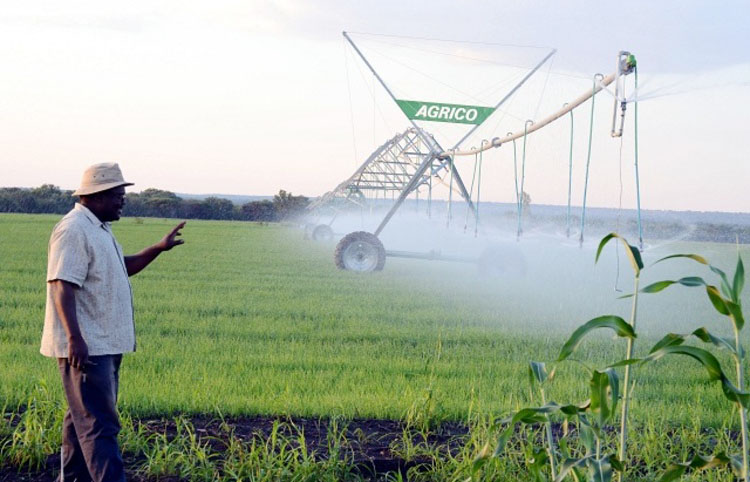
Kuda Bwititi and Theseus Shambare
LOCAL farmers last week achieved another milestone by delivering the most tobacco since commercial production of the cash crop began in Zimbabwe.
According to the Tobacco Industry and Marketing Board (TIMB), output by Monday last week had surpassed 259 million kilogrammes, the previous record realised in 2019.
Last year, their hard work similarly helped the country achieve a record haul of wheat.
“I have grown as a tobacco farmer over the past nine years. I started with 50 hectares but I currently have 120ha,” said Mr Nalan Ruzvidzo, a Marondera-based farmer.
“When we started farming, we never thought we would surpass what the white farmers produced, but now, we are very proud that we are beating their records.”
He is one of the thousands of indigenous farmers whose efforts are enabling Zimbabwe’s drive to reclaim its pride of place as an agricultural powerhouse, both in the region and on the continent.
The country is the largest producer of leaf tobacco in Africa and sixth-largest in the world.
Eighty-five percent of the crop, which is one of the country’s biggest foreign currency earners, is being produced by smallholder farmers, 60 percent of whom are beneficiaries of the Land Reform Programme.
Lands, Agriculture, Fisheries, Water and Rural Development Permanent Secretary Dr John Basera recently told The Sunday Mail that it was possible that this year’s output could even reach 300 million kg.
“. . . we can get to 300 million kg. We may not be good prophets, certainly, but we believe that we will get closer to that target,” he said.
Initially, the tobacco sector was projected to start producing 300 million kg annually by 2025.
Guided by the Tobacco Value Chain Transformation Plan, tobacco is expected to become a US$5 billion industry by 2025.
With rising tobacco production also comes increased incomes.
Mr Newmous Kupfuwamhandu, a tobacco farmer from Centenary, Mashonaland Central province, said he is now living a life that he never dreamed of before.
“My life has been transformed for the better from the time I started growing tobacco. I can now afford the lifestyle I used to fantasise about before the land reform programme,” he said.
Zimbabwe Commercial Farmers Union president Dr Shadreck Makombe said smallholder farmers have been integral to the resurgence in agriculture.
“Farmers have now mastered the art of agriculture. Good agronomic practices point to good results. We are looking forward to a bumper harvest in tobacco and other crops. We are positive that there is significant growth in our industry,” he said.
“Foreign currency retention increments to 85 percent are an incentive to our farmers. That is why we are witnessing good yields today.”
There has been a marked increase in the production of other crops, as well as livestock and milk.
Wheat
The Russia-Ukraine conflict affected most parts of the world.
The two countries, which are considered Europe’s breadbasket, account for 25 percent of the world’s wheat exports.
However, Zimbabwe was largely insulated from the resultant shocks, as it ramped up output and achieved wheat self-sufficiency by producing more than 380 000 tonnes of the cereal.
This year, the target was to put about 90 000 hectares under the crop, up from about 80 000ha last year, to achieve the new target of 408 000 tonnes.
The serial success in agriculture could mean Zimbabwe is beginning to reap dividends of the land reform programme.
The Second Republic, under President Mnangagwa, has revolutionised the sector through a litany of interventions that include timeous distribution of inputs; announcement of producer prices ahead of time; capacitating agricultural extension workers; adoption of conservation farming methods; and aggressively putting most of the agricultural land under irrigation, as part of a broad strategy to wean the industry from reliance on rain-fed agriculture, especially in the wake of climate change.
The overall target is to put 350 000 hectares under irrigation by 2025.
Shaking off negative stereotypes
But most importantly, success in the sector, which President Mnangagwa considers one of the central plinths in accelerating economic growth after years of regression, corrects the negative narrative that the land reform programme was a failure, and the suggestion that indigenous farmers did not have the ability to step up to the plate. Some think tanks in the West have long suggested that the negative publicity around Zimbabwe’s agrarian reforms was inaccurate.
In 2010, Professor Ian Scoones, from UK’s Institute of Development Studies at Sussex University, indicated that he was “genuinely surprised” to see how much activity was happening on the farms he visited during his 10-year study titled “Zimbabwe’s Land Reform, Myths and Realities”.
“What we have observed on the ground does not represent the political and media stereotypes of abject failure; but nor indeed are we observing universal, roaring success,” said the study at the time.
Current evidence suggests that local farmers are progressively outperforming the former commercial farmers.
It is a historic turning point for a country that has paid a steep price for daring to reclaim its land from minority white commercial farmers, who appropriated it during colonialism.



 Online Reporter