Online Reporter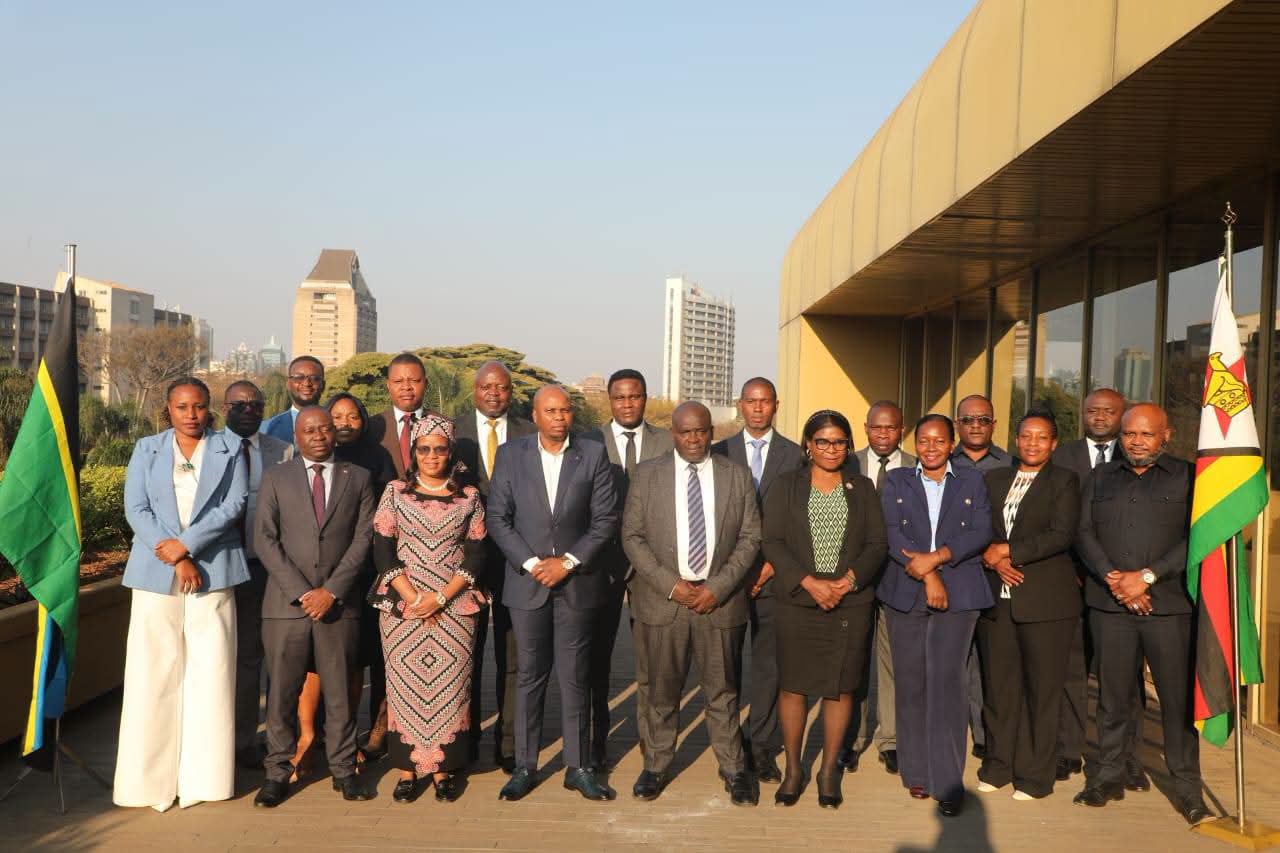
Freeman Razemba
Senior Reporter
OFFICIALS from Zimbabwe’s Ministry of Transport and Infrastructural Development and their Tanzanian counterparts met in Harare this week to review progress in cooperation on the establishment of a dry port terminal in Tanzania.
The meeting follows Tanzania’s allocation of 10 hectares of land at Kwala in the Coastal Region for Zimbabwe to establish the facility.
The dry port is expected to enhance cargo handling, sorting and storage services while facilitating and strengthening trade between the two countries.
Representing the Permanent Secretary, Engineer Joy Makumbe, the Ministry’s Head of Legal Services, Advocate Kingston Magaya, said the two countries were at an advanced stage in negotiations towards signing a Memorandum of Understanding (MoU).
He said the MoU would provide a framework for cooperation and pave the way for definitive agreements required for the implementation and operationalisation of the dry port project.
This development comes after Tanzania officially launched the Kwala dry port in the Pwani region in 2025, marking a major step in overhauling the country’s logistics landscape and addressing longstanding congestion at the Dar es Salaam seaport.
The inauguration followed the signing of operational agreements between seven strategic entities: the Tanzania Shipping Agencies Corporation (TASAC), Tanzania Ports Authority (TPA), Tanzania Railways Corporation (TRC), Tanzania Revenue Authority (TRA), the Tanzania Shipping Agents Association (TASAA), Tanzania East Africa Gateway Terminal Ltd. (TEAGL), and UAE-based logistics giant DP World.
Designed as a high-capacity inland logistics hub, the Kwala dry port will absorb up to 30 percent of the cargo volume currently overwhelming Dar es Salaam port. By doing so, it aims to reduce transit bottlenecks, improve cargo turnaround times, and enhance Tanzania’s competitiveness as a regional trade facilitator.
Strategically linked to the upgraded central railway line managed by TRC, the dry port will enable the rapid inland transfer of containers to key domestic and regional markets. Landlocked countries such as Rwanda, Burundi, and the Democratic Republic of Congo stand to benefit from improved access and reduced logistics costs via the Central Corridor.
According to the Tanzania Ministry of Transport, the Kwala facility is a cornerstone of Tanzania’s broader infrastructure strategy to build an integrated logistics ecosystem.
This includes expanding port capacities, modernising rail systems with both standard and metre-gauge tracks, and developing multimodal logistics platforms that support regional trade and industrialisation.
DP World’s involvement reflects growing international confidence in Tanzania’s vision to become a logistics gateway for East and Central Africa.
With the Kwala dry port now operational, the country is positioning itself as a pivotal hub for efficient cargo movement, regional connectivity, and economic growth.