
Tapiwanashe Mangwiro
Zimbabwe is intensifying efforts to curb the rising tide of counterfeits in local markets, a problem posing serious threats to consumer safety, business profitability and the country’s reputation globally.
Its five-year blueprint, the National Development Strategy 2 (NDS 2, 2026-2030, identifies the surge in substandard and fake goods as a critical challenge, stressing the urgent need for coordinated Government action.
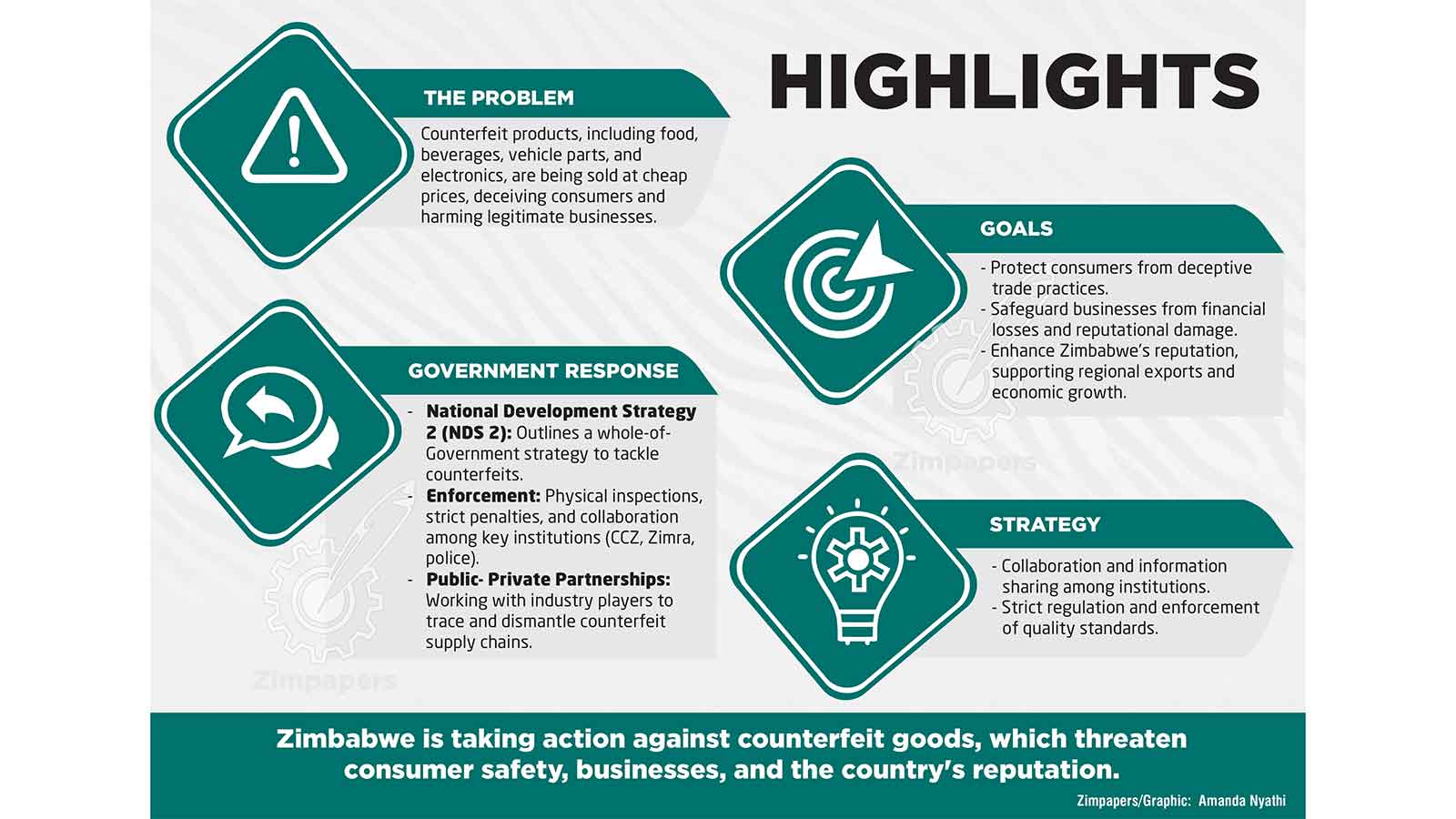
According to the policy document, counterfeit products, such as food and beverages, vehicle parts and electronic gadgets, often reach consumers well-packaged and cheaply priced, deceiving buyers while undercutting legitimate businesses.
“Counterfeits are undermining business operations and inflicting significant damage on financial health, brand reputation and customer trust,” the document states, further warning that these illicit goods also jeopardise Zimbabwe’s regional exports, weakening the image of Brand Zimbabwe.
- Related stories: https://www.heraldonline.co.zw/nds2-to-transform-industry-through-local-procurement-thresholds/
- https://www.heraldonline.co.zw/govt-zanu-pf-seized-with-conference-resolutions-nds2/
To tackle the problem, NDS2 outlines a whole-of-Government strategy that builds on anti-smuggling operations initiated under NDS1. Enforcement will be strengthened through physical inspections and strict penalties targeting the manufacture, importation, distribution, and sale of counterfeit goods.
The strategy emphasises enhanced coordination among key institutions, including the Consumer Council of Zimbabwe (CCZ), the Consumer Protection Commission, the Standards Association of Zimbabwe, the Zimbabwe Revenue Authority and the Zimbabwe Republic Police.
This collaboration will support joint operations, information sharing and prosecution of offenders.
Public-private partnerships will also play a key role, working closely with industry players and authorities to trace and dismantle counterfeit supply chains, protecting both consumers and legitimate enterprises.
NDS2 stresses that protecting consumers goes beyond regulating substandard imports. It includes shielding them from deceptive trade practices and ensuring manufacturers comply with national quality standards.