admin
admin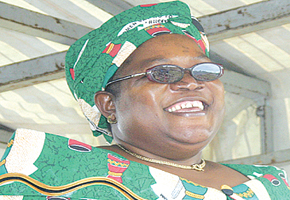
at the region’s heads of state summit in Mozambique next month, Vice-President Joice Mujuru has said.
The protocol is a legally binding document advocating gender equity in all levels of Government that was adopted by Sadc states in 2008.
It has 28 targets that are supposed to be achieved by 2015, chief of which is equal representation of men and women in leadership positions.
However, when it was crafted, it did not take into account the effects of climate change on gender justice.
The addendum commits governments to acknowledge that climate change affects women most and therefore mainstream gender in mitigation and adaptation efforts.
According to a Gender Links (GL) policy brief, 70 percent of the world’s poor are women. The brief highlights that while climate change affects everyone, the poor and vulnerable in Africa and other developing countries that have the least responsibility for climate change suffer the most, as they experience violence, exclusion and loss of sovereignty over natural resources.
“About 85 percent of people who die in climate-induced natural disasters are women while 75 percent of environmental refugees are women,” the policy brief reads.
In an interview at Merryland Farm in Umguza District on Wednesday, VP Mujuru said Zimbabwe was 100 percent behind the adoption of the addition of climate change and sustainable development to the Sadc Protocol on Gender and Development.
“Our Government is among those who take gender issues seriously. We do not just talk about women empowerment, but practise it. I am a living example as a woman who holds the highest office in the land, a traditional preserve for men,” said VP Mujuru.
She said a majority of national economies in the region were based on agriculture and it was up to Governments to ensure that women who did most of the work in homes were empowered to deal with the effects of climate change.
“As an agro-based economy, we are at the forefront of calling for the essential addendum to the Sadc Protocol. As a country, we shall adopt it and lobby other countries that may not realise its importance to do so,” she said.
VP Mujuru said about 75 percent of the country’s population lived in rural areas and a majority of whom were women who were eking a living for their families from subsistence farming.
“The addendum would compel governments in the region to ensure that these vulnerable groups get access to valuable information about how to commercialise their farming activities and contribute to the fiscus. It would also ensure that resources are deliberately set aside to assist and educate all vulnerable groups on how to cope with climate change and have sustainable development at the same time,” said the Vice-President.
VP Mujuru said such information would also introduce environmentally friendly farming practices that would preserve the environment for future generations.
“By empowering vulnerable groups, we remove their dependency on handouts from the national budget and free resources for other pressing Government programmes.
“We also increase the country’s revenue base as they would also start contributing to the Gross Domestic Product (GDP), thereby chasing poverty from their doorsteps. All countries that adopt the addendum stand to reap these and other benefits for their citizens,” she said.
In April, about 280 participants from 10 Sadc countries met at the 2012 Gender Justice and Local Government Summit held in Johannesburg, South Africa, and signed a petition appealing to Sadc leaders to adopt the addendum.



 Online Reporter