Chronicle Editor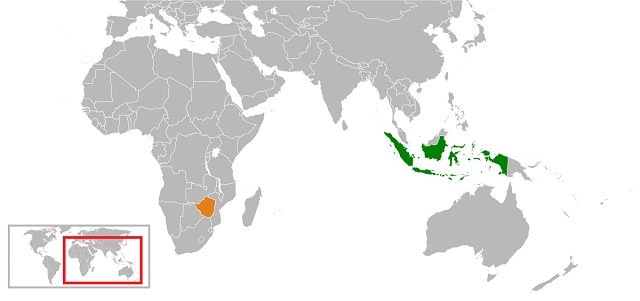
Golden Sibanda in Victoria Falls
TURKEY and Zimbabwe have signed a memorandum of understanding aimed at deepening bilateral trade and investment relations for mutual cooperation between the two countries.
The MoU was signed here last week and will provide a basis for establishing the Turkey-Zimbabwe Business Council to lead processes of creating business connections and partnerships for the mutual benefit for the two economies.
Turkey-Africa Business Council chairman, Mr Tamer Taskin, who led a delegation of five Turkish companies with over $3 billion worth of balance sheets, signed for Turkey while Confederation of Zimbabwe Industries (CZI) chief executive, Mr Clifford Sileya, signed for Zimbabwe.
It is expected that the business council will focus on activities such as identifying opportunities, determining products and services and creating a networking platform for concrete business deals and partnerships.
Mr Taskin said Turkey and Zimbabwe were “best placed strategically and geographically to benefit through trade and investments”.
He said there was a need to grow trade volumes, which stand at $16.5 million.
“The biggest asset in developing bilateral relations between Turkey and Zimbabwe is the existing motivation on both sides, as well as great potentials that both countries have in various economic sectors,” he said.
He pointed out that the business meetings held during the CZI congress served as a platform to better discover the economic potential of the two.
The meetings brought together Zimbabwean and Turkish companies in industrial oils, chemicals, clothing, agriculture, energy, livestock, IT, aluminum, steel, automotive, packaging and food, GRP pipe production, consumer electronics, construction machinery, carpet machinery and architecture.
Turkey is largely a free market economy driven by industry and service sectors. It also provides a bridge for Zimbabwean companies to 65 countries while Zimbabwe will give Turkey access to markets in Sadc and Comesa.
In line with Turkey’s African opening policy, the European country aims to improve its commercial and investment relations with Africa and increase the share of its companies on the African continent. To that end, the number of Turkish business councils with African countries has reached 41.
Turkey’s decade long economic boom has been accompanied by renewed interest in Africa and its unfettered desire to grow trade volumes with Africa saw trade triple to $16.7 billion in 2016 from $5.4 billion in 2003.
Its win-win approach towards Africa culminated in burgeoning relations on the continent. Its focus centres on political equality, mutual cooperation and economic development than dependence, tutelage and exploitation.
Mr Taskin said Turkey had taken time to grow trade and economic relations in Zimbabwe because relations were previously strong with North African countries while it knew little about countries south of the continent.



 Online Reporter