
Africa Moyo Deputy News Editor
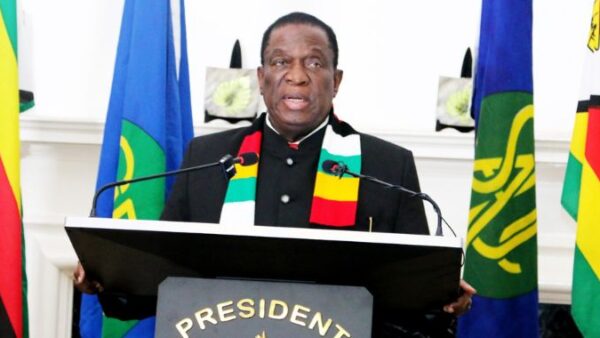
Zimbabwe is completing the development of its national carbon credit framework which is expected to guide businesses, benefit communities and protect investors who wish to establish carbon-trade businesses in the country, President Mnangagwa has said.
He said this in a speech read on his behalf by the chief director for environment, climate and meteorological Services in the Ministry of Environment, Climate, Tourism and Hospitality Industry Professor Prosper Matondi, during the Africa Business Forum held in Addis Ababa, Ethiopia, on Monday.
The forum ran under the theme: “Making carbon credits work for Africa”.
Carbon credits are built around allowing some producers to emit carbon dioxide, while others remove carbon dioxide from the atmosphere or slash their emissions.
The trade involves at the completion for the emitters to be paying the sequesters, such as forest owners, or the investors into green energy and the like some of their costs.
President Mnangagwa said the forum had come at an opportune moment, after the conclusion of the Climate Change Conference of Parties (COP27) held in Sharm el Sheik in Egypt last year.
At COP27, carbon credit trade (article 6) was adopted as a decision for implementation and many countries are putting in place plans, developing policies, legislation and partnerships on the business of carbon trade.
Other countries are re-examining the carbon trade deals they had made in the past, due to lack of results.
In most cases, the carbon business deals have not fulfilled the climate, economic, environmental and social goals they had promised.
President Mnangagwa said the carbon credit framework being crafted in Zimbabwe establishes institutions to enhance transparency of transactions and accountability to ensure that Zimbabwe gets “a fair share of the proceeds from the trade”.
“In addition, the framework also establishes a National Carbon Registry that is aligned and will assist the UNFCCC and parties that register the carbon credits independently to keep track of all credits issued out in Zimbabwe,” said the President.
“As a united front we can negotiate better carbon trade terms with the rest of the world to ensure that we meet the global goal of fighting against climate change that has affected the performance of our economies, and has led to loss and damage to life and property in recent times.
“So, I urge us all to embrace this business forum as one big step towards a United Africa that is willing to ensure that its resources, including carbon assets fully benefit the continent and its people.”
President Mnangagwa said Zimbabwe has vast opportunities for carbon trading in the energy sector through investments in solar, wind, mini-hydro and geothermal power generation.
Expansion of African economies in recent years, he added, has raised demand for electricity to levels beyond the current generation capacity.
The situation is expected to worsen in future as economies continue to grow, and the global move to cut down on fossil-fuel use as guided by the current climate change negotiations.
President Mnangagwa said in Zimbabwe, the energy sector has a ready market for carbon credits as the country is facing power challenges due to increased demand in all socio-economic sectors.
Energy efficiency, cleaner technologies in the manufacturing sector and the replacement of hydrofluorocarbons, presents further opportunities.
“In addition, there are opportunities in the transport sector to reduce emissions through partnerships in mass bus transit systems and railway transport with an emphasis on renewable energy,” he said.
“The rural areas have a lot of potential in relation to forest conservation and afforestation whilst the large urban areas generate a lot of waste and present opportunities for methane capture as well as waste-to-energy projects.”
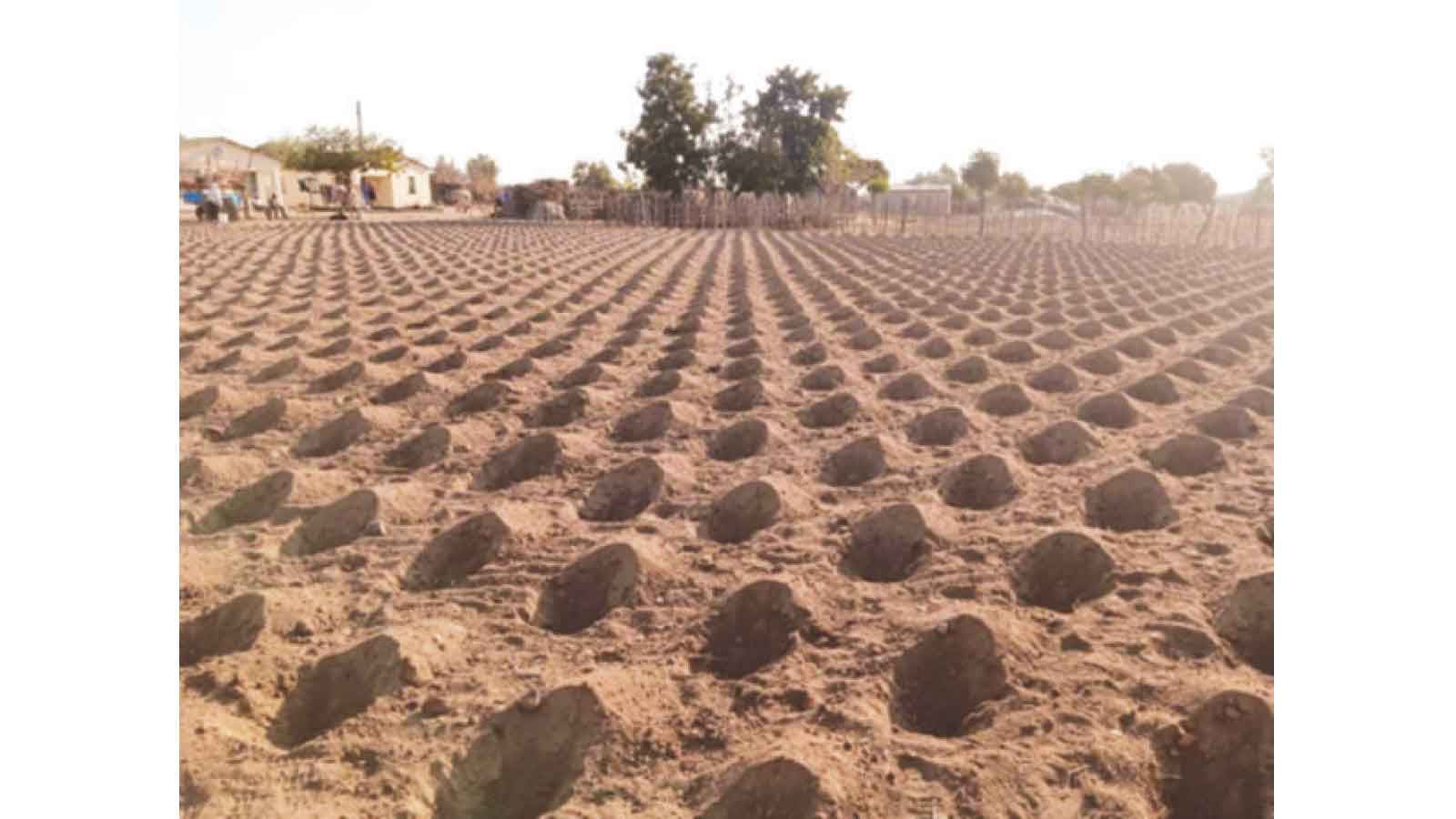
“In the area of agriculture, Zimbabwe could benefit and treble the impact of a food response strategy through programmes that reduce carbon. This can be achieved by unlocking businesses that promote conservation farming such as Pfumvudza/Intwasa and agroforestry. Such businesses consume less energy, provide for soils reconditioning, and production of organic nutrients that are vital for building healthy soils to sequestrate carbon.”
The success of national food security efforts in Zimbabwe has been due to the implementation of conservation farming in large measures, resulting in increased yields, in the last four seasons.
The conservation approach, when combined with maximising land use, forest cover, agro-forestry and use of organic cultures, significantly reduces the use of synthetic fertilisers and contributes to a reduction in emissions.
President Mnangagwa said the world was at a moment in the history of climate change, where everyone ought to examine their performance in addressing climate change.
He said Zimbabwe had complied with its reporting through its nationally determined contributions, low emissions development strategy and a raft of other policy measures.
“Carbon trade business has become a key additional measure not only to trigger finance, but also assist in the global emissions reduction,” President Mnangagwa.
“The outcomes so far are below expectations and we must dialogue and agree on a way forward in the implementation of carbon credits.
“Looking at the ability of the carbon trade to address climate challenges, it is true that Africa is gifted with an abundance of natural resources in the form of forests, wildlife, water, good agricultural soils and minerals. These resources play a vital role in carbon sequestration.”
The world, and in particular Africa, faces deep climate-related challenges caused by global warming that is now 1.1 degrees above historic norms, and with the current business-as-usual, is expected to be 4.2 degrees above by 2030.
The capacity of Africa’s natural resources (forests and wetlands) to sink carbon is severely challenged. Carbon trading is seen as playing a central role in delivering broad-based and cost-efficient reduction in greenhouse gas emissions and achieving the climate targets of the Paris Agreement of 2015.
Introduction of carbon trade has been slow, complex and misunderstood globally and in particular, in Africa.
At COP19 held in Poland in 2013, delegates adopted the seven decisions of the Warsaw Framework for Reducing Emissions from Deforestation and Forest Degradation (REDD+).
The agreement has widely been recognised as a breakthrough in negotiations providing clarity on the mechanism to introduce carbon trade sinks from forests.
Some countries used the decisions to establish REDD+ projects such as the Kariba REDD+ in the case of Zimbabwe, which have been used for trading forests as carbon sinks.
For some countries, this became the foundation of the current carbon trade business put into consideration by the Paris Agreement in 2015 and now being implemented by the COP27 Sharm el Sheik implementation programme.
President Mnangagwa said the US$100 billion promise made by wealthy nations at COP26 in Glasgow, Scotland, for climate finance to meet Africa’s needs, appeared to “have lost momentum at COP27”.
The rich nations have cited a variety of reasons why they are unable to fulfil the US$100 billion promise, including that they were also confronted by climate change issues and others.
“Sadly, the world is getting into a worse climate crisis and extreme events such as the unfortunate earthquake that killed many people in the Republic of Türkiye and Syria (may their souls rest in peace),” President Mnangagwa.
“In addition, we are emerging from economic recessions induced by Covid-19. The climate events continue to affect countries and require financial resources for an emergency and for long-term responses.
“I am pleased that the COP27 agreed to the Loss and Damage Fund, and we would like the UNFCCC to make it operationalised as soon as possible. The carbon trade business can offer relief, if the objectives are met with better compliance on the common objectives of reducing emissions.”
The present fight to address climate change and the associated need for low carbon development, provides a great avenue for Africa to negotiate better trade terms with the rest of the world.
This is in view of the abundance of carbon trading opportunities in the continent’s natural forests, reforestation programmes as well as renewable energy related to solar, wind, biogas and geothermal power, and waste to energy programmes.