Vusumuzi Dube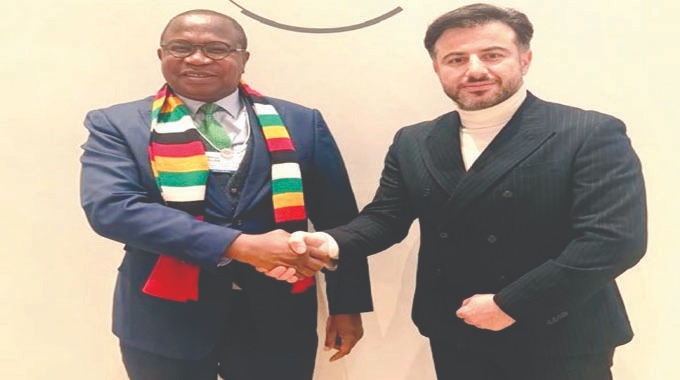
Nqobile Bhebhe, Zimpapers Senior Writer
Zimbabwe’s delegation to the 2026 World Economic Forum (WEF) in Davos, Switzerland, led by Finance, Economic Development and Investment Promotion Minister Professor Mthuli Ncube, used the global platform to champion the country’s economic interests, unlock strategic partnerships and position the nation firmly on the path towards Vision 2030.
Prof Ncube held several high-level engagements with strategic global entities.
The Davos engagements formed part of a broader strategy to advance Brand Zimbabwe, while ensuring the country adapts to rapidly evolving global economic dynamics through innovation, research and stronger financial systems.
“Following a high-impact week at the 2026 World Economic Forum, Hon Professor Mthuli Ncube championed Zimbabwe’s interests on the global stage, securing strategic investment prospects aligned with the nation’s march toward Vision 2030.
“His central message was clear and urgent: the world has shifted dramatically in recent months, and Zimbabwe must respond by strengthening its own capacity and capabilities to secure a better future for its citizens,” the ministry said in an update.
At the heart of Minister Ncube’s message was the importance of continental solidarity and integration as a buffer against global shocks.
“Professor Ncube emphasised the power of a united continent, applauding initiatives such as the African Continental Free Trade Area (AfCFTA) as Africa’s strongest pathway to shared prosperity and sustainable development.
“As part of advancing Brand Zimbabwe, the Minister held a series of high-value engagements with investors and partners, including LG Sonic (Netherlands), discussions on a proposed US$20 million facility for the rehabilitation of Lake Chivero and sewer reticulation systems, Lamar Holdings: productive talks with the private infrastructure investment firm on opportunities in road construction, energy, and power generation.”
The minister’s schedule in Davos also featured strategic development finance and regional policy engagements.
Prof Ncube held high-level talks with the President of the Arab Bank for Economic Development in Africa (BADEA), Abdullah Kh. Almusaibeeh.
Their discussions cemented the rapid expansion of cooperation between Zimbabwe and BADEA, particularly in priority sectors such as infrastructure, energy, agriculture, industrialisation, and social development.
BADEA continues to play a pivotal role in strengthening Arab-African economic cooperation through, concessional financing, private sector support, trade promotion, technical assistance, capacity‑building initiatives.
Zimbabwe has already benefited significantly from this partnership through bilateral development financing, the regional SADC-BADEA co-operation framework, and investment promotion platforms that have supported the country’s progress under NDS1.
As Zimbabwe advances the implementation of NDS2, the deepening of this strategic partnership is set to further accelerate national development, reinforce regional integration, and unlock new opportunities for mutually beneficial growth.
Added to that, he held talks with digital tax experts, consultations on refining Zimbabwe’s digital services taxation framework.
The new tax is a withholding tax on payments made for digital services supplied by non-resident companies.
It targets foreign digital platforms that earn money from Zimbabwean users but do not have a physical presence in the country.
These include services such as online advertising platforms, streaming services, cloud software subscriptions, and digital marketplaces and apps operated from outside Zimbabwe.
“Zimbabwe received commendation for its pioneering work on the Digital Services Withholding Tax and other innovative fiscal tools that continue to strengthen Government financing for key programmes,” the ministry noted.”
The WEF platform further enabled Zimbabwe to benchmark its policies against global trends and recalibrate its economic strategy in line with emerging realities.
“The Forum offered policymakers a critical window into global economic shifts, enabling Zimbabwe to craft informed, resilient, and home-grown policy responses. With global growth projected to hold steady and gold prices expected to hit record highs, Minister Ncube remains optimistic about Zimbabwe’s domestic growth prospects,” the ministerial update added.
In line with this outlook, the Government is deepening its focus on knowledge-driven policy formulation and future-oriented sectors to sustain economic transformation.
“Zimbabwe is thus intensifying efforts in economic research, modelling, fiscal innovation, and emerging technologies, particularly Artificial Intelligence. Professor Ncube also reiterated the need to build a robust and sophisticated capital market, a cornerstone for long-term economic stability and growth in line with the national developmental agenda.”
The Davos mission underscored Zimbabwe’s resolve to engage constructively with the international community, leverage innovation and strengthen domestic institutions as it accelerates progress toward upper-middle-income status by 2030.



 Online Reporter