Online Reporter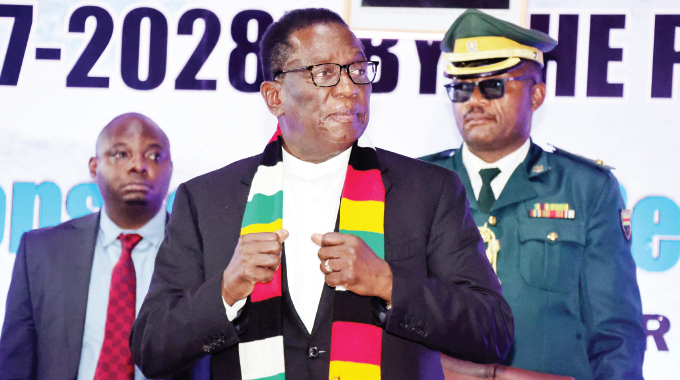
Richard Muponde, Zimpapers Politics Hub
PRESIDENT Mnangagwa has officially launched Zimbabwe’s bid for a non-permanent seat on the United Nations Security Council (UNSC) for the 2027–2028 term, signalling the country’s intention to play a more assertive role in global peace and security.
The event, held on Tuesday in Harare, was a declaration that Zimbabwe’s campaign is not merely a national pursuit but a continental one, supported by both the Southern African Development Community (SADC) and the African union (AU).
“A vote for Zimbabwe is a vote for peace, multilateral cooperation, and a more inclusive global order,” President Mnangagwa told delegates.
The campaign will run under the theme, “Advancing 21st Century Solutions for Global Peace and Security Through Multilateralism.”

The Role of Non-Permanent Members
Non-permanent members of the UNSC serve two-year terms and are elected by the UN General Assembly.
While they do not hold veto power like the five permanent members (the United States, United Kingdom, France, Russia, and China), their participation ensures diverse representation in global security matters.
These members contribute by participating in deliberations and resolutions on global conflicts, supporting the establishment and financing of peacekeeping missions, voting on sanctions and authorisations of force, and ensuring that security challenges affecting their regions are prioritised. If elected, Zimbabwe would gain a platform to elevate African and developing world perspectives in global security debates.
Advancing Peace and Security
Zimbabwe has pledged to prioritise peace and conflict prevention. President Mnangagwa emphasised the country’s focus on silencing guns, fighting terrorism, and combating organised crime, aligning Zimbabwe with Africa’s broader Silencing the Guns Strategy.
“Zimbabwe will work with members of the UN Security Council and other members of the UN to promote the peaceful settlement of disputes,” said President Mnangagwa.
He also stressed the importance of addressing the root causes of instability such as poverty and climate-induced insecurity.

This approach reflects the recognition that sustainable peace cannot be separated from development. By integrating economic stability and environmental resilience into security discussions, Zimbabwe intends to champion solutions that address underlying drivers of conflict.
Multilateralism at the core
The theme of Zimbabwe’s campaign underscores multilateralism as the backbone of its intended approach. Non-permanent members often use their diplomatic leverage to push for collective solutions, and Zimbabwe has signalled that it will act as a “trusted, proactive, and solutions-driven partner.”
This strategy positions Zimbabwe not just as an African voice but also as a representative of the developing world.
In a period marked by geopolitical tensions and divisions among the permanent members, non-permanent members can play a balancing role by building consensus and pushing for inclusive dialogue.
Africa’s Collective Support
Zimbabwe enters the campaign with strong backing from its neighbours and regional bodies. Both the AU and SADC have unanimously endorsed Zimbabwe’s candidature, highlighting a sense of African solidarity.
This regional endorsement strengthens Zimbabwe’s legitimacy and ensures that its bid is framed as part of Africa’s larger quest for stronger representation in global decision-making.
Historically, Africa has sought greater influence at the UN, including calls for permanent seats for the continent.
A successful bid by Zimbabwe would reinforce this push for inclusivity.
Diplomacy, Legitimacy, and Influence
While Zimbabwe would not wield veto power, its influence would be diplomatic. Non-permanent members often shape negotiations, propose draft resolutions, and lobby for consensus on pressing issues.
Participation on the Council would also allow Zimbabwe to promote international law by advocating for stronger adherence to the UN Charter, enhance legitimacy by ensuring that the voices of smaller states and African countries are included in high-level decision-making, and showcase diplomatic leadership by projecting the country as a responsible international actor committed to peace.
President Mnangagwa framed this role as extending beyond Zimbabwe itself. The bid for the seat is not solely for Zimbabwe; it is for Africa, the developing world, and all nations that desire peace, justice, and equality, he said.
Elections and the Road Ahead
The election for the UNSC non-permanent seats will take place in June next year, when the UN General Assembly votes by secret ballot. Zimbabwe will be vying for one of the two seats allocated to Africa.
If successful, the country will serve from January 2027 to December 2028. During that time, Zimbabwe will have an opportunity to shape decisions on some of the most pressing global crises, from conflicts and humanitarian emergencies to climate-related security risks.
Zimbabwe’s bid for a UNSC seat is both symbolic and strategic. Symbolic because it represents the country’s re-emergence on the international stage with the backing of its region and continent.
Strategic because it would allow Zimbabwe to advance African priorities, champion multilateralism, and push for sustainable solutions to peace and security challenges.
As President Mnangagwa put it, the campaign is a rallying call. Zimbabwe’s commitment to peace is unshakeable.
We recognise that peace is the cornerstone of sustainable socio-economic development, and we stand ready to contribute our experience and leadership to the mission of the Security Council.
All patriotic Zimbabweans should rally behind the nation as it conquers such milestones as a seat on the UNSC.