Online Reporter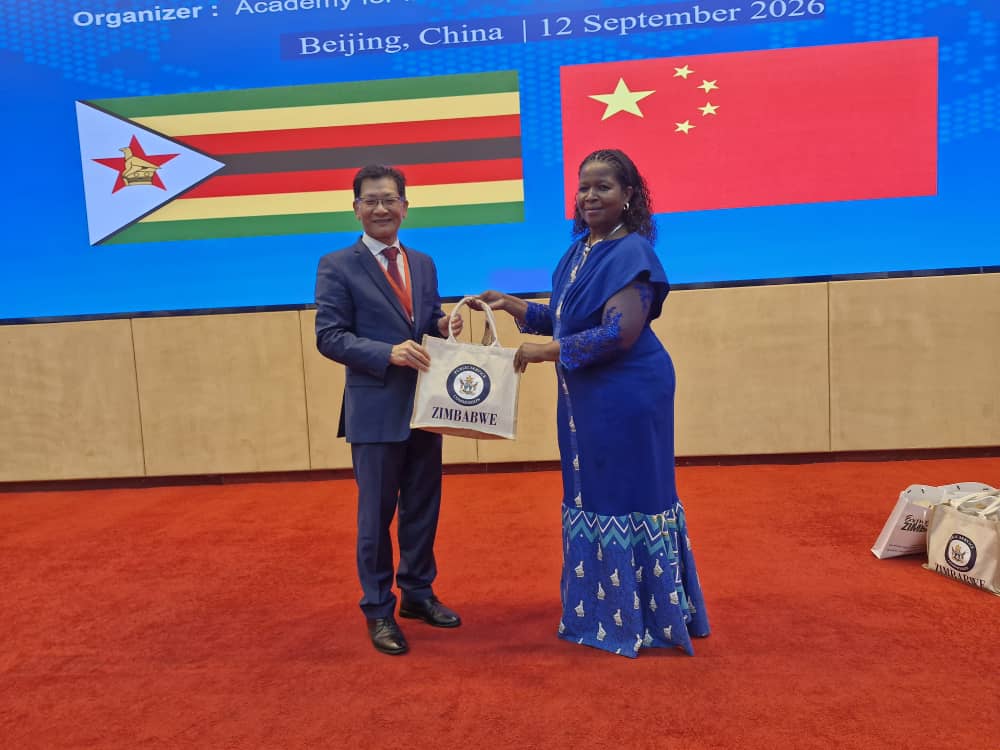
Vusumuzi Dube in Beijing, China
THE Zimbabwe-China Bilateral Ministerial Seminar for Senior Public Management Officials has ended with Zimbabwean officials calling for lessons from China’s development experience to be translated into practical action, stronger institutions and measurable results for citizens.
The 12-day seminar, held from September 1 to 12, exposed senior Zimbabwean officials to China’s approaches to long-term development planning, governance, infrastructure development, industrialisation, digital transformation, rural revitalisation, tourism and public-sector capacity building.
The seminar was organised by the Academy for International Business Officials (AIBO), an institution under China’s Ministry of Commerce, with the Zimbabwean delegation led by Deputy Minister of Public Service, Labour and Social Welfare, Advocate Mercy Dinha.
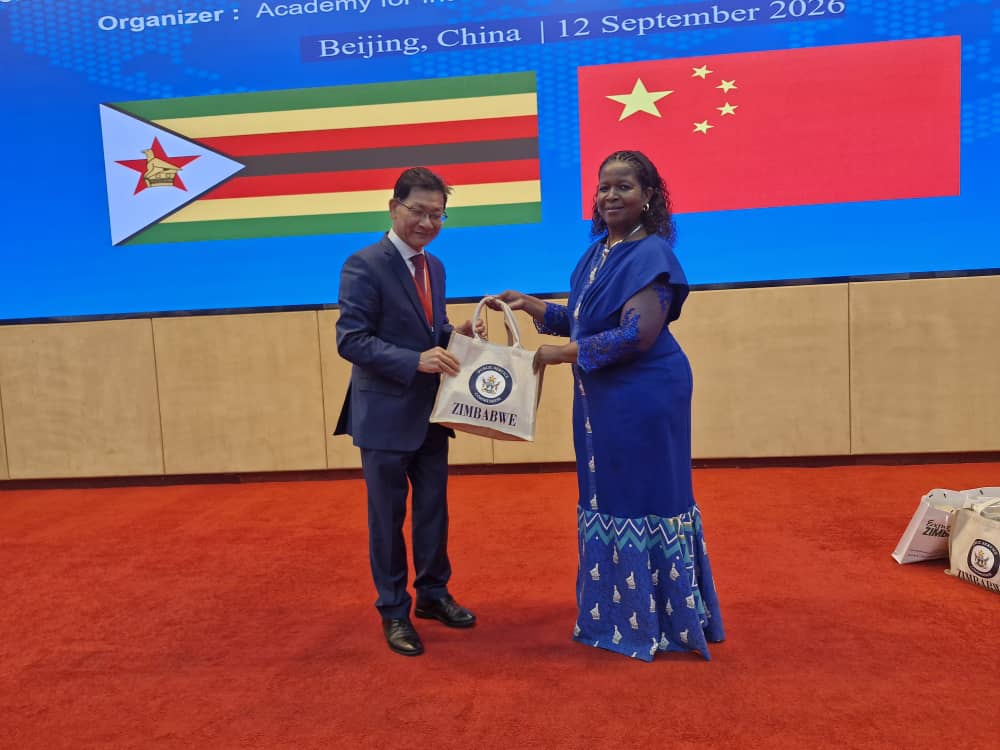
Speaking during the closing ceremony Public Service Commission Commissioner Rosemary Mukogo said the delegation was returning home with new knowledge, perspectives and relationships, as well as a deeper appreciation of the systems and implementation practices underpinning China’s development.
“Our delegation had arrived in China with expectations, questions and a strong desire to learn but we leave with new knowledge, new perspectives, new relationships and, most importantly, a deeper appreciation of the systems and implementation practices that have contributed to China’s development,” said Commissioner Mukogo.
She said the programme had demonstrated the importance of translating long-term national vision into practical implementation, with sessions on Chinese-style modernisation and development planning highlighting the role of technological innovation, modern infrastructure, environmental sustainability and cultural development.
The field visits, she said, brought the lessons from the classroom into practical perspective.
The delegation visited the Museum of the Communist Party of China and the Great Wall, among other sites, gaining insights into leadership, institutional continuity, heritage preservation, tourism and local economic development.
“For Zimbabwe, these experiences challenge us to think differently about our own assets — from Great Zimbabwe, Victoria Falls and Matobo to our cities, cultural spaces and tourism destinations,” Commissioner Mukogo said.
The delegation also visited China Railway Engineering Group, where officials were exposed to the practical aspects of infrastructure development.
Commissioner Mukogo said the experience demonstrated that infrastructure should be viewed as an enabler of broader economic development rather than an end in itself.
“Infrastructure is an enabler of productivity, industrialisation, trade, urban development and effective public service delivery,” she said.
The visit to Shengxin Lithium Group was also significant for Zimbabwe, particularly given the company’s operations in the country through the Sabi Star Lithium Mine.
Commissioner Mukogo said the engagement reinforced the need for Zimbabwe to move beyond the extraction of natural resources towards processing, beneficiation, value addition and the development of domestic industrial capacity.
The delegation further visited the Chengdu Research Base of Giant Panda Breeding and Yilong County, where it gained insights into conservation, scientific research, tourism, local governance, rural revitalisation and place-based development.
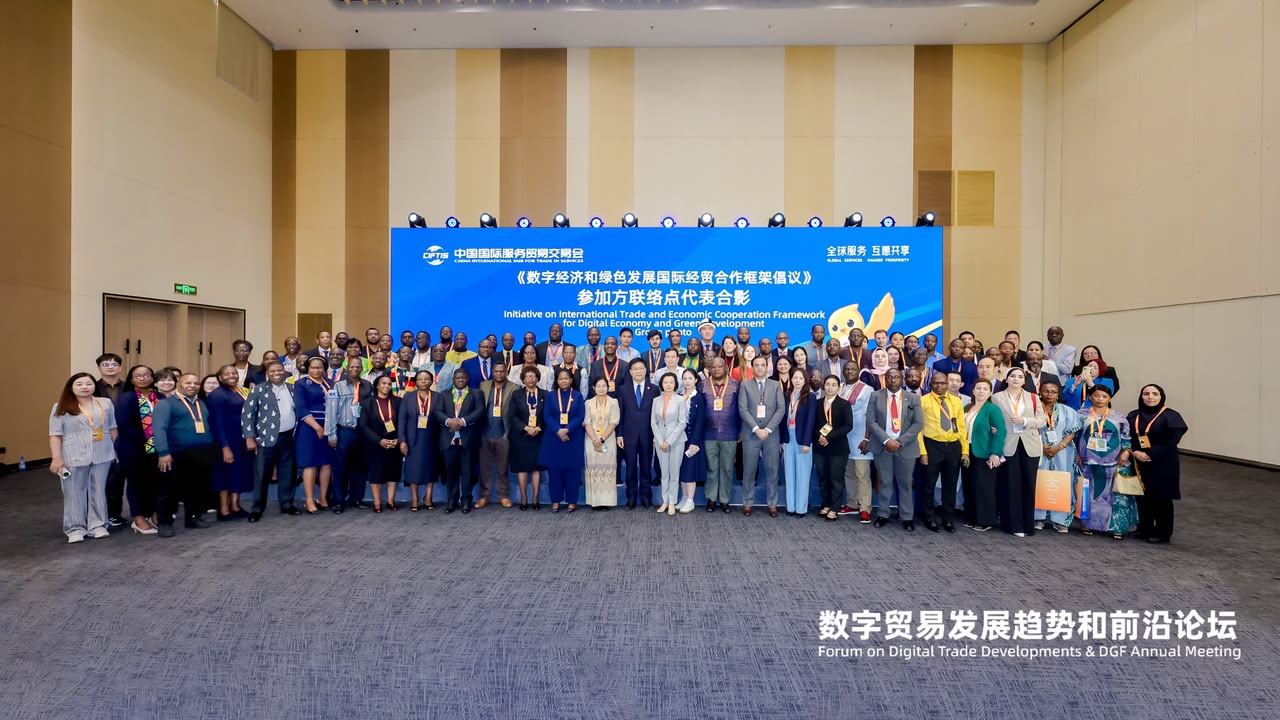
Officials also participated in the China International Fair for Trade in Services (CIFTIS) at Shougang Park and the CIFTIS Conference on Innovation and Development of Digital Trade in Xiong’an, where they were exposed to developments in digital trade, Artificial Intelligence, digital and green industrialisation, smart-city platforms and international cooperation.
“All these engagements demonstrated the increasing importance of connecting government policy, technology, business, innovation and international cooperation,” said Commissioner Mukogo.
She said the overarching lesson from the seminar was the importance of implementation.
“China’s development experience cannot be attributed to one policy, one project or one institution. The strongest message for us is therefore simple; development requires the capacity to implement,” she said.
“Effective implementation requires capable institutions, competent and ethical public servants, effective leadership, coordination across government, performance management, innovation and continuous learning.”
The seminar also provided an opportunity for Zimbabwe to reflect on strengthening its own public administration institutions, particularly the Zimbabwe Institute of Public Administration and Management (ZIPAM).
Commissioner Mukogo said Zimbabwe’s exposure to AIBO and the Yilong County Executive Leadership Academy offered an opportunity to consider how the country could further strengthen and modernise its public-sector capacity-development institutions.
She challenged the delegation to ensure that the lessons gained in China translated into tangible results once officials returned home.
“For our delegation, perhaps the greatest test of this seminar begins after we leave China,” she said.
“The real question is not simply what did we learn? The more important questions are: What will we adapt? What will we implement? What will we change? And what measurable results will Zimbabwean citizens see?”
In an interview on the sidelines of the closing ceremony Chief Director in the Ministry of Information, Publicity and Broadcasting Services, Mr Jonathan Gandari, said the seminar had also exposed Zimbabwean officials to a structured approach to national development, particularly the importance of leadership, planning and implementation.
“I think this has been a very important engagement in the sense that we have been exposed to a structured, well-configured way of developing our country,” he said. “What is very important, what is very striking here is the role of leadership in development, the role of planning and the role of making sure that what will have been planned is implemented and the tools to manage that development, that has been very, very important for us.”
Mr Gandari said officials had also drawn lessons on leadership humility and the importance of leaders remaining connected to the people.
“Also, what has been important for us is to learn the humility of leadership, that the leadership is in the people, that the leadership leads by example and this is very important,” he said.
He said the lessons gained during the seminar would be consolidated into a report for submission to the respective principals of members of the delegation, with some recommendations potentially proceeding to Cabinet for consideration.
“From here we are going to produce a report. The leaders of this meeting, of this delegation, are going to present this report to their respective principals,” said Mr Gandari.
He noted that the delegation’s diverse composition, which included parliamentarians, public servants and ministers, would allow the lessons to be taken forward through different institutional platforms.
Mr Gandari said the seminar was likely to form part of a series of engagements targeting different skills and categories of Zimbabwean leadership.
“Given what has been described by our Chinese counterparts here as five-star ironclad friendship, we see this being sustained going forward,” he said
Meanwhile, the Director of the Coordination Office of AIBO, Mr Shengyan Yang, said the seminar had strengthened mutual understanding between China and Zimbabwe while providing participants with practical insights into China’s development experience.
“I am confident that your stay in China has been rewarding and fruitful, not only in terms of China’s experience in economic development and governance and creative inspiration, but also in cultural exchanges and the precious friendships you have forged along the way in Beijing, Chengdu, Yilong, Langfang and Xiong’an,” Mr Yang said.
He said the programme had provided an important platform for exchanging views and sharing China’s experience in areas of common interest, including poverty reduction, rural revitalisation, economic and social development, digital transformation, green development, service trade and cross-border e-commerce.
Mr Yang stressed that the objective was not simply to transfer knowledge, but to equip participants with practical ideas that could be adapted to Zimbabwe’s own development priorities.
“As a timeless Chinese philosophy goes, ‘Teach, don’t just give,’ and teaching a man how to fish is more valuable than giving him a fish,” he said.
“As you return home, you will carry with you not only the knowledge and the experience, but also the genuine friendship of the Chinese people.”
Mr Yang described the Zimbabwean participants as important bridges in public-administration dialogue between the two countries and urged them to continue promoting the longstanding friendship between China and Zimbabwe.
“It is my sincere hope that the perspectives gained here will serve as valuable reference for your work back home, supporting Zimbabwe’s development agenda and delivering real benefits to the people of Zimbabwe,” he said.
The seminar concluded with both sides expressing confidence that the knowledge, relationships and institutional links established during the programme would contribute to stronger China-Zimbabwe cooperation and support Zimbabwe’s development agenda.