Online Reporter
Nqobile Bhebhe, Zimpapers Business Hub
Zimbabwe’s mining sector is entering a new era one defined by sustainability, technological innovation and value addition as Government, investors and industry leaders chart the course for a greener and more inclusive industry.
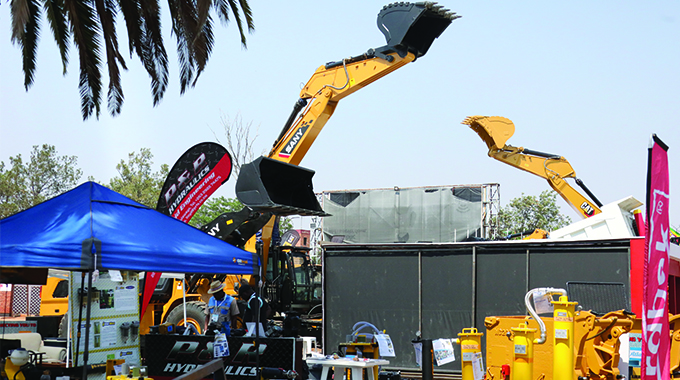
This vision took centre stage at the 27th edition of the Mining, Engineering and Transport Expo (Mine Entra 2025) held in Bulawayo last week under the theme: “Beyond Extraction: Sustaining the Future of Mining.”
This year’s edition positioned sustainability at the heart of discussions, underscoring the need to balance economic growth with environmental protection and social inclusion.
Since its launch in 1995, Mine Entra has grown into Zimbabwe’s leading platform for promoting innovation, investment and collaboration across the mining, engineering and transport sectors.
Addressing delegates, Mines and Mining Development Minister Winston Chitando, said Zimbabwe’s mining industry is growing at a “very fast pace,” with the drive towards value addition and beneficiation beginning to bear tangible results.
“By early next year, there will be production of lithium sulphate among other notable initiatives in the mining sector,” he said.
However, the minister stressed that the sector’s growth must be responsible and inclusive.
“There is no space, there will not be space for players who cannot follow the ethos and principles of responsible mining,” said Minister Chitando.
He outlined the country’s Responsible Mining Initiative, whose first phase focuses on enforcing existing laws, while the second still being finalised will strengthen regulations and penalties.
Minister Chitando also urged stakeholders to promote local manufacturing of inputs and products, ensuring that more value is retained within the country.
“The future of mining is where we have stakeholders who follow the ethos and principles of responsible mining,” he said.
Stakeholders at the conference agreed that sustainability is no longer a peripheral concern but a strategic necessity for the sector’s long-term viability.
A participant, Ms Monalisa Mlotshwa, emphasised that responsible mining practices safeguard both the environment and the livelihoods of communities.
“Sustainability is not just about compliance; it’s about ensuring that the communities hosting our mines also thrive. The next phase of Zimbabwean mining must integrate clean technologies, renewable energy and responsible land management,” she said.
Environmental expert, Mr Donald Dururu, echoed similar sentiments, noting that sustainable mining must prioritise rehabilitation, emission reduction and water efficiency.
“We are witnessing a positive shift as more companies adopt renewable energy sources and invest in land rehabilitation. Sustainability is not only an environmental issue, it is an economic and social imperative,” he said.
With global investors increasingly demanding ethically sourced minerals, adopting ESG (Environmental, Social, and Governance) standards is now crucial for market access and investor confidence.
“Global investors are now more conscious of ESG compliance. Our goal is to ensure that Zimbabwean minerals meet global benchmarks for responsible production. This not only boosts investor confidence, but also opens access to premium markets,” said Mr Dururu.
Mining companies exhibiting at Mine Entra 2025 showcased cutting-edge technologies for energy efficiency, waste management, and environmental monitoring, further demonstrating the sector’s shift towards modern, sustainable operations.
Beyond environmental stewardship, stakeholders stressed that sustainability must also be people-centred, ensuring communities benefit through jobs, infrastructure and social investment.
A small-scale miner from Filabusi, Mrs Simangele Nxumalo, called for greater support for artisanal and small-scale miners.
“Small-scale miners contribute immensely to our gold output, but they need support to adopt safer, cleaner and more sustainable methods. Empowering them through training and technology is essential to a sustainable future,” she said.
Several mining firms have rolled out corporate social responsibility programmes focusing on education, healthcare and infrastructure development, fostering trust and social stability in mining communities.
With global demand for lithium, platinum and other critical minerals surging, Zimbabwe’s mining industry is well-positioned for sustainable, value-driven growth.
“Our vision as small-scale miners is to make Zimbabwe a key global supplier of processed minerals produced in a clean, responsible, and ethical manner. Sustainability is the foundation upon which that future will be built,” said Mrs Nxumalo.
The country is expanding smelting capacity, investing in refinery projects and incentivising local processing — efforts aligned with Vision 2030 and the National Development Strategy 1 (NDS1).
Buy Zimbabwe general manager, Mr Alois Burutsa, called for deeper local procurement within the sector.
“In 2024, the mining sector order book was US$2.7 billion, but only US$540 million was spent locally. This is a worrying statistic. The challenge is how do we convert this US$2,1 billion to local suppliers,” he said.
Chamber of Mines of Zimbabwe president, Mr John Musekiwa, said Mine Entra 2025 came at a time when the industry is expected to deliver more value to Government, communities, employees and shareholders.
He noted that over a million Zimbabweans participate in small-scale mining, supporting more than two million livelihoods.
“The sector’s impact goes well beyond the mine site. Every dollar generated in mining creates three more in other parts of the economy through supply chains, services, transport, power generation and manufacturing,” he said.
Mr Musekiwa chronicled new investments in beneficiation and capacity expansion, particularly in green technologies.
“Lithium producers are moving towards producing lithium sulphate for export, with some indicating that by the end of 2025, they will already be exporting.
“These developments reflect the industry’s positive response to Government’s value-addition policies,” he said.
He also noted growing investments in solar energy to meet rising power demand as beneficiation expands.
“The Chamber, working with Government, continues to promote local content by supporting local enterprises and encouraging mining companies to source locally where possible,” he added.