Patrick Chitumba
ZIMBABWE is courting Chinese investors to establish local mineral processing and manufacturing industries as the country seeks to move away from exporting raw materials and maximise economic benefits from its vast natural resource endowment.
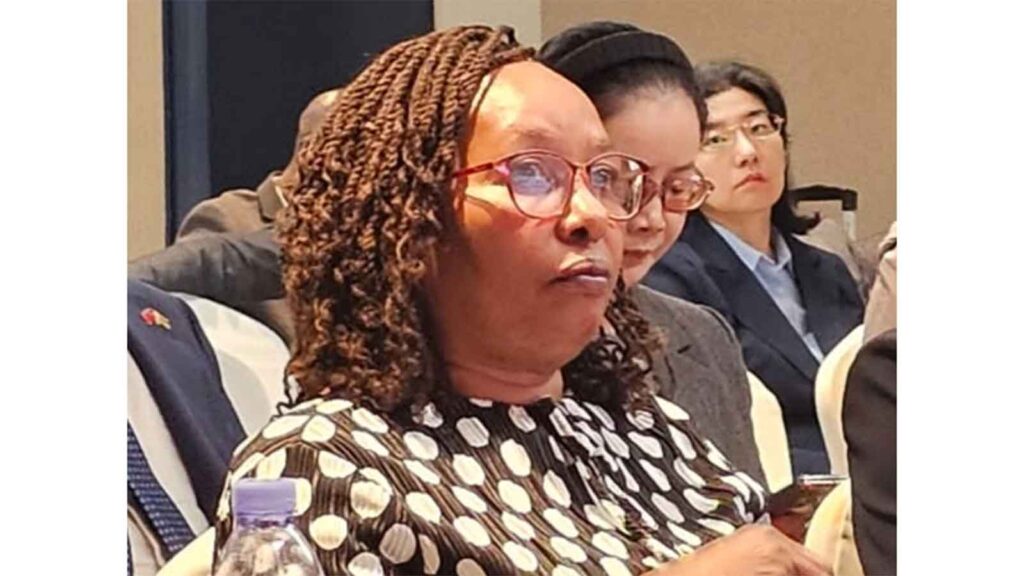
Minister of State for Provincial Affairs and Devolution for Midlands Province Owen Ncube said Zimbabwe was offering investment opportunities in lithium, platinum, gold and nickel beneficiation, as well as renewable energy and industrial manufacturing.
Addressing the Zimbabwe-China Business Forum on the sidelines of the China International Import Expo 2026 in Shanghai, China, Minister Ncube said the country was keen to transform its trade relations with China into sustainable partnerships that support local industrialisation, create employment and strengthen domestic production.
“This platform represents a vital gateway to integrate into global value chains and transform trade relationships from mere resource extraction to sustainable, value-added partnerships as we navigate an ever-evolving global economic landscape of unique natural and man-made shocks,” said Minister Ncube.
He said Zimbabwe’s vast mineral deposits presented significant opportunities for Chinese companies seeking to invest in industries supporting the global transition towards clean energy.
“As the world accelerates towards green energy, Zimbabwe stands as a pivotal global player with vast reserves of lithium, platinum, gold and nickel.
“We are actively moving away from raw material exports towards local value addition and beneficiation, presenting lucrative industrial manufacturing opportunities for foreign investors,” he said.
Minister Ncube said the Government was inviting Chinese businesses to partner local companies in establishing industries that would process the country’s natural resources and produce finished and semi-finished goods for domestic and international markets.
“We invite Chinese enterprises and global partners to collaborate with us in joint ventures, industrial park developments, renewable energy projects and digital technology, among several other sectors,” he said.
He said China’s zero-tariff policy on imports from 53 African countries had created opportunities for Zimbabwean producers to increase exports and access the Chinese market.
“This Business Forum, being held against the backdrop of China’s zero-tariff policy that eliminates import tariffs on goods from 53 African countries, underscores Zimbabwe’s commitment to economic diplomacy, open markets, globalisation and shared prosperity,” said Minister Ncube.
He said the policy presented an opportunity for Zimbabwe to expand its export base, particularly in agriculture, where the country had established a reputation for producing high-quality commodities.
“Zimbabwe is globally renowned for producing some of the finest tobacco, organic blueberries, citrus, tea, peas and macadamia nuts. Our fresh produce is finding a welcome home in the vast Chinese market, offering consumers world-class quality,” he said.
Minister Ncube said the country’s economic partnership with China had continued to grow, with bilateral trade increasing from US$1.9 billion in 2021 to US$4.4 billion.
“Trade between Zimbabwe and China has been characterised by rapid growth, heavy industrial integration and a shift into a trade surplus for Zimbabwe. Under the Second Republic, bilateral trade increased from US$1.9 billion in 2021 to US$4.4 billion,” he said.
He said China had remained a key partner in Zimbabwe’s economic development, supporting projects across mining, energy, infrastructure, telecommunications and agriculture.
“China has been a pillar of support for the Republic of Zimbabwe, both at the diplomatic level and along our socio-economic development trajectory, by reliably partnering with us across critical sectors that include mining, energy, infrastructure, telecommunications and agriculture, among others,” said Minister Ncube.
He said the Government was pursuing economic diplomacy and international partnerships as part of efforts to achieve an upper-middle-income society by 2030.
Minister Ncube said President Mnangagwa’s engagement and re-engagement policy, guided by the principle of being a friend to all and an enemy to none, was opening Zimbabwe to international trade and investment.
He said the Government was also working to create an enabling environment for investors through appropriate regulatory frameworks, infrastructure development, investor protection laws and Special Economic Zones offering fiscal incentives.
“Trade cannot flourish in isolation; it requires appropriate governance institutions, regulatory frameworks and supportive infrastructure development.
“Zimbabwe offers a peaceful and stable investment climate, backed by comprehensive investor protection laws, Special Economic Zones (SEZs) offering generous fiscal incentives and a highly skilled, educated workforce,” he said.
Minister Ncube said the country’s tourism sector also offered opportunities for international investment, with Victoria Falls and its wildlife resources providing a strong foundation for tourism development.
He said Zimbabwe’s participation at the China International Import Expo was aimed at showcasing its products, investment opportunities and cultural heritage to the international business community.
Minister Ncube called on business leaders to translate engagements at the forum into actual investments that would benefit both countries.
“I appeal to us all to turn conversations into contracts, ideas into tangible investments, and partnerships into prosperity for our peoples,” he said.
Ends