Online Reporter
Nelson Gahadza, Zimpapers Business Hub
ZIMBABWE has developed an energy compact in collaboration with the African Development Bank (AfDB) and the World Bank under the Mission 300 initiative, which aims to ensure all citizens have access to reliable, affordable, and sustainable energy by 2030.
The US$5 billion Mission 300 is a joint initiative by the World Bank and AfDB to connect 300 million people in Sub-Saharan Africa to electricity by 2030.
It seeks to accelerate energy access, ensure reliable and affordable power, and promote economic growth and job creation. The initiative is supported by various partners, including governments, the private sector, and civil society organisations.
Presenting the mid-term budget review, Finance, Economic Development, and Investment Promotion Minister, Professor Mthuli Ncube, said the Energy Compact programme underscores Zimbabwe’s commitment to achieving universal access to reliable, affordable, and sustainable energy.

“Despite the country’s abundant renewable energy resources, a significant portion of the rural population remains without electricity. The prevailing reliance on traditional biomass for cooking not only hampers social and economic development but also exacerbates environmental degradation and gender inequality.
Government is committed to addressing energy deficits to ensure optimal power supply, which is essential for industrial growth, improved health outcomes, advancing education, and fostering environmental sustainability,” he said.
Minister Ncube stated that the Government would continue to prioritise the expansion of universal household electricity access through an integrated approach, combining grid extension, decentralised mini-grids, and off-grid solar systems.
He said the Government would also scale up the adoption of clean energy sources, particularly for heating, increasing usage from the current level of 39 percent to 70 percent. This would significantly mitigate the adverse health and environmental impacts of biomass use.
Furthermore, the programme is expected to diversify the national energy mix by increasing the renewable energy share from 8 percent to nearly 30 percent, aligning with broader climate resilience and sustainability goals.
“This reflects a transition towards a more inclusive and sustainable energy landscape capable of underpinning the country’s long-term economic transformation,” he said.
The Treasury chief also emphasised the Government recognises a secure, reliable, and sustainable energy sector as fundamental to Zimbabwe’s economic transformation and the attainment of an “Empowered and Prosperous Upper Middle-Income Society by 2030.”
He said that as global momentum builds towards a low-carbon and resilient energy future, Zimbabwe is aligning its energy policy and investment priorities to accelerate its own energy transition, enhance energy security, and unlock new drivers of productivity and competitiveness.
Zimbabwe is facing an energy deficit, with a maximum available production capacity of approximately 1 500 megawatts (MW) against a national demand of around 2 000MW. This demand is expected to exceed 5 177MW by 2030, driven by growth in mining, manufacturing, agriculture, and increased household consumption.
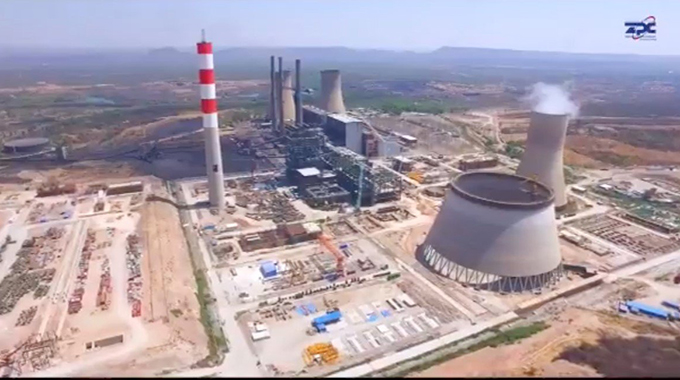
However, Minister Ncube noted the successful completion of the Hwange Power Station Units 7 and 8 expansion project, along with upgrades to Units 1 to 6, has significantly improved the country’s power supply situation.
He reported that Hwange Units 7 and 8 reached their full individual capacities of 335MW in March 2025, resulting in improved electricity access nationwide.
Additionally, the expansion of Zimbabwe’s captive power production capacity — particularly from renewable sources such as solar energy by companies and households — has added an estimated minimum of 86MW, easing pressure on the national grid.
“The increased adoption of solar energy supports the country’s environmental goals by reducing greenhouse gas emissions and promoting sustainable development,” the minister said.
Experts agree that a reliable energy supply is crucial for Zimbabwe’s economic growth, particularly in key sectors such as mining, agriculture, and tourism.