Online Reporter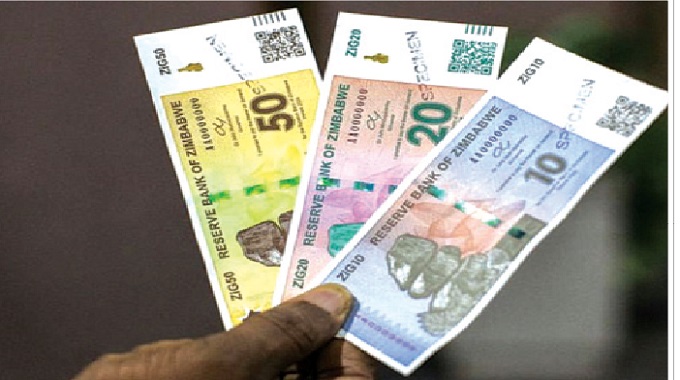
Zimpapers Business Hub
ZIMBABWE posted major economic milestones in 2025, amid a rapid return of durable stability and steady sectoral recovery, strengthening the country’s prospects of achieving the projected 6,6 percent growth this year.
After a challenging 2024, following El Niño-induced drought pressures and subdued agricultural output, the economy entered 2025 on a better footing, with inflation easing, production improving across key sectors and rising confidence among businesses and households.
At the heart of the strong performance was the downtrend in inflation. During 2025, price pressures moderated significantly, reflecting tighter fiscal discipline, improved co-ordination between fiscal and monetary policies and greater exchange rate stability.
This development has been crucial in restoring predictability and confidence in the economy.
For years, inflation volatility eroded incomes, distorted planning and investment decisions and weakened purchasing power. Its containment in 2025 has therefore brought about several benefits.
ZiG annual inflation stood at 85,7 percent in April this year, rising to a peak of 95,8 percent by July, before decelerating rapidly to 15 percent this month.
The steady decline since then reflects tighter monetary conditions and improved currency management.
Lower inflation has allowed businesses to plan more effectively, set prices with greater confidence and commit capital to productive activities. For ordinary Zimbabweans, the easing of price increases has helped stabilise household budgets, preserving real incomes and supporting consumption.
This has been particularly important in a consumption-driven economy, where domestic demand plays a central role in sustaining growth.
Economic commentator Mr Tinevimbo Shava said the importance of inflation control cannot be overstated.
“Stability is not just a macroeconomic concept; it directly affects the lives of people,” he said.
“When prices are predictable, salaries go further, businesses avoid panic pricing and the entire value chain functions more smoothly. That is what we are beginning to see in 2025.”
Global developments have also worked in Zimbabwe’s favour. International inflation has been easing following the post-pandemic commodity and supply chain shocks, reducing imported inflation pressures.
Lower global energy and food prices have eased costs for local producers and consumers, complementing domestic policy efforts to contain inflation.
Beyond price stability, the structure of growth in 2025 highlights a broad-based recovery across productive sectors. Agriculture has emerged as the single largest contributor to GDP growth, rebounding strongly after the drought ravaged 2024.
Benefitting from improved rainfall patterns, expanded irrigation and better agronomic practices, the sector is estimated to grow by around 24 percent in 2025, contributing approximately 2,2 percentage points to overall GDP growth.
The agricultural resurgence is already translating into tangible benefits for rural communities. Increased output has boosted farm incomes, supported food security and stimulated downstream activities such as transport, storage, agro-processing and trade.
One of the most striking success stories has been in the tobacco industry. Zimbabwe sold over about 300 million kilogrammes of tobacco during the 2024 season, achieving 94 percent of the 300 million kilogramme target and earning about US$944 million.
Participation has widened, with more than 108 000 farmers involved, an increase of 4,6 percent from last year. Although average prices softened slightly to US$3,37 per kilogramme, tobacco remains profitable and a vital source of income for thousands of households.
The Tobacco Industry and Marketing Board (TIMB) said total sales during the marketing season surpassed 350 million kilogrammes, breaking the previous national record and generating over US$1 billion in value.
This performance underscores agriculture’s central role in driving growth and spreading income gains across rural areas.
Wheat production reached a record, climbing to more than 640 000 tonnes this year, thanks to deliberate planning, strong Government support, mechanisation, irrigation and strategic partnerships, among other factors.
Mining has continued to anchor export earnings and foreign currency inflows. Despite softer prices for some base metals, the sector is projected to grow by 7,3 percent in 2025, supported by strong international gold prices and rising output.
Zimbabwe has already surpassed its annual gold production target of 40 tonnes, with output reaching 41,8 tonnes by November.
Artisanal and small-scale miners have been the backbone of this success, contributing nearly three-quarters of national gold output. Government incentives and formalisation efforts have improved deliveries through official channels, boosting transparency and export receipts.
Foreign currency earnings from gold for the 10 months to October surged by almost 89 percent to US$3,76 billion, providing critical support to the balance of payments position and exchange rate stability.
Economic analyst Mr Namatai Maeresera said the gold sector’s performance had far-reaching implications.
“Gold earnings strengthen the country’s foreign currency position, which helps stabilise the exchange rate and contain inflation,” he said.
“That stability filters through to the general public through more stable prices, better availability of goods and improved confidence in the economy.”
Manufacturing has also shown signs of strong recovery, growing by an estimated 4,2 percent in 2025. While still operating below capacity, the sector has benefitted from lower inflation, improved electricity supply and reduced exchange rate volatility.
Local companies have been able to stabilise production schedules, retain jobs and gradually rebuild capacity, signalling a shift towards value addition rather than reliance on raw commodity exports.
Electricity generation quiet but significant contributor, expanding by about 6,7 percent. Improved power availability, especially for key economic sectors, has reduced production downtime and costs for industry, enhancing competitiveness and supporting growth across mining, manufacturing and services.
On the demand side, wholesale and retail trade, financial services and information and communication sectors have all posted significant growth. These sectors thrive in a stable macroeconomic environment, where predictable prices and exchange rates support savings, credit extension and investment.
For consumers, this translates into better access to goods, services and financial products.
Fiscal discipline has reinforced these gains. Continued expenditure alignment and cash budgeting have limited inflationary financing, anchoring inflation expectations and reducing policy uncertainty.
Although fiscal space remains constrained, disciplined budget execution has strengthened confidence among economic agents.
Zimbabwe’s projected 6,6 percent growth in 2025 reflects the combined impact of inflation control, sectoral recovery and improving confidence. Importantly, the benefits are not confined to headline statistics.
Rising agricultural incomes, stronger mining earnings, more stable prices and improved electricity supply are all contributing to better livelihoods, job retention and opportunities for small businesses.
While risks remain, including global trade uncertainties and commodity price fluctuations, Zimbabwe’s 2025 performance demonstrates how stability and consistent policy implementation can deliver real gains.
As Mr Shava observed, “Growth anchored in stability is more meaningful because it touches ordinary people. The task now is to sustain it and ensure it continues to uplift communities across the country.”
If maintained, the foundations laid in 2025 provide a strong platform not only for achieving the 6,6 percent growth target, but for building a more resilient and inclusive economy that benefits the general populace.
In 2025, Zimbabwe’s primary infrastructure achievement was the completion and commissioning of the Trabablas Interchange in Harare, a major road project aimed at easing traffic congestion in the capital while serving as a key link of the north-south transport corridor for Southern Africa and the rest of the continent. Progress was also made on the Harare-Masvingo-Beitbridge highway and new industrial projects.
The Government continued its national road upgrades under the Emergency Road Rehabilitation Programme (ERRP) and the National Development Strategy 1 (NDS1) across the country, despite constrained resources.