Online Reporter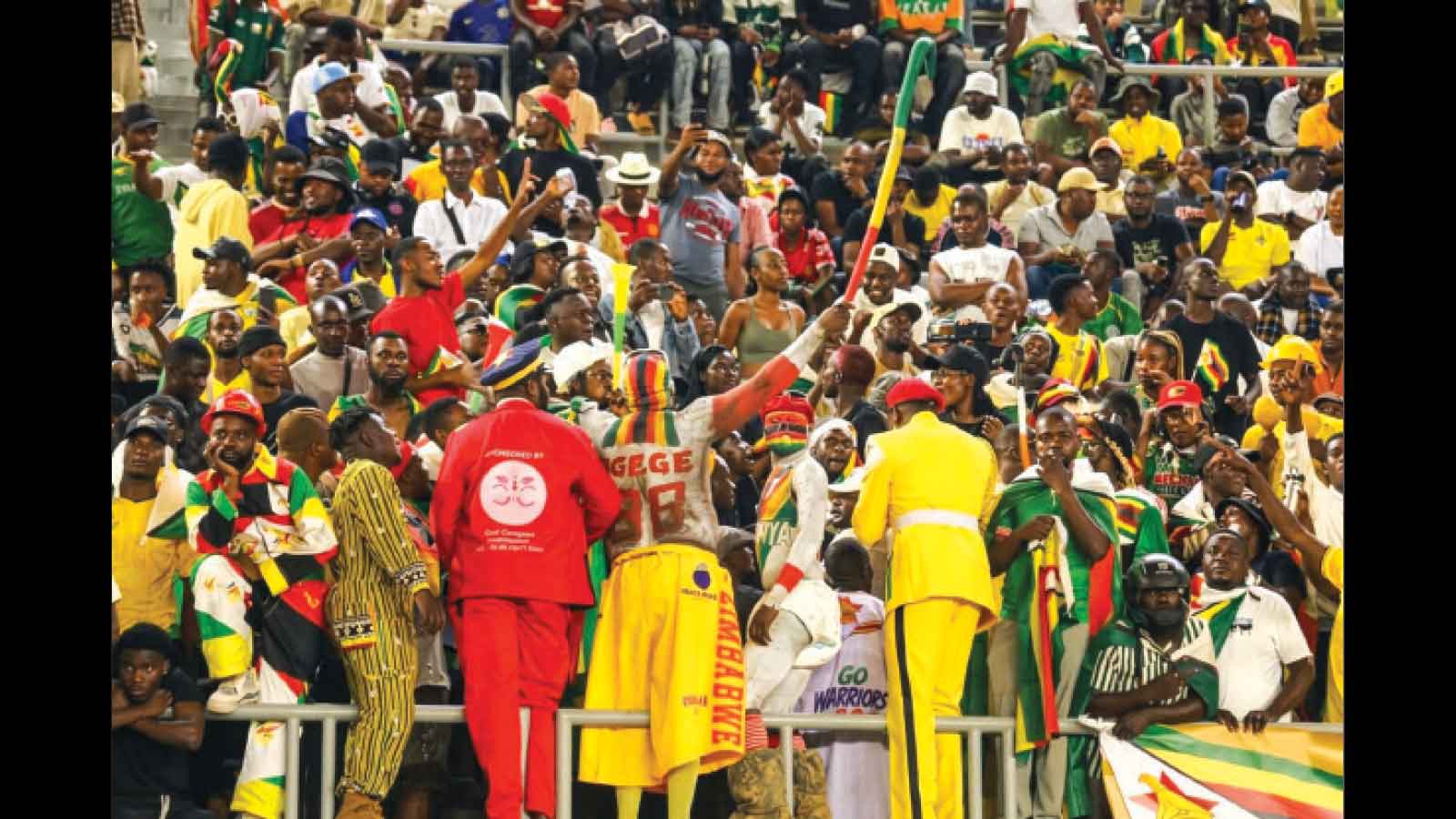
Inside ZIFA-Nqobile Magwizi
A FOOTBALL NATION is not rebuilt by one result. It is rebuilt by what happens around the result: how teams respond, how systems improve, how lessons are absorbed and whether there is enough conviction to keep moving forward.
That is why the Warriors’ 2-1 defeat to the Democratic Republic of Congo, disappointing as it was, should be seen in a wider context.
We wanted the perfect return to the National Sports Stadium (NSS). We wanted to mark the occasion, in front of the Head of State and thousands of supporters, with a victory. We did not get it. But rebuilding football is rarely a straight line. The defeat exposed areas that need work, but it also showed character, competitiveness and enough promise to build on.
The real measure of progress now is not whether we ignore the disappointment, but whether we learn from it and become better because of it.
It was significant, too, to see President Mnangagwa remain for the entire match, follow the performance closely, acknowledge the team’s effort afterwards and pledge his continued support.
Moments like these matter because rebuilding Zimbabwean football will require more than results on the pitch.
It will require patience, belief and sustained support for the work taking place across the game. Two days later, the mood at the NSS had changed. Our Under-23 side defeated Mauritius 2-0 in an Africa Cup of Nations Under-23 qualifier, giving Zimbabwean football something to celebrate and reminding us why development across all our national teams matters.
The Mighty Warriors are also in camp preparing for their two-legged 2028 Los Angeles Olympic Games qualifier against Malawi. Within the space of a few days, the Warriors, Young Warriors and Mighty Warriors will all have been active.
That is the bigger story. Zimbabwean football is beginning to move again.
One area in which we are becoming increasingly deliberate is preparation.
Our national teams are spending more time together because one of the great challenges of international football is simply time. Clubs work with their players almost every day.
National teams do not have that luxury. Players arrive from different clubs, countries, leagues and football cultures, sometimes with only a few days before an important fixture.
Coaches are then expected to build relationships, introduce tactical ideas and mould a group into a team almost overnight. We have to give our technical teams a better opportunity to succeed. That means bringing players into camp as early as circumstances allow and creating an environment in which coaches can properly understand the group they are working with.
Players need time to understand one another, coaches need time to communicate their ideas and teams need time to develop chemistry. Preparation is not simply an administrative detail. It is part of performance. The Under-23 victory over Mauritius was important because we want to win football matches, but its significance goes beyond the scoreline.
The Under-23 programme is one of the most important bridges between youth football and the senior national team. It gives young players an opportunity to experience the demands of international football and grow within that environment before being asked to carry the full responsibility that comes with representing the Warriors.
There is another encouraging development within this group. We are seeing more Zimbabwean players based abroad choosing to represent the country of their birth or family heritage.
They arrive with experience of different coaching systems, football cultures and levels of competition, and bringing that experience into our national teams strengthens the pool available to Zimbabwe while creating healthy competition for places. Our responsibility is to find Zimbabwean talent wherever it exists. Whether a player is developing in Harare, Bulawayo, Mutare, London, Birmingham, Johannesburg, Munich or anywhere else in the world should not be the determining factor.
If that player is eligible to represent Zimbabwe, has the required quality and genuinely wants to wear the shirt, our system must be capable of identifying and integrating that talent.
This thinking sits at the heart of Dream 2030. We are trying to build a football pathway rather than simply assemble teams whenever another competition appears on the calendar.
That pathway must connect our Under-15s, Under-17s, Under-20s and Under-23s to the senior national teams.
It must also connect our domestic football structures to Zimbabweans playing abroad.
Most importantly, players moving through the system should be able to see where that journey can ultimately take them.
I was reminded of the importance of such a pathway when I saw former Warriors defender George Mbwando working with our Under-23 team.
George represents a wonderful piece of Zimbabwean football history. In 1995, he was part of the Zimbabwe side that reached the final of the All-Africa Games here in Harare.
He scored Zimbabwe’s goal in the final against Egypt before the match eventually went Egypt’s way.
That experience became part of his own football journey. He went on to enjoy a professional career that included several years in Germany.
Today, decades later, he is back in a national team environment, sharing what he learnt with another generation of young Zimbabwean footballers.
That is what a football pathway should look like. A young player enters the system, experiences international football, develops, builds a career and, one day, brings that knowledge back to help those coming behind him.
Football development is not simply about producing players. It is about creating generations that pass knowledge and experience back into the game.
The same long-term thinking must apply to the Mighty Warriors.
They are preparing under newly appointed head coach Stella Gotal for the Olympic qualifying assignment against Malawi, and there is genuine anticipation around this team.
Our ambition cannot simply be for the Mighty Warriors to occasionally produce a good result. We want them to become a consistently competitive force in African women’s football.
That will not happen through hurried preparation before individual matches. It requires planning, player development, regular competition, strong technical structures and a sustained pathway for girls and women within Zimbabwean football.
Perhaps one of the most encouraging developments of this period has been seeing Zimbabwean football reconnect with its supporters.
The return to the NSS has restored something we had been missing for years: the colour, the noise, the anticipation and the emotion of arriving at the stadium to watch the national team play on home soil. These things matter. Football is meant to be shared.
But with that privilege comes responsibility. Unfortunately, we have also seen behaviour that risks taking away from the significance of our return home.
Bathroom mirrors have been vandalised and ground sprinklers damaged. Such conduct has no place at the NSS and cannot be allowed to become part of this new chapter for Zimbabwean football.
We fought hard to bring international football back home. We cannot now become the people who damage the very home we fought to regain.
The NSS is a national asset. It belongs to Zimbabwe, and protecting it should be as much a part of supporting the national team as wearing the shirt, singing from the stands or celebrating a goal.
Passion is welcome. Vandalism is not.
There is also a far more painful matter that cannot be ignored. I extend my sincere condolences to the family and loved ones of Kudzai Chigora. Football, for all its competition, emotion and spectacle, is ultimately about people.
Anyone who leaves home to attend a football match, whether as a supporter, player, administrator, official or volunteer, should be able to return home afterwards and talk about the experience with family and friends.
Kudzai’s death has left a painful mark on our game. Our thoughts remain with his family and everyone affected by the tragedy.
Football should be a place of joy. It should offer an escape from the pressures of everyday life, a place where families and friends gather, where strangers celebrate together and where, for a few hours, a nation can feel united around the same game.
That is the experience we must protect, strengthen and preserve.
Zimbabwean football is not yet where we want it to be, and nobody involved in rebuilding the game should pretend otherwise. There will be defeats. There will be mistakes.
There will be difficult moments, hard questions and lessons we would rather not have to learn.
But there are also signs of movement.
The Warriors are playing at home again. Our Under-23s are competing. The Mighty Warriors are preparing for another major qualification campaign.
Young Zimbabweans from across the world are answering the call to represent their country. Former internationals are returning to pass their experience on to a new generation.
Supporters are once again filling the stands and reconnecting with their national teams.
The pieces are beginning to come together.
Our responsibility now is to keep them moving in the same direction. Administrators must continue improving.
Coaches must continue developing players. Players must understand the privilege and responsibility of wearing the national shirt.
Supporters must protect the game and the places where it is played. The Government, corporate partners, clubs, leagues and every stakeholder around Zimbabwean football must continue playing their part.
Rebuilding a football nation will never be the work of one match, one team, one coach or one administration. It is a journey measured over years and, ultimately, over generations.
What matters is that we have begun to move.
Now we must keep moving, with purpose, patience and belief. We must learn from the difficult moments, build on the encouraging ones and refuse to lose sight of the football nation we know Zimbabwe can become.
The journey has started. It belongs to all of us.
Let us keep building, keep believing and keep moving forward together.
Nqobile Magwizi is the president of the Zimbabwe Football Association (ZIFA).