Online Reporter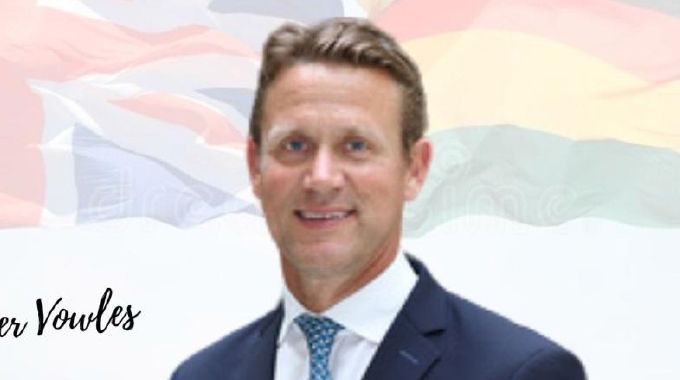
Peter Matika, [email protected]
THE United Kingdom has pledged £500 000 towards efforts to end violence against women and girls (VAWG) in Zimbabwe, in a significant boost to national programmes aimed at strengthening prevention and response mechanisms.
Speaking during a side event held on the margins of the Zimbabwe International Trade Fair, United Kingdom Ambassador to Zimbabwe, Mr Peter Vowles (pictured), said the funding underscores Britain’s commitment to tackling gender-based violence (GBV), which he described as both a social injustice and a major economic constraint.
“It’s my honour to address you today at this important side event, as we reflect together on how to strengthen financing for gender-based violence prevention and response,” said Amb Vowles.
He emphasised that addressing GBV requires sustained collaboration across Government, civil society and the private sector, noting that the British Embassy views its engagement as a long-term partnership rather than a once-off intervention.
“Today’s subject, financing for GBV prevention and response, is not abstract. It speaks directly to the challenges we face and has a real impact on the lives of the women and girls we serve,” he said.
Amb Vowles highlighted the often-overlooked economic cost of GBV, saying it undermines national development by increasing pressure on health and social services while limiting women’s participation in the economy.
“GBV is an economic issue. It drives up costs, reduces productivity and places a significant burden on national resources. Addressing it is not only a moral imperative but an economic necessity,” he said.
The funding is expected to support a range of initiatives, including strengthening survivor support services, expanding safe shelters and enhancing prevention programmes at the community level.
Government officials at the event welcomed the pledge, describing it as timely and aligned with Zimbabwe’s broader development agenda under Vision 2030.
Secretary for Women’s Affairs, Community, Small and Medium Enterprises Development, Dr Mavis Sibanda, said the engagement marked a critical step towards building sustainable financing models for GBV interventions.
“It’s my honour to address you today at this important side event, as we reflect together on how to strengthen financing for gender-based violence prevention and response,” said Dr Sibanda.
“Let me begin by genuinely thanking the British Embassy, not just for organising this event, but for believing that this conversation matters. On behalf of the ministry, we don’t see this as a once-off collaboration. We see it as a shared commitment.”
Dr Sibanda underscored that GBV must be understood beyond its social and human rights dimensions, highlighting its far-reaching economic implications.
“While we always confront GBV from a social and human rights perspective, it is equally critical to bring to the table a harder truth: GBV is an economic issue. It undermines economic progress, drives up the costs of health and social services, and limits the full participation of women and girls in economic life,” she said.
She noted that hosting the dialogue alongside the ZITF was strategic, as it brought the private sector into the conversation.
“The corporate sector is a driver of economic growth and a major employer. It has a critical role to play in strengthening GBV prevention and response,” said Dr Sibanda.
She urged businesses to integrate gender-sensitive policies into their operations, including enforcing anti-sexual harassment frameworks, fostering safe workplaces and supporting survivor-centred initiatives.
“On financing and corporate social responsibility, the private sector should go further to support efforts to expand GBV services, including through financing national and community-based GBV response mechanisms.
“Partnerships allow us to leverage our comparative advantages, combining policy, resources, technical expertise and grassroots reach to make our GBV response and prevention efforts far more effective,” she said.
Government has taken the lead in providing policy direction and an enabling environment with President Mnangagwa signing the High-Level Political Compact on Ending Gender-Based Violence and Harmful Practices, as a clear commitment from the highest office.
“Significant progress has been made in establishing multi-sectoral co-ordination mechanisms. Yet there remains a pressing need to expand and strengthen resourcing for such initiatives,” said Dr Sibanda.
She reiterated that ending GBV is central to Zimbabwe’s broader development aspirations.
“Addressing GBV is key to achieving Vision 2030, as well as our regional and global commitments, including the Southern African Development Community Protocol on Gender and Development and the Sustainable Development Goals,” said Dr Sibanda.
“Let us ensure that this dialogue does not end as mere talk, but becomes the foundation for strengthened partnerships and concrete, lasting action.”
The UK’s financial support is expected to complement domestic efforts and strengthen collaboration among Government, development partners, and civil society organisations as Zimbabwe intensifies efforts to eradicate gender-based violence and promote inclusive national development.