Online Reporter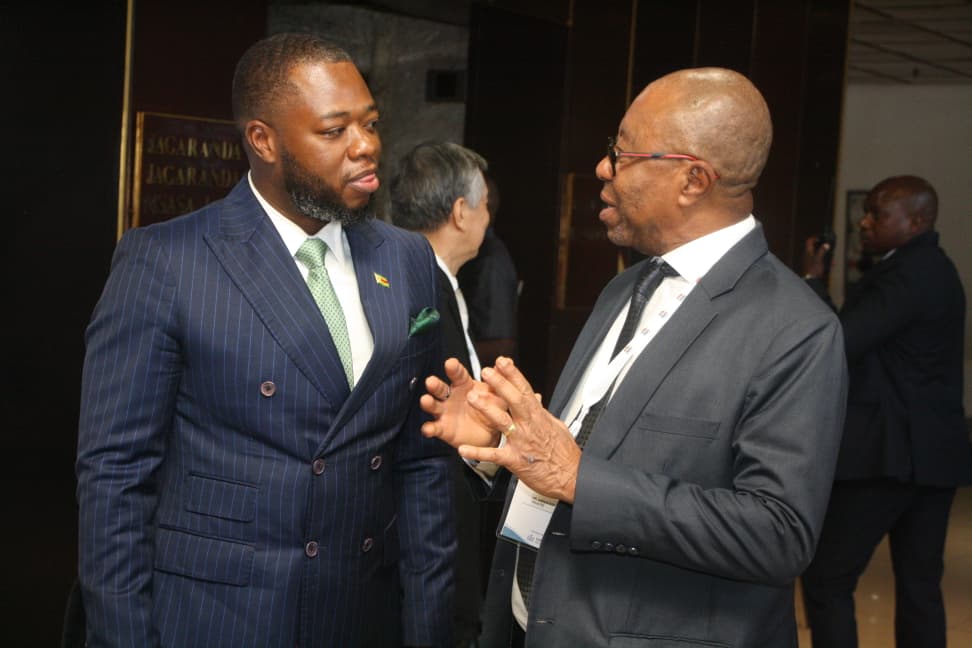
Sekai Manyere
Herald Reporter
Zimbabwe has officially opened the 24th Annual Conference of the Association of Insurers and Reinsurers of Developing Countries (AIRDC), with regulators, insurers and reinsurers urged to build resilient markets capable of withstanding geopolitical shocks, rapid technological change and growing climate risks.
Speaking at the official opening, Deputy Minister of Finance, Economic Development and Investment Promotion Kudakwashe Mnangagwa said insurance was central to building economic resilience, but significant gaps in coverage continued to leave Zimbabwe and other developing economies exposed to various risks.
He said closing the insurance protection gap was critical to strengthening the ability of economies to withstand shocks and support sustainable development.
“Across many developing markets, a significant protection gap remains too many households, farmers, micro, small, medium enterprises and informal businesses remain uninsured and underinsured,” said the minister.
Deputy Minister also framed insurance not simply as financial compensation aftershocks, but as a tool for long-term risk management.
“Our task is therefore to move insurance from the margins of economic turbulence to the centre of the developmental conversation, calling for a shift from solid insurance policies to building national resilience,” he said.
He argued that technology will be critical to expanding access and lowering costs, describing digital transformation as a potential route to faster underwriting, improved claims, and wider reach, especially for remote communities.
“Technology presents perhaps one of the greatest opportunities to achieve this transformation,” he said.
“A smallholder farmer in a remote community should not have to travel to a major city to access insurance.”
He also cautioned that innovation must go hand in hand with safeguards, including cyber security, data protection and consumer protection.
“Innovation must be the company’s primary responsibility, as financial institutions increasingly rely on technology, we must pay more attention to cyber security, data protection, algorithmic bias, operational resilience, and consumer protection,” he said.
He pointed to artificial intelligence and data analytics as both an opportunity and a risk area, particularly as the insurance sector adopts new tools for underwriting and claims processing.
Deputy Minister suggested that Artificial intelligence, satellite and mobile technologies could help change insurance economics, potentially reducing costs and improving the ability to serve customers previously priced out of coverage.
“Artificial intelligence, big data, satellite technology, mobile platforms, and other innovations can fundamentally change the economics of insurance,” he said.
“They can reduce risk cost, improve underwriting and allow insurers to reach customers who must be considered out of the money.”
He addressed climate risk, particularly risks affecting agriculture, food security and livelihoods in the region.
Deputy Minister added that climate-related threats affect agricultural production and infrastructure, and can undermine future development.
He pointed to conditions affecting the 2026–2027 agricultural season, warning that the region cannot wait for disasters to unfold.
“We cannot wait for the drought to become a disaster before we begin financial response and traditional approaches to risk financing alone will not be sufficient, said the minister.
Deputy Minister urged faster adoption of new insurance structures and risk financing instruments, including parametric and index-based solutions and public-private partnerships.
“We must therefore accelerate innovation in agricultural insurance, index-based and parametric solutions, catastrophic risk financing and public-private partnerships,” he said.
He also highlighted the need for satellite data, weather information, predictive analytics and digital technologies to support earlier protection for vulnerable communities.
“We must increase the need to harness satellite data, weather information, digital technologies, and predictive analytics and this emerging threat should remind us we cannot wait for the drought to become a disaster,” said the minister.
He also emphasised that developing countries cannot solve these challenges alone but through regional and international collaboration.
“No developing country can address these challenges in isolation the speaker said, noting that organisations linking insurers across Africa, Asia and the Middle East support collaboration, networking, education and technical cooperation.
Deputy Minister challenged participants to leave with outcomes including new partnerships, practical strategies for responsible use of AI, approaches for closing protection gaps and renewed momentum on making reinsurance relevant and accessible to all individuals.
AIRDC President Dr Aaron Issa Anafure said that as the world grapples with increasing geopolitical uncertainty and rapid technological changes, there is need to strengthen the insurance sector and essential for supporting developing countries.
“The insurance sector plays a vital role in economic resilience and financial stability and it provides security against unforeseen risks, enabling businesses to invest or withdraw as necessary,” he said.
He highlighted that technology is a major driver of innovation within insurance, transforming everything from underwriting to customer service.
“These advances offer an important opportunity to broaden access to insurance products, particularly for underserved communities,” he added.
Dr Anafure said the sector also faces challenges, including cyber threats and unequal access to technolog.
“Through collaboration among regulators, insurers, and other stakeholders, we can improve financial protection and reduce the insurance gap,” he said.