

 Online Reporter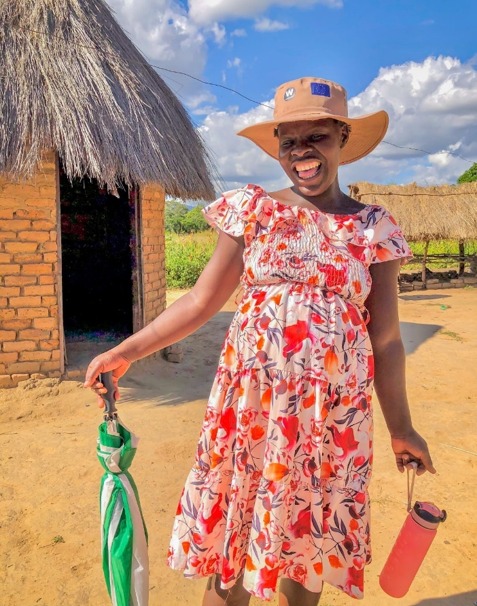
Herald Reporter
Zimbabwe has demonstrated its growing leadership in climate and health research after being featured in Health Wonders, a new film series by the Wellcome Trust celebrating 90 years of science improving health worldwide.
The series puts an international spotlight on Zimbabwe’s Heat Adaptation for Pregnant Women and Infants Study (HAPI), being implemented in Mt Darwin through the country’s first Climate Health Demonstration Laboratory.
At its core, the film tells a story of innovation, partnership and hope, showing how communities in Mt Darwin are working with researchers and health workers to protect mothers and babies from extreme heat.
It also highlights how Zimbabwean science is informing policy and practice and contributing to global solutions.
In a statement, the Climate Health Department at the Centre for Sexual Health, HIV and AIDS Research (CeSHHAR) said the initiative was generating practical evidence on how communities and health systems can respond to rising extreme heat, with specific attention to the vulnerabilities of pregnant women and newborns.
The organisation said the inclusion of HAPI in Wellcome’s Health Wonders series was a significant endorsement of Zimbabwe’s contribution to global research and innovation and also reflected the value of investing in locally led science.
CeSHHAR Zimbabwe head, Dr Fortunate Machingura, said the most effective climate and health solutions were those developed with and for communities.
“The HAPI Study demonstrates how locally generated evidence can inform practical interventions that protect pregnant women and newborns from the growing threat of extreme heat.
“We are proud that this work, supported by Wellcome and implemented with communities in Mt Darwin, is contributing to the evidence needed to build climate-resilient health systems in Zimbabwe, across Africa and globally,” she said.
The recognition comes after Zimbabwe hosted the inaugural Climate and Health Africa Conference in Harare in 2024.
The conference brought together heads of institutions, policymakers, researchers and development partners from across Africa and beyond.
It culminated in the adoption of the Harare Declaration on Climate and Health in Africa, which called for increased investment in climate-resilient health systems, stronger research partnerships and greater African leadership in generating solutions.
President Mnangagwa, who attended alongside senior Government officials and ministers from other nations, described climate change as a public health emergency requiring urgent and coordinated action.
The Declaration emphasised scientific evidence, community-led innovation and policy action to protect vulnerable populations.
Climate change is increasingly recognised as a health issue as much as an environmental one.
Across Zimbabwe, temperatures continue to rise, with some districts regularly recording above 40 degrees Celsius during peak summer.
While extreme heat affects entire communities, pregnant women and newborns are among the most vulnerable.
Globally, WHO, UNICEF and UNFPA have warned that heat exposure during pregnancy is linked to increased risks of preterm birth, low birth weight, stillbirth and pregnancy complications.
As evidence linking climate change and maternal health grows, CeSHHAR researchers are ensuring solutions are developed where impacts are felt most.
CeSHHAR is collaborating with the Ministry of Health and Child Care and the Ministry of Environment, Climate and Tourism to develop a Health National Adaptation Plan using Vulnerability and Adaptation Assessments to understand the impacts of ambient heat on pregnant women, postpartum women, infants and health workers.
The HAPI Study is an initiative of behavioural, community, health-system and environmental interventions to reduce the impacts of extreme heat on pregnant women and newborns.
Implemented through Zimbabwe’s first Climate Health Demonstration Laboratory in Mt Darwin, the study brings together researchers, communities, traditional leaders, health workers and policymakers to test practical adaptation measures that can be scaled nationally.
Interventions include: community heat champions who share life-saving heat-health information, cooling kits for pregnant and postpartum women, community mobilisation involving men and families and cool-roof interventions using reflective white paint to reduce indoor temperatures.



