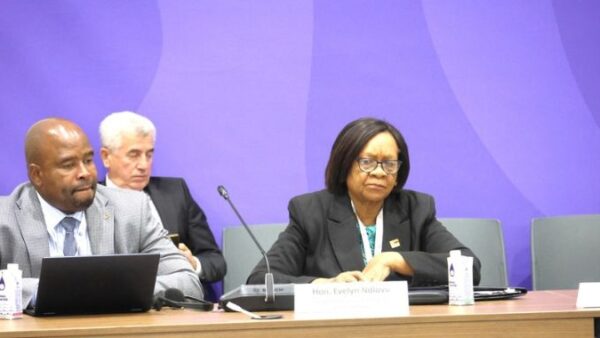
Mthabisi Tshuma [email protected]
ZIMBABWE is seeking to retain a senior position in global telecommunications governance as Dr Cosmas Zavazava battles for re-election as Director of the International Telecommunication Union (ITU) Telecommunication Development Bureau (BDT) at a conference in Doha, Qatar.

The ITU Plenipotentiary Conference 2026 (PP-26), the organisation’s highest decision-making body, opened on Monday, 9 November and runs until November 27 at the Doha Exhibition and Convention Centre.
The conference is held every four years to set the Union’s policies, approve its strategic and financial plans and elect its leadership for the next four-year term, covering 2027 to 2030.
Dr Zavazava, the incumbent BDT director, is seeking a second term and faces one challenger, Nele Leosk of Estonia.
The Zimbabwean delegation is being led by Information Communication Technology, Postal and Courier Services Minister Tatenda Mavetera. It also includes Zimbabwe’s Ambassador to the United Nations in Geneva, Ambassador E Mlilo, ICT Deputy Minister Dingumuzi Phuti and Postal and Telecommunications Regulatory Authority of Zimbabwe (Potraz) director-general Dr Gift Machengete.
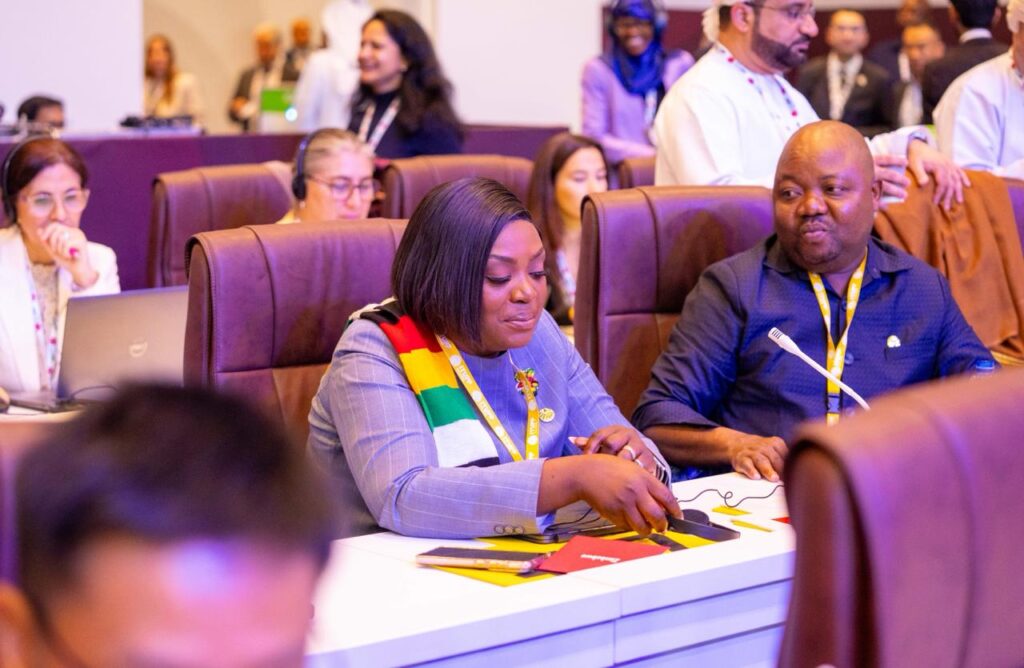
Minister Mavetera said Zimbabwe was optimistic about Dr Zavazava’s chances, citing his record in advancing digital inclusion and supporting developing countries.
“We are optimistic ahead of the election here in Doha. Dr Cosmas Luckyson Zavazava has a strong record of service and we hope that his work to advance digital inclusion and support developing countries will earn him the confidence of the ITU membership for a second term.
“Zimbabwe’s policy of being a friend to all and an enemy to none, as championed by His Excellency President Emmerson Mnangagwa, remains central to our engagements. We are approaching this election in that spirit of friendship, cooperation and mutual respect, while seeking the support of all Member States,” said Minister Mavetera.
Deputy Minister Phuti said the campaign was progressing well, with several countries showing solidarity with Zimbabwe.
“The election campaign is going on well and our candidate is poised for great heights, with many countries showing solidarity with Zimbabwe.
“Our candidate has been instrumental in setting up a lot of projects across the world and coming up with various innovations that have transformed various economies, so he remains the favourite. This election is better than the 2022 one as there were too many candidates,” said Deputy Minister Phuti.
The BDT is responsible for driving digital development, expanding connectivity and building capacity in developing countries, making the position particularly significant for nations seeking to bridge the digital divide.
A victory for Dr Zavazava would secure Zimbabwe continued representation at the highest level of the ITU’s development work and give the country a platform to contribute to global discussions on connectivity and digital inclusion.
The election process begins on Thursday, 12 November, with Member States voting for the Secretary-General. Incumbent Doreen Bogdan-Martin of the United States is unopposed after winning the position in 2022 with 139 votes.
The Deputy Secretary-General election will also take place on Thursday, with three candidates in the race: Carlos Baigorri of Brazil, president of telecommunications regulator Anatel; Stephen Bereaux of The Bahamas, ITU chief of administration and finance; and Adel Darwish of Bahrain, director of the ITU Arab States regional office. Incumbent Tomas Lamanauskas of Lithuania is not seeking re-election.
On Friday, 13 November, Member States will vote for the three bureau directors.
In the Radiocommunication Bureau (BR) contest, which oversees the international coordination and registration of radio-frequency assignments, including those used by satellites, three candidates are in the race: Eric Fournier of France, Alexander Kühn of Germany and Revathi Mannepalli of India, a current Radio Regulations Board member. Incumbent Mario Maniewicz of Uruguay has served two terms, the maximum allowed.
The Telecommunication Standardization Bureau director, Seizo Onoe of Japan, is unopposed.
On Monday, 16 November, delegates will elect the 48 members of the ITU Council and the 12-member Radio Regulations Board.
Voting is by secret ballot, with each Member State entitled to one vote. Candidates must secure a majority to win. Where no candidate obtains the required majority, further ballots are held in line with ITU election rules.
The conference is scheduled to close on Friday, 27 November, with the signing of the Final Acts.
Follow on X: @mthabisi_mthire