Online Reporter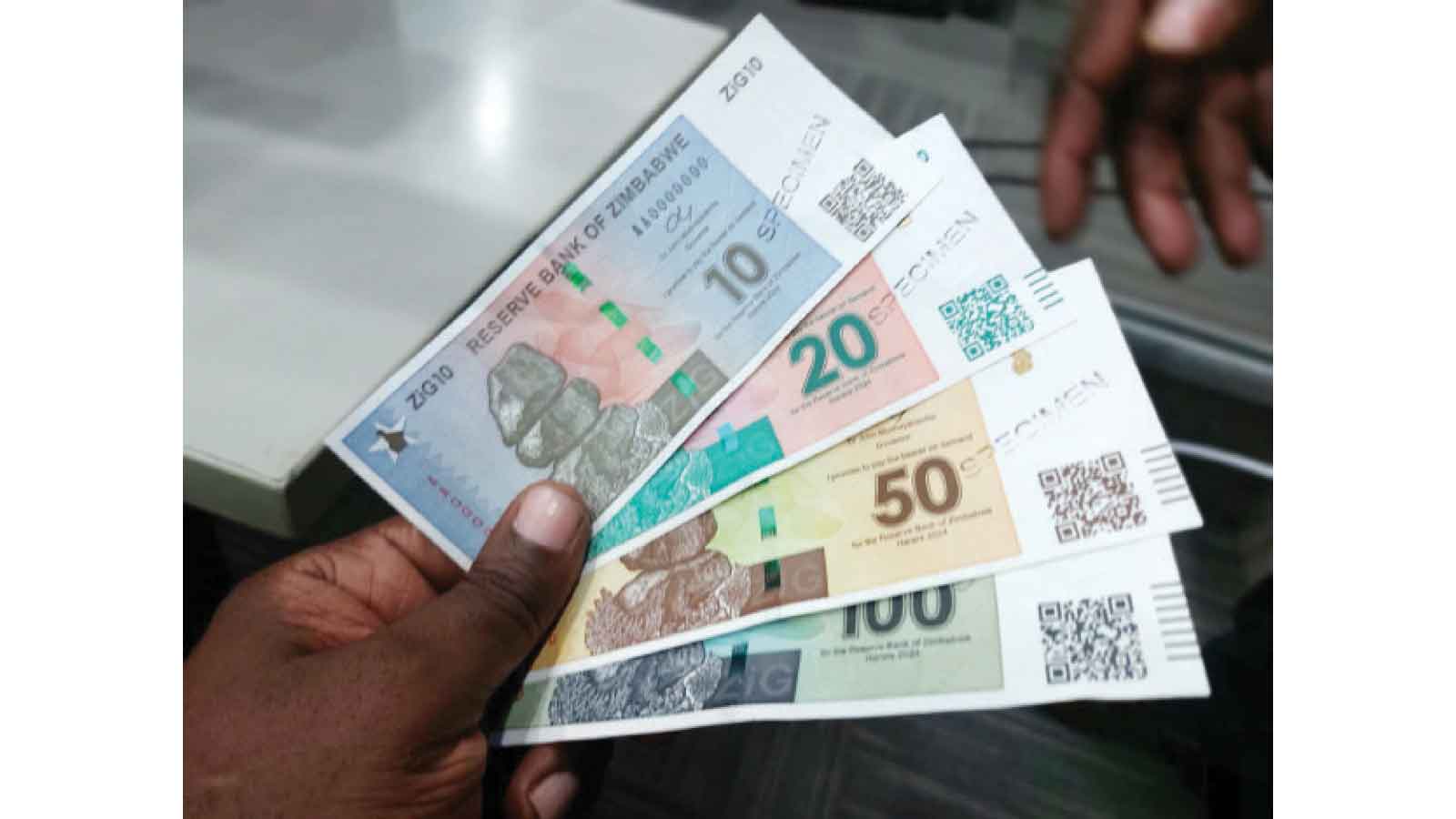
Debra Mutabvu
ZIMBABWE is inching closer to the sole use of the local currency — Zimbabwe Gold (ZiG) — for domestic transactions after meeting six of the eight conditions that the Government believes will sustainably anchor the local unit, Reserve Bank of Zimbabwe (RBZ) Governor Dr John Mushayavanhu has said.
In an interview with The Sunday Mail, Dr Mushayavanhu indicated that the transition to the exclusive use of ZiG for settling all domestic transactions will be a gradual process anchored in macroeconomic stability.
The transition, however, is not date-based but is dependent on the achievement of specific conditions.
Drawing from experiences from other countries, the central bank identified eight critical conditions that must be met before Zimbabwe can fully transition to a single-currency regime.
These are: durable macroeconomic stability with single-digit inflation, adequate foreign currency reserves of at least three to six months of import cover, stable exchange rate dynamics, an efficient foreign exchange management system, increased demand for the local currency, financial sector stability, an efficient National Payments System, as well as fiscal and monetary policy cohesion with non-monetisation of the Budget.
Milestones
However, of all the eight conditions, monetary authorities have managed to achieve six through maintaining stable and low inflation within single-digit levels since January 2026, ensuring an efficient foreign exchange trading system, containing the parallel market premium below 20 percent, sustaining financial sector stability and an efficient National Payments System, including ensuring that the central bank does not finance fiscal deficits.
The RBZ is now working on achieving the outstanding conditions through entrenching confidence and use of ZiG by broadening the payment of public sector goods and services in the local unit, as well as boosting foreign currency reserves to attain the minimum threshold of three months’ import cover.
The country’s foreign currency reserves had grown to US$1,6 billion (enough to cover 1,6 months of import cover) by last month, of which gold holdings accounted for around 40 percent of the portfolio.
The central bank envisages that by the time of the transition to full use of ZiG, it will be holding more than 11 tonnes of gold in its vaults.
“The transition to the exclusive use of ZiG for settling all domestic transactions will be a gradual process anchored on macro-economic stability. As such, the transition is not date-based but is dependent on the achievement of the conditions precedent (CPs),” said Dr Mushayavanhu.
“The country is on course to meet the conditions precedent, as evidenced by sustained single-digit inflation. Important to note is that the country has already achieved most of the CPs and has made significant progress towards achieving the remaining ones,” he said.
Underlining the growing economic stability, annual ZiG inflation has averaged 4,4 percent for the first six months of 2026, with inflation expected to remain low and stable within single-digit levels in the medium to long term.
Further, the Reserve Bank, working with the World Bank, is finalising the development of an automated foreign currency trading system.
As a major boost to the market and transacting public, the parallel market premium has been contained below 20 percent during the first six months of the year, while the financial sector has remained stable.
Dr Mushayavanhu also said there has been zero central bank financing of fiscal deficits since April 2024.
Final push
The RBZ is now actively working to achieve the outstanding conditions.
Last week, Dr Mushayavanhu, who indicated that administrative national payments data, surveys and regulatory surveillance had shown growing confidence and use of ZiG, gave the clearest hint yet that the Government will soon be broadening the payment of public sector goods and services in the local currency.
“The recent nationwide ZiG awareness and education campaign conducted by the Reserve Bank showed that there has been an overwhelmingly positive reception of ZiG by economic agents.
Businesses are accepting ZiG for payment of goods and services and prices have been stable,” he said.
“There has also been a shift in the way the local currency is perceived in the market, as most companies are no longer charging discriminatory prices at more depreciated exchange rates.
“As a result, the exchange rates being used by supermarkets have been gradually moving towards converging with the interbank exchange rate, and the observed difference now merely reflects transaction costs as opposed to the uncertainty premiums. The Reserve Bank has also noted increased demand for ZiG to settle payments to cotton farmers and to meet mandatory tax payments in ZiG at the quarterly payment dates. The Reserve Bank expects demand for ZiG to continue increasing in tandem with increased economic activity across the country.”
To boost confidence in ZiG, monetary authorities recently launched high-quality notes — ZiG10, ZiG20, ZiG50, ZiG100 and ZiG200.
The ZiG10, ZiG20 and ZiG50 notes are already in circulation, while the ZiG100 and ZiG200 will be released to the market soon.
“The demand for ZiG has been on an increasing trend, as evidenced by a significant increase in ZiG transactions in the National Payments System from 26 percent in April 2024 to current levels of between 35 and 40 percent of electronic transactions. Government has also made significant efforts to support the local currency through the requirement to pay 50 percent of QPDs (quarterly payment dates) in the local currency and the settlement of public sector suppliers in ZiG,” added Dr Mushayavanhu.
“To complement Government efforts, the Reserve Bank has issued attractive ZiG-denominated instruments. Furthermore, the effective management of inflation, coupled with ongoing ZiG awareness and education campaigns on the back of the high-quality BiG5 ZiG banknote series, has enhanced confidence in ZiG. Furthermore, monitoring by the Financial Intelligence Unit has shown that most companies are now accepting payments in both ZiG and US dollar.
“Importantly, there has been a reduction in discriminatory pricing practices, where businesses were using a more depreciated exchange rate to price goods in ZiG. The Reserve Bank and Government will continue to explore options to increase demand for ZiG through additional tax heads to be settled in ZiG, in line with the transition to mono-currency.”
ZiG buffer
To create a buffer that will anchor the ZiG and further insulate it from volatility, the Reserve Bank says it plans to build enough reserves to meet two months’ import cover by year-end, which is closer to the ultimate target of the international minimum threshold of between three and six months.
Gold holdings, which have steadily increased from 1,5 tonnes in April 2024 to 4,5 tonnes last month, constitute 40 percent of the reserves.
The Government plans to grow its holdings to around 11 tonnes by the time of transition to a mono-currency.
“The significant build-up of foreign currency reserves is a critical success factor for restoring market confidence, entrenching macroeconomic stability and supporting the transition to mono-currency. Ordinarily, foreign currency reserves would include a mix of foreign currency, gold holdings and other foreign assets. To date, gold holdings account for around 40 percent of the foreign currency reserve’s portfolio,” added Dr Mushayavanhu.
“Important to note is that the Reserve Bank joined the World Bank’s Reserve Advisory and Management Partnership (RAMP) programme in 2025, which is expected to enhance foreign currency reserves portfolio management, especially in the context of greater uncertainty in the global economy.”
“This, notwithstanding and barring any major changes to the current portfolio mix of 40 percent gold, at the likely time of transition to mono-currency, the Reserve Bank will hold above 11 tonnes of gold in its vaults . . .
“The accumulation of gold to levels of around 11 tonnes alongside other foreign currency reserves will put the country on firm footing to maintain macro-economic stability. Specifically, sufficient foreign currency reserves enable the Reserve Bank’s strategic intervention in the foreign exchange market to smoothen any exchange rate volatility. In addition, maintaining import cover between three and six months will boost confidence in the country and support its alignment with regional macroeconomic convergence criteria.”
Zimbabwe has enjoyed a period of unprecedented economic stability since September, putting ZiG in good stead to become the sole currency for domestic transactions.