Chronicle Editor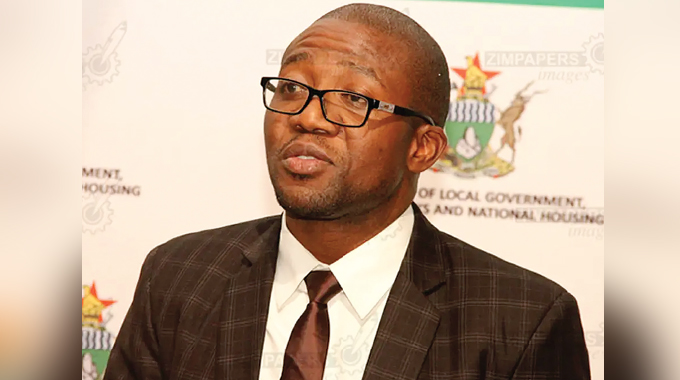
Nqobile Bhebhe, [email protected]
THE Ministry of Industry and Commerce is drafting a one-year transitional plan — the Zimbabwe Industrial Reconstruction and Growth Plan (ZIRGP) 2024-2025 — to address the immediate challenges hindering the growth of the manufacturing and commercial sectors, a Cabinet Minister announced yesterday.
The policy, set to be launched soon, aims to lay a solid foundation for the Industrial Development Policy, which will be introduced by the end of 2025.
Speaking at a business forum in Bulawayo yesterday to assess the state of the Matabeleland and Bulawayo manufacturing sectors, Minister of Industry and Commerce Nqobizitha Mangaliso Ndlovu stated that the Zimbabwe Industrial Development Policy (2019 to 2023) reached its tenure at the end of last year.
“To align the Industrial Development Policy with the NDS2, the Ministry is drafting a one-year transitional plan to be called the Zimbabwe Industrial Reconstruction and Growth Plan (ZIRGP) 2024-2025,” said Minister Ndlovu.
“The major objective of this transitional plan is to address the immediate challenges hindering the growth of the manufacturing and commercial sectors, while laying a solid foundation for accelerated industrial development in the period 2025 and beyond. Furthermore, the ZIRGP aims to address issues such as competitiveness, the cost of doing business, the promotion of linkages with SMEs, innovation, research, and collaboration with academia.
“The private sector is a strategic partner in the implementation of the ZIRGP; this is a living document, meant to lay a solid foundation for the Industrial Development Policy which we will launch at the end of 2025. Hence, I encourage you to work closely with my ministry to identify key drivers for growth, investment, and market expansion for Zimbabwean industries.”
During the engagement, Minister Ndlovu highlighted Bulawayo’s rich history in manufacturing, particularly in food processing, engineering, and traditional industries such as leather and textiles.
He noted that the manufacturing industry in Bulawayo has the potential to play a pivotal role in the revival of the economy due to its proximity to the country’s major trading partner, South Africa.
“The Second Republic is committed to assisting Bulawayo in regaining its status as the country’s industrial hub, through policy support and the implementation of the Special Economic Zones initiative.
“The ministry will be working closely with local authorities to identify idle factory shells that could be used by industry. The private sector is therefore invited to participate in the exercise by ensuring that idle spaces are utilised to benefit the citizenry.
“The Government is very much aware of the issues affecting the performance of industry in terms of the availability of water and electricity and is encouraged by the Whole of Government and Society approach to these challenges.”
Confederation of Zimbabwe Industries (CZI) Matabeleland chamber president Mr Stephen Ncube said there is evidence of both resilience and lagging behind in the manufacturing sector in Bulawayo.
“In 2023, about 54 percent of manufacturing firms in Bulawayo undertook investment to increase their production capacity, at a time when only 46 percent of manufacturing firms at the national level did so. This reveals some optimism for the future among Bulawayo manufacturing firms.
“At the national level, only about seven percent of output is exported. However, for Bulawayo, about 11 percent of output is exported. This shows that manufacturing firms in Bulawayo are more export-oriented than the rest of the country,” said Mr Ncube.

Over the years, the region has suffered severe de-industrialisation since the turn of the millennium, as several big companies either closed their shops or relocated to Harare due to various challenges, leaving thousands of people jobless.
The situation was worsened by the imposition of illegal Western sanctions, which crippled trade relations and the supply of critical imports and equipment.
However, the advent of the Second Republic under President Mnangagwa in 2018 has revived investment interest through several ease-of-doing-business policies, which have seen several companies being revived while others have increased production, with foreign investors also coming on board.
The Government has also been assisting companies to retool; hence, a significant number of businesses are back in production and creating employment through the diversification of operating models.


 Online Reporter