Business Reporter
Across the sunlit hills of Manhize and the bustling industrial zones of Harare, a quiet economic transformation is taking shape – one defined not just by statistics, but by a genuine shift in how the Government and business interact.
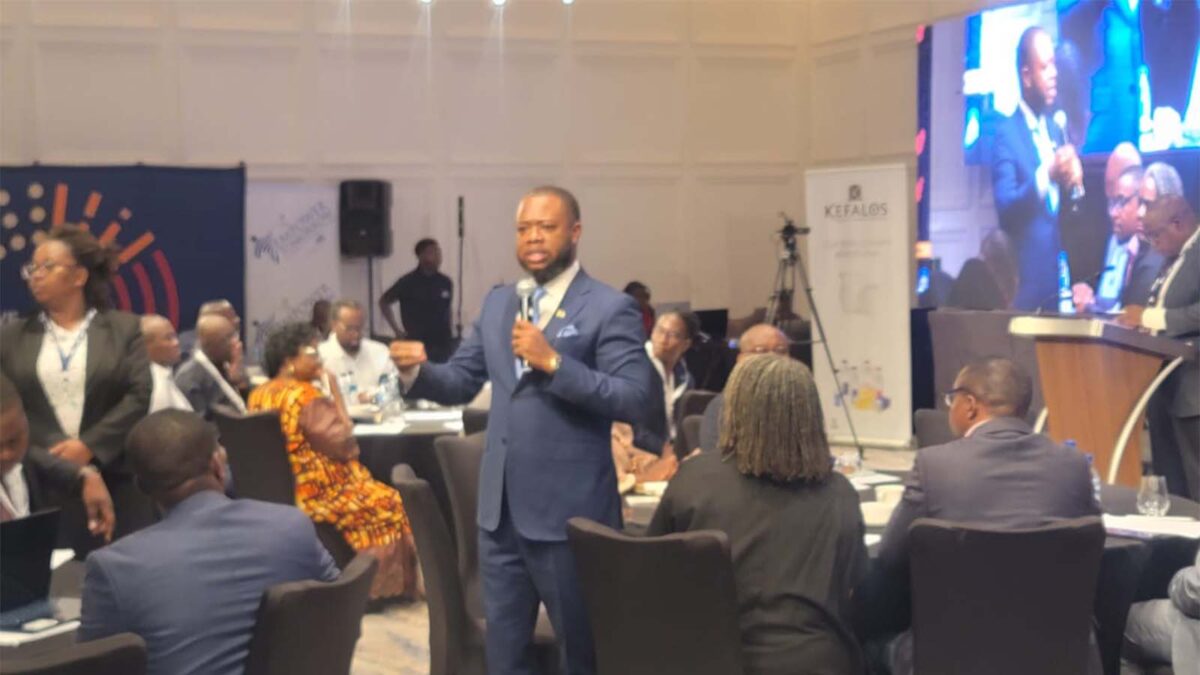
In his keynote address at the three-day Confederation of Zimbabwe Industries (CZI) Strategic Intelligence Forum, hosted in partnership with Zimpapers, Deputy Minister of Finance, Economic Development and Investment Promotion, Kudakwashe Mnangagwa, delivered a grounded, candid message on the nation’s rising attractiveness to capital, the immense local opportunities ahead and the Government’s commitment to listen and adapt.
The economic numbers reflect this growing momentum. Despite severe climate headwinds such as the recent drought, Zimbabwe’s real GDP grew by 8.3 percent in 2025. Investors are taking notice: foreign direct investment (FDI) inflows climbed from US$596.7 million in 2024 to US$964.9 million in 2025, while the Zimbabwe Investment and Development Agency (ZIDA) approved 871 investment licences in 2025 – up from 709 the previous year – and recorded more than US$1.4 billion in commitments in the first quarter of 2026 alone.
Yet behind the investment surges lies a Government actively rethinking its regulatory role to ensure that businesses can actually scale. Rather than imposing rigid, top-down mandates, Deputy Minister Mnangagwa signalled a clear intent to ease the administrative weight on growing enterprises.
“A start-up employing three people should not carry the same administrative burden as a corporation employing thousands,” Deputy Minister Mnangagwa emphasised. “Our task is to make compliance proportionate, transparent and efficient… Entrepreneurs should spend more time building businesses and less time moving between offices.”
Addressing the country’s high rate of informal business – where ZimStat census data shows that more than 76 percent of operating establishments remain informal – Deputy Minister Mnangagwa framed formalisation not as a tax trap but as an essential ladder for business expansion.
“Formalisation should not be understood as an obligation to register or pay taxes,” he noted. “It is your gateway to finance, larger procurement contracts and export markets.”
To back this dialogue with concrete support, the Government continues to offer generous incentives under the Special Economic Zones (SEZ) framework, including a 0 percent corporate income tax rate for the first five years, preferential rates thereafter and customs duty rebates on qualifying capital imports.
The power of these incentives is clearest when connected to landmark projects such as the US$1.5 billion Dinson Iron and Steel industrial park in Manhize, Mvuma. Positioned to create up to 25,000 direct and 150,000 indirect jobs, the mega-development opens up vast downstream niches for local suppliers in engineering, spare parts, logistics, construction and information technology.
However, Deputy Minister Mnangagwa challenged established private-sector leaders in the room to do their part by offering real market access to local start-ups.
“One of the strongest forms of entrepreneurship support is not another workshop,” Deputy Minister Mnangagwa urged. “It is a purchase order, a supply contract or access to a distribution network.”
Closing his address, the Deputy Minister reaffirmed that as Zimbabwe prepares for National Development Strategy 2 (NDS2: 2026–2030), the Government remains open to continuous dialogue to remove bottlenecks and turn viable ideas into bankable projects.
By pairing vast natural wealth with a policy environment built around listening and delivering targeted incentives, Zimbabwe is proving that it is not merely open for business – it is actively building an environment in which businesses can thrive.