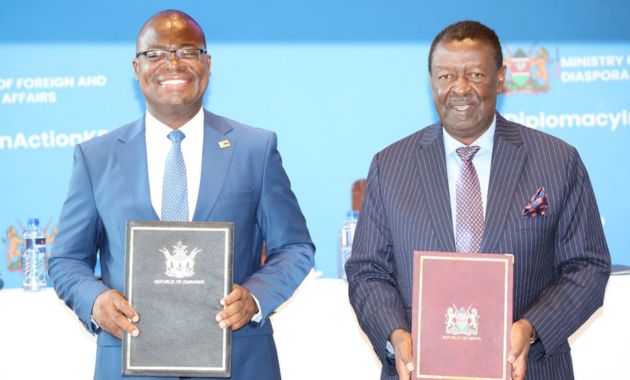
Nduduzo Tshuma in Nairobi, Kenya
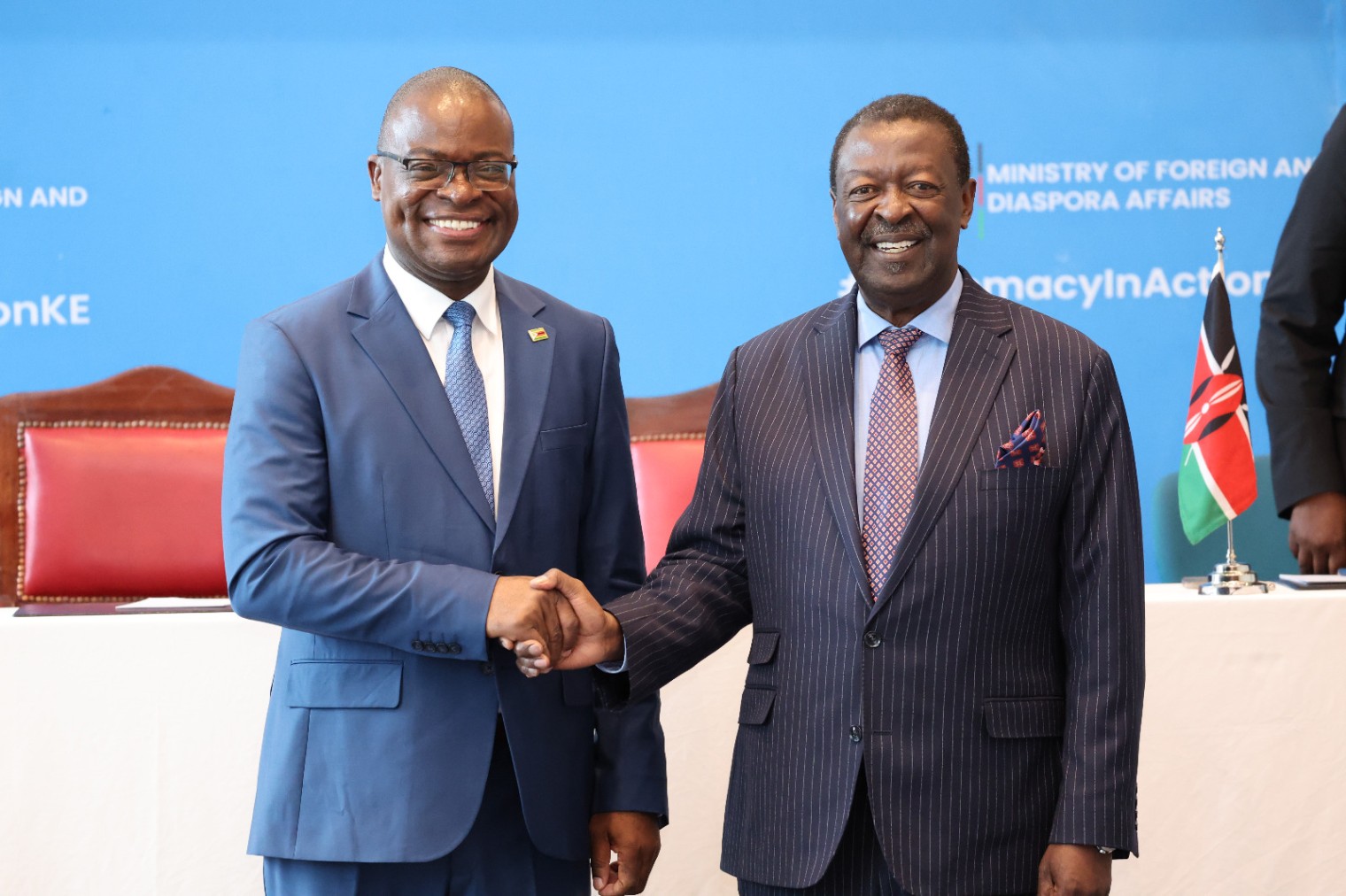
ZIMBABWE and Kenya have elevated their bilateral relations to the highest level of political engagement following the signing of a Memorandum of Understanding (MoU) establishing a Bi-National Commission (BNC), providing a stronger institutional framework for deepening cooperation across key sectors.
The agreement formalises the transition from the Joint Permanent Commission for Cooperation (JPCC) to a BNC, creating a platform for enhanced political coordination, economic cooperation and joint development initiatives under the strategic direction of President Mnangagwa and his Kenyan counterpart, President William Ruto.
The two Presidents will jointly chair the inaugural Zimbabwe-Kenya BNC here on Friday.
Minister of Foreign Affairs and International Trade Professor Amon Murwira and his Kenyan counterpart, Prime Cabinet Secretary and Cabinet Secretary for Foreign and Diaspora Affairs Dr
Musalia Mudavadi, signed the agreement during the ministerial session of the inaugural Zimbabwe-Kenya BNC here on Wednesday.
Speaking during the meeting, Prof Murwira said the new framework should translate the longstanding political goodwill between the two countries into stronger commercial exchanges, investment and joint development projects.
“Our principal objective through this BNC is to transform political goodwill into robust commercial exchanges, thereby enhancing the integrity, dignity and prosperity of our two peoples,” he said.
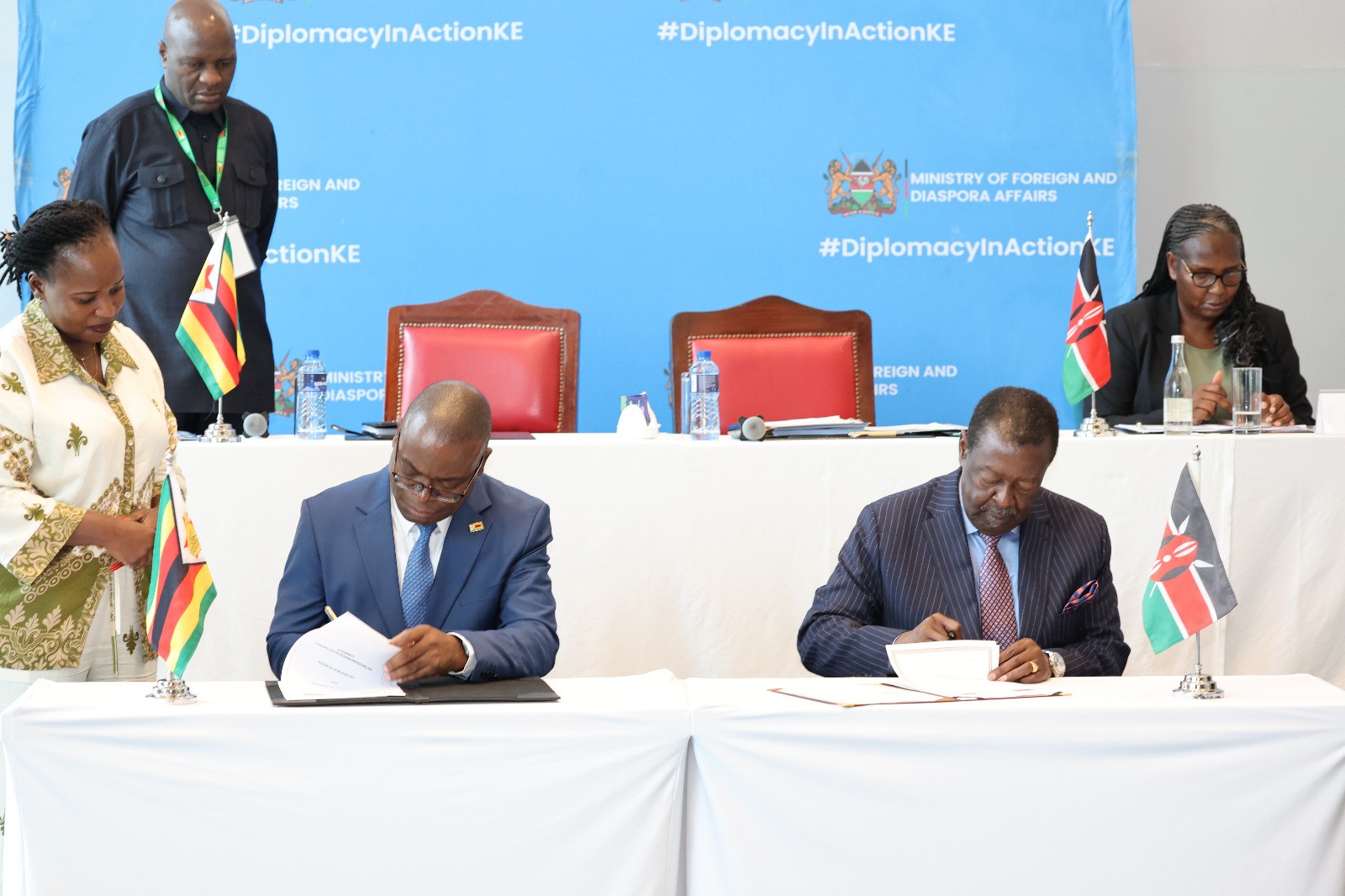
The two countries are seeking to increase annual trade to US70millionbytheendof2026,buildingontheUS57,6 million recorded last year. This comprised Kenyan exports worth US32,1millionandimportsfromZimbabwevaluedatUS25,5 million.
Prof Murwira said the two countries should identify complementary economic strengths and pursue opportunities in trade, investment, transport, tourism and industrial development.
He emphasised Zimbabwe’s commitment to value addition and beneficiation, saying the country was prioritising minerals-based industrialisation rather than exporting raw resources.
“Zimbabwe no longer exports raw minerals as a matter of policy, conviction and practice. We prioritise value addition and beneficiation to drive minerals-based industrialisation, create jobs and enhance economic growth,” he said.
The Foreign Affairs Minister also welcomed growing Kenyan investment in Zimbabwe and encouraged local businesses to explore opportunities in Kenya.
He commended collaboration between the Zimbabwe Investment and Development Agency and the Kenya Investment Authority, saying stronger institutional partnerships would help unlock investment opportunities and facilitate joint projects.
The BNC will build on 17 bilateral instruments already signed between the two countries, covering areas including defence, agriculture, health, investment promotion, tourism, sports, transport, education and public-service capacity development.
Dr Mudavadi said the trade target was within reach but would require improved trade logistics, deeper private-sector engagement and deliberate promotion of products from both countries.
“Realising this potential will depend on improved trade logistics, deeper private sector engagement and the strategic promotion of our products,” he said.
He called for a structured and predictable approach driven by businesses, particularly micro, small and medium-sized enterprises and manufacturers, while encouraging greater use of regional integration frameworks to expand market access.