Online Reporter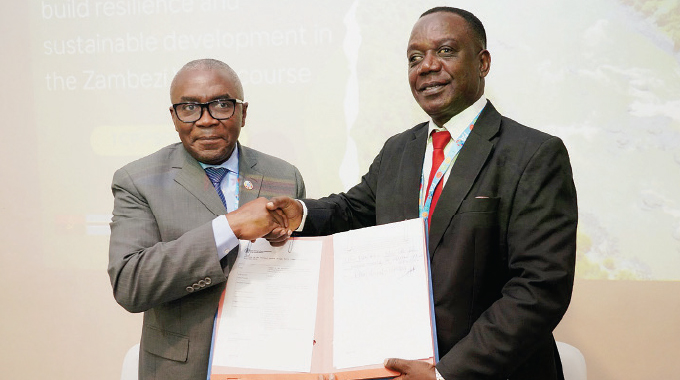
Theseus Shambare
ZIMBABWE has taken centre stage in a major regional drive to unlock US$28,3 billion in investment aimed at transforming livelihoods, strengthening food security and building climate resilience for more than 50 million people, who depend on the Zambezi Basin.
The high level initiative, launched yesterday, seeks to close long standing financing gaps that have slowed the implementation of development programmes across the basin, despite the existence of an ambitious long term strategic plan.
Operating under the Strategic Basin Investment Programme (SBIP), the initiative is designed to translate regional priorities into bankable, climate smart projects capable of attracting global finance.
The Zambezi Basin — one of Africa’s most strategic transboundary resources — underpins agriculture, energy production and ecosystems across eight countries, but is increasingly coming under pressure from climate change, land degradation and mounting socio-economic demands.
Nearly 44 percent of the basin’s population lives below the poverty line, while more than two thirds rely on rain fed agriculture, leaving millions exposed to recurrent droughts and increasingly unpredictable weather patterns.
Speaking at the inception meeting, officials said the programme marks a decisive shift from planning to implementation, with a strong emphasis on mobilising large scale resources.
The Zambezi Watercourse Commission (Zamcom) said the investment programme is anchored on its 2018–2040 Strategic Plan, which sets out infrastructure development, livelihood support, environmental protection and sustainable water management as its core pillars.
Zamcom executive secretary Mr Felix Ngamalagosi said the scale of investment required reflects both the urgency of the basin’s challenges and the opportunities for transformative growth.
“The development of the Strategic Basin Investment Programme comes at a critical time for the Zambezi Basin. It offers us a unique opportunity to move from planning to implementation at scale, mobilise resources and deliver tangible benefits to our people,” he said.
The programme is being developed in partnership with the Food and Agriculture Organisation (FAO), which has already deployed a US$250 000 catalytic project to lay the foundation for mobilising significantly larger investments from global financiers.
FAO Sub-regional Co-ordinator Mr Patrice Talla said the initiative is expected to position the Zambezi Basin as a priority destination for climate, development and private sector financing.
“This project is designed as a catalytic intervention to unlock larger public, private and climate finance. The goal is to create a credible pipeline of investments that partners can confidently support,” he said.
The investment framework will prioritise irrigation development, fisheries, forestry, hydropower generation and sustainable land use systems, while strengthening early warning systems and digital tools to support agricultural production and trade.
Regional institutions are also advocating for a blended financing model that brings together multilateral development banks such as the African Development Bank and the World Bank, climate funds including the Green Climate Fund, alongside private sector capital.
At least 282 projects have already been identified for potential investment, covering both national and transboundary priorities.
Southern African Development Community (SADC) Secretariat programme officer for water, Dr Dumsani Mndzebele, underscored the strategic importance of the initiative, describing it as central to the bloc’s regional integration agenda.
He said the programme dovetails with SADC’s Water Energy Food Ecosystems (WEFE) nexus, which is being used as a vehicle to drive industrialisation, enhance livelihoods and reduce poverty across the region.
“The WEFE nexus has become the Secretariat’s vehicle for regional integration, bringing together the water, energy, food and ecosystems sectors to pool efforts towards increasing industrialisation, improving living standards and reducing poverty,” he said.
Dr Mndzebele stressed that strengthening co-operation through basin wide programmes such as the Zambezi initiative is critical, noting that progress within the commission has direct implications for the wider SADC region.
Zimbabwe is expected to benefit from expanded irrigation systems, improved agricultural productivity and strengthened water resource management, in line with its broader rural industrialisation and food security agenda.
Experts say the success of the programme will depend on strong co-ordination among member states, effective stakeholder engagement and the ability to unlock sustained financing in an increasingly competitive global funding environment.
With an estimated 65 percent of the basin’s land facing degradation risks, the co-ordinated investment drive is being viewed as a decisive step towards safeguarding one of Southern Africa’s most critical shared natural resources.
The programme now enters a consultative and technical phase, during which member states will identify and prioritise projects, conduct feasibility assessments and engage potential investors.
If successfully implemented, the initiative is expected to mark a turning point — shifting the Zambezi Basin from fragmented planning to large scale, co-ordinated development capable of transforming millions of lives across the region.