Online Reporter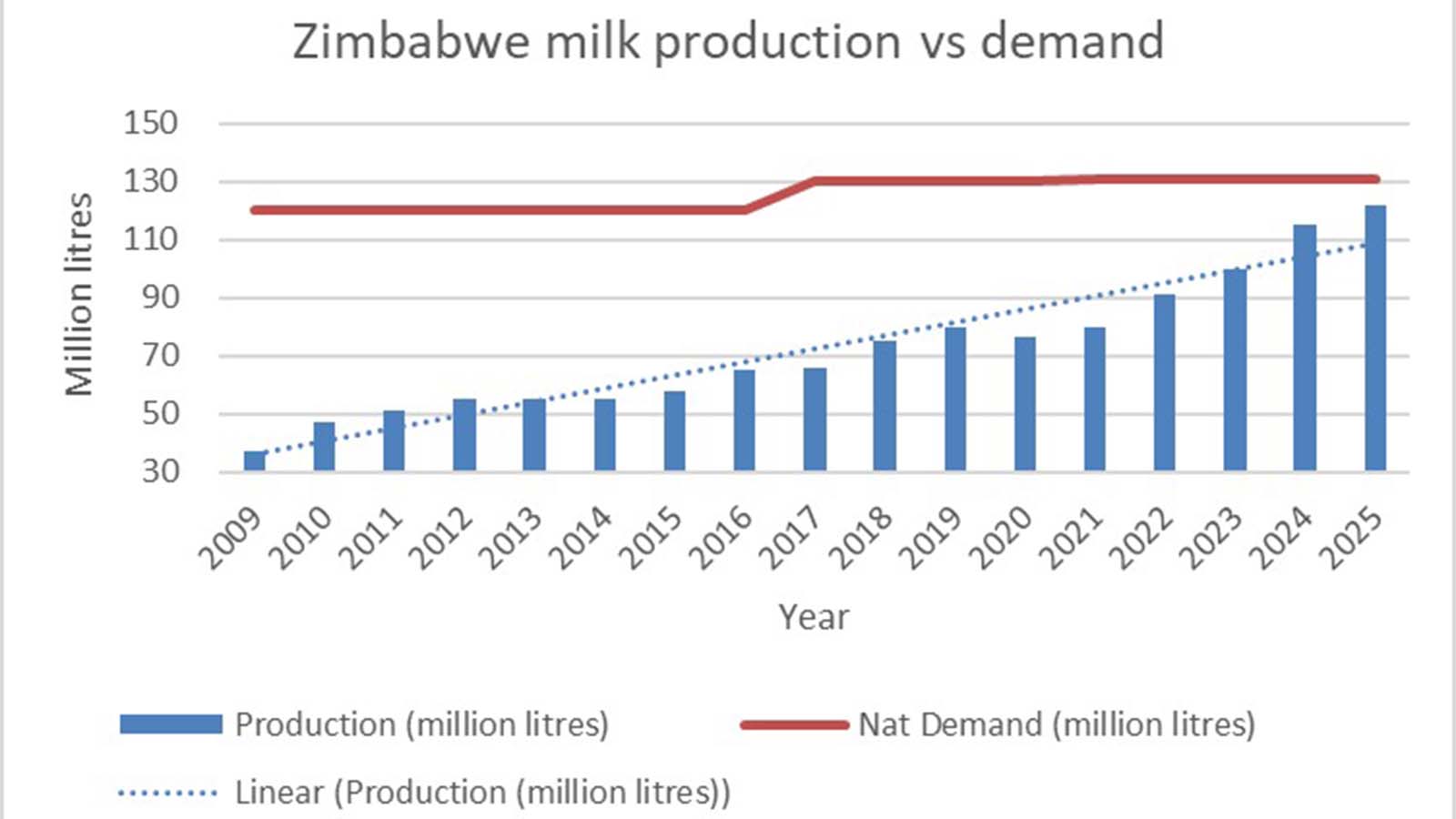
Edgar Vhera
Specialist Writer – Agribusiness
Zimbabwe today joins the rest of the world in commemorating World Milk Day.
This year’s theme focuses on celebrating women farmers, highlighting the essential role they play in the dairy industry, sustainable agriculture and ensuring global food and nutrition security.
World Milk Day was established in 2001 by the Food and Agriculture Organisation (FAO) to help people recognise the importance
of milk as a global food and the dairy sector’s profound impact on society.
Zimbabwe Association of Dairy Farmers (ZADF) national chairman, Mr Edward Warambwa, said plans were underway, led by the
Zimbabwe Dairy Industry Trust (ZDIT) for two key World Milk Day commemorations.
“A Dairy Field Day set for June 12 will be held at a women-owned dairy farm, focusing on practical learning and showcasing
good dairy practices,” he said.
“A Family Fun Day will follow on June 13 to celebrate World Milk Day and encourage public appreciation for the dairy industry and dairy producers,” he said.
Mr Warambwa said that due to growing dairy product demand, stakeholders were now seeking to review the actual national annual demand estimates, which currently stand at 131 million litres.
“However, if dairy receives the necessary support in 2026, including access to affordable dairy inputs and finance, support towards irrigation and development of pastures to reduce costs, reliable animal health services, breeding support and enabling policies, we are optimistic that we can move decisively towards milk self-sufficiency,” he noted.
According to the ZADF, supporting farmers’ production capacity and productivity through improving access to affordable dairy inputs and finance, animal health services and breeding support, especially for smallholder and women farmers, increases both quality and
consumption.
“Policies should be crafted that promote investment in milk cooling, collection, logistics infrastructure and improving extension
services and farmer training on milking hygiene, record keeping, animal health and feed management.
“There is also need to promote domestic dairy consumption through targeted programmes such as nutrition awareness campaigns
and public nutrition initiatives, including promote investment in irrigation and development of pastures to reduce costs and enhance competitiveness,” said Mr Warambwa.
Mr Warambwa said the national dairy herd is rising and estimated at over 70 000 cattle, while milking cows are at 37 000.
Commercial milk production rose seven percent to 40 million litres in the first four months of 2026, against 38 million litres in the same period last year.
Monthly production for January was up nine percent to 10, 6 million litres, with February also rising by eight percent to 9,4 million litres.
The same trend was extended in March and April with a six percent rise to 10, 2 million litres and a five percent increase to 10, 1 million litres, respectively.
Agriculture, Mechanisation and Water Resources Development Minister, Dr Anxious Masuka, said the livestock sub-sector contributed
significantly to household and national food and nutrition security, foreign currency earnings and was a source of livelihood for about 67 per cent of the country’s rural households.
The dairy value chain is a high employment generator providing direct employment to approximately 30 000 people and indirectly to 1, 3 million households.
Speaking at the recent International Dairy Federation (IDF) Regional Dairy Conference Africa 2026 in Victoria Falls, Dr Masuka said the country would be milk self-sufficient this year.
“Zimbabwe produced 155 million litres of milk in 2025, with 121 million litres under commercial production and the balance going towards home consumption. Zimbabwe has made significant progress in revitalising the dairy sector, guided by deliberate policy reforms and strategic investments,” he said.
Dr Masuka said the country was pushing commercial milk output to exceed 200 million litres by 2030, in line with the Agriculture, Food Systems and Rural Transformation Strategy 2: 2026-2030, which prioritised increased production and productivity, enhanced sector viability and expanded value addition and beneficiation.
“From 2026 onwards, the country should be self-sufficient in milk production, with the sector having grown by 129 percent
since 2017,” he said.