Online Reporter
Yeukai Karengezeka
THE Government has begun taking steps towards ensuring that intersex persons are recognised within the country’s legal framework and that the challenges affecting them are addressed through policy and legislative reforms.
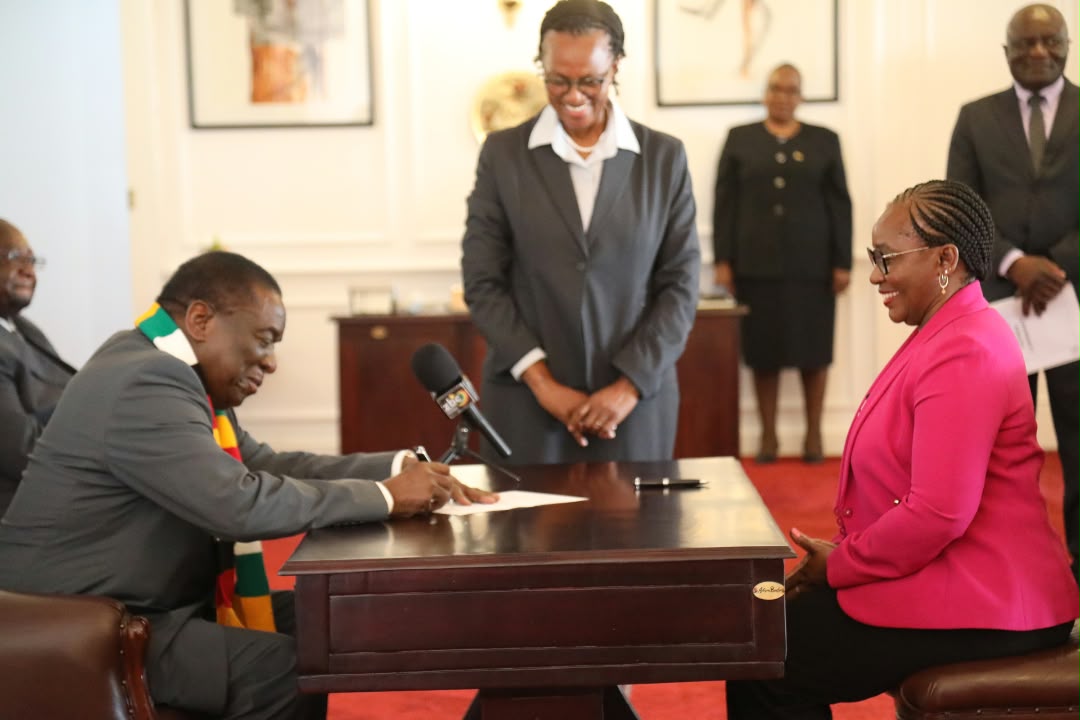
This emerged at a high-level breakfast meeting held in Harare on Wednesday, where Justice, Legal and Parliamentary Affairs Minister Ziyambi Ziyambi officially opened discussions attended by Cabinet ministers, senior Government officials, development partners, civil society organisations, health experts and representatives of the intersex community.
Among those present were Health and Child Care Minister Dr Douglas Mombeshora, Public Service, Labour and Social Welfare Minister Edgar Moyo, Women Affairs, Community, Small and Medium Enterprises Development Permanent Secretary Dr Mavis Sibanda and Deputy Justice, Legal and Parliamentary Affairs Minister Nobert Mazungunye.
Intersex people are individuals born with natural biological sex characteristics, including chromosomes, hormones, reproductive organs or genitalia, that do not fit typical medical definitions of exclusively male or female.
Intersex is a naturally occurring biological variation and is distinct from a person’s gender identity or sexual orientation.
The meeting also received findings from national consultations conducted by the Ministry of Justice, Legal and Parliamentary Affairs through its Law Development Commission, led by Ms Lyna Saizi, with support from the United Nations Development Programme (UNDP).
The consultations identified several legal and social challenges faced by intersex persons.
Among the key findings was that Zimbabwe’s current legal documentation system only recognises binary sex markers, creating difficulties for intersex persons in obtaining birth certificates, national identity documents and other official records where there is a mismatch between their biological characteristics and existing Government forms.
The consultations also found that this lack of legal recognition often results in exclusion from education enrolment, healthcare services, banking, employment opportunities and even voter registration.
Health-related concerns raised included reports of non-consensual medical interventions, particularly involving intersex children, inadequate protection of bodily autonomy, limited access to sexual and reproductive health services, and a lack of awareness and training among healthcare workers.
Participants also highlighted the stigma, discrimination, interrupted education, social isolation and limited employment opportunities experienced by many intersex persons.
Addressing delegates, Minister Ziyambi said Government had initiated the research process after a legal challenge exposed gaps within the country’s legal framework.
“Basically what we have done is we received a court challenge regarding this issue and we referred it to the Attorney-General. After that we decided, as a ministry, that we needed to undertake research,” he said.
“You will recall that in our Constitution we only have two sexes, male and female. When it came to our attention that there were challenges regarding the current legal structure, we tasked our Law Development Commission, with support from UNDP, to conduct research.”
He said the breakfast meeting was intended to allow experts and stakeholders to contribute towards developing a coordinated Government position.
“We want experts to feed into the process so that we can have a whole-of-Government and whole-of-society approach to the policy that we will eventually propose to Government,” said Minister Ziyambi.
“This is work in progress. The presentations and testimonies we have received will help us come up with concrete measures to address these challenges.”
Public Service, Labour and Social Welfare Minister Edgar Moyo described the meeting as an important platform that had exposed issues that had remained largely hidden.
“It’s a very important meeting. It’s an eye-opener. A lot of things have always been kept under the carpet and people are not privy to intersex issues,” he said.
“What has come out is that there is a real gap in our statutes because our legal framework currently classifies people as either male or female, yet there are individuals who fall outside those categories.”
Minister Moyo said Government would need to review legislation and strengthen awareness campaigns to promote greater understanding of intersex issues.
“The testimonies we heard were heartbreaking. Imagine someone travelling through an airport being questioned because their physical appearance does not match the sex indicated on official documents. Having to explain yourself everywhere you go is disheartening.
“The way forward is legislation to address this gap and awareness campaigns so that families, communities and institutions better understand these issues.”
He said the Ministry of Public Service, Labour and Social Welfare, whose mandate includes child protection, would review its policies and service delivery systems to ensure they adequately cater for intersex persons.
“We will work on our policies and services as Government, together with the private sector, to ensure that we build a more inclusive society,” he said.
Stakeholders at the meeting expressed hope that the consultation process would culminate in legal and policy reforms that uphold the dignity, equality and human rights of intersex persons while improving their access to essential public services.