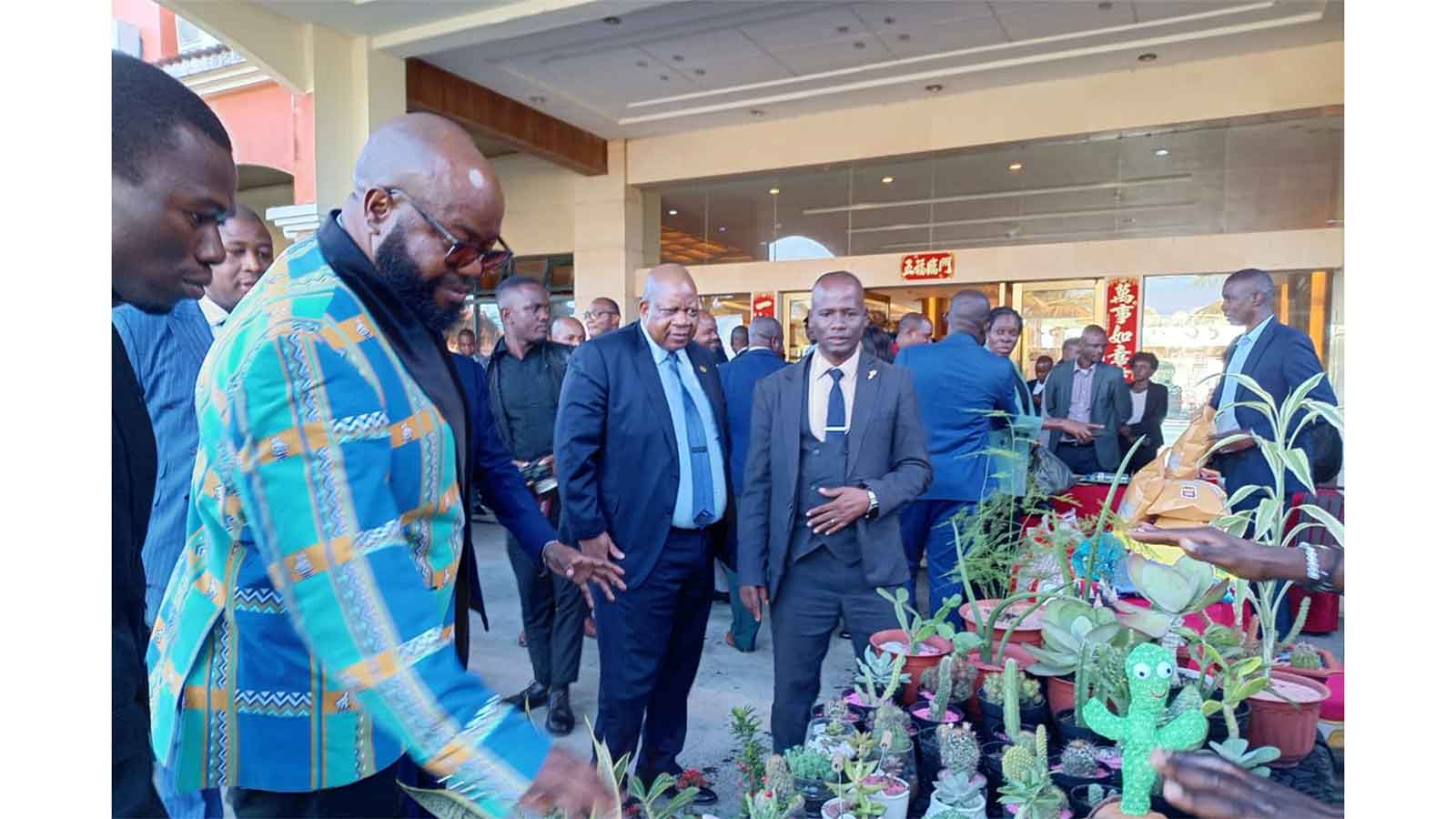
Cletus Mushanawani in BEIRA, Mozambique
BILATERAL trade between Zimbabwe and Mozambique is on a steady increase, with exports increasing from US$11.1 million in 2024 to US$266.2 million in 2025.
Speaking during ZimTrade’s second Outward Seller Mission in Beira yesterday, Minister of State for Manicaland Provincial Affairs and Devolution, Advocate Misheck Mugadza, said the Beira Corridor was the lifeline of Zimbabwe’s commerce and trade with the world.
More than 20 Zimbabwean companies are participating at the Beira Outward Seller Mission.
“Zimbabwe’s imports from Mozambique grew from US$285.9 million in 2023 to US$401.2 million in 2024, and reached US$457.7 million in 2025 – a 60 percent increase in only two years. On the export side, Zimbabwe’s exports to Mozambique reached US$266.2 million in 2025, an increase of US$11.1 million on 2024 – a 4.4 per cent growth, indicating a steady improvement in bilateral trade.
“Manicaland sits at the very gateway of this relationship. The Mutare–Beira Corridor is the lifeline of our province’s commerce and of much of Zimbabwe’s trade with the world. Through the Port of Beira flow our exports of timber, fertilisers, processed foods and engineering goods – and through it, too, flow the fuel, cereals and vegetable oils that sustain our industries and our people. This is not an abstract statistic to the people of Manicaland: it is the road our trucks travel, the border our traders cross, and the market that sustains thousands of livelihoods in Mutare and beyond,” said Minister Mugadza.
He said the true measure of Zimbabwe and Mozambique friendship lies, not only in commemorating the two sister nations’ past, but in building the future together.
Minister Mugadza said the two sister nations should intensify economic diplomacy by creating greater opportunities for trade, investment, and industrial cooperation.
“This is precisely why I am leading a delegation of Zimbabwean companies on this mission—to explore new markets for Zimbabwean products, establish lasting business partnerships, and identify reliable sources of raw materials that will drive industrial growth, create jobs, and deliver shared prosperity for the people of both Zimbabwe and Mozambique.
“Beira is, not only known for its beautiful coastline, but also as one of Southern Africa’s most important trade gateways. The Port of Beira is a strategic asset for the SADC region, providing the shortest maritime route for several landlocked countries, including Zimbabwe, and serving as a catalyst for regional trade and economic integration.
“For Zimbabwe, the Port of Beira is our closest and most important gateway to international markets. As the port’s largest hinterland user, Zimbabwe relies on Beira for the movement of key exports and essential imports that drive our economy,” he said.
Advocate Mugadza called for the urgent address of challenges affecting the movement of cargo between the two countries.
“While we commend the continued investment in the port, our business community has raised concerns over delays in cargo movement and clearance. Addressing these challenges will improve the efficiency of the Beira Corridor, reduce the cost of doing business, and further strengthen trade and economic cooperation between our two countries.
“To the Zimbabwean companies present, I urge you to see in Mozambique not a distant export destination, but a neighbouring market that understands our products, shares our tastes, and welcomes our quality. The opportunities run in both directions – in construction, agriculture, logistics and extractive industries.
“To our Mozambican counterparts, Zimbabwe stands ready to be your reliable partner – in supply, in investment, and in friendship. I encourage you to view Zimbabwe not only as a market for your goods, but as a genuine partner in joint production, processing and logistics along this corridor,” he said.
Advocate Mugadza said the Government remains committed to working with ZimTrade, Embassy and Consulate in Mozambique, and with the relevant authorities of Mozambique to ease the movement of goods and people along this corridor – addressing the documentary, logistical and language barriers that have, for too long, made this short distance feel longer than it should.
Zimbabwe-Mozambique exports jump to US$266.2m