Nyasha Simbisai – Harare
ZIMBABWE must accelerate efforts to reduce dependence on rainfall-driven agriculture through investment in irrigation, soil rehabilitation, research and climate-smart technologies to safeguard food production against the growing threat of climate change, Permanent Secretary in the Ministry of Agriculture, Mechanisation and Water Resources Development, Professor Dr Obert Jiri, has said.
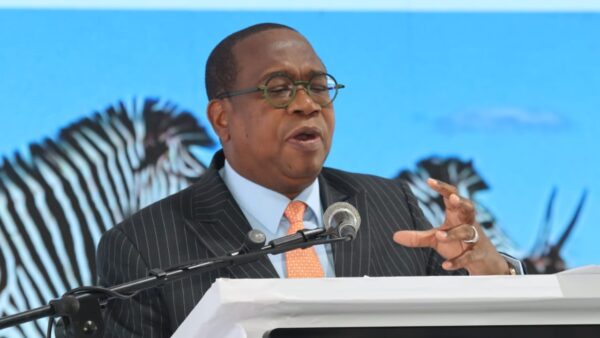
Addressing an El Niño Preparedness Symposium at the University of Zimbabwe yesterday, Prof Jiri challenged researchers, academics and agricultural stakeholders to develop practical solutions that would guarantee national food production regardless of rainfall patterns.
“For how long shall we continue worrying about the weather? For how long shall our agricultural production remain dictated by the rains? What does it take for us to decouple our production from the weather and ensure that we produce enough, irrespective of how much rain falls from the sky?” he said.
Prof Jiri said Zimbabwe had sufficient intellectual capacity and scientific expertise to achieve food sovereignty despite the increasingly severe effects of climate change.
“We have enough brains to ensure that we are able to be food sovereign in the face of climate change. We know that climate change will be with us for the longest time. In fact, it is now getting worse,” he said.
He highlighted projections from crop suitability models indicating that by 2030, only 30 per cent of the country would remain suitable for maize production, underscoring the need to rethink conventional agricultural production systems.
Prof Jiri identified soil acidity as one of the major constraints affecting agricultural productivity, particularly in rural farming communities, noting that unfavourable soil pH compromises the efficiency of fertiliser utilisation.
He said approximately 76 per cent of Zimbabwe’s land was characterised by inherently infertile soils, calling for accelerated interventions to improve soil health through liming, organic matter enrichment and sustainable soil management practices.
“Yet we know the solutions. We must be able to correct the pH. Why does it take us a lifetime to correct soil pH? Why does it take us a lifetime to improve the organic matter content of our soils when we already know what needs to be done? Why can’t we just do it?” he said.
The Permanent Secretary said the country needed to move beyond understanding climate forecasts and develop technologies and production systems capable of sustaining agricultural output under different rainfall conditions.
He challenged the country’s researchers and agricultural experts to translate scientific knowledge into practical interventions that would enable farmers to produce despite delayed rainfall, prolonged dry spells and unpredictable precipitation patterns.
“We must be able to produce our own food as Zimbabwe. Food sovereignty is at the top of our agenda. It is about producing enough food for ourselves as a nation,” he said.
Prof Jiri said the symposium’s deliberations should inform national policy formulation, adding that its success would be measured by the practical recommendations generated to guide the country when rainfall seasons fail.
“I expect that at the end of this symposium, we should know what we must do as a country if the rains do not come or if the rains fail. We depend on these discussions, their results and recommendations to develop better policies,” he said.
He urged participants to embrace innovative thinking, saying difficult circumstances often provided opportunities for developing lasting solutions.
In his presentation on the symposium’s objectives, University of Zimbabwe Faculty of Arts and Humanities Dean Professor Fainos Mangena said the engagement was being held under the theme, “Bracing for the Rains That Fail and the Rains That Flood: Anticipatory Action, Peacebuilding and Social Resilience in a 2026 El Niño Year.”
Prof Mangena said seasonal forecasts indicated the possibility of El Niño-influenced rainfall conditions in Southern Africa, characterised by below-normal rainfall, delayed onset, prolonged dry spells and localised episodes of intense rainfall and flooding.
“These patterns threaten agriculture, water security, food supplies, livestock, health and livelihoods in general. Today, we gather with a unified purpose to deepen our understanding and coordinate preparations for effectively addressing the challenges that lie ahead,” he said.
He outlined four key objectives of the symposium, including examining the latest seasonal forecasts, strengthening stakeholder coordination and information-sharing, generating evidence-based policy and community recommendations, and producing a publicly accessible compendium of the proceedings.
Prof Mangena said collaboration among universities, Government ministries, disaster management agencies and development partners was essential in strengthening anticipatory action and disaster risk reduction.
He said the symposium was also expected to promote social cohesion in vulnerable communities and strengthen working relationships among stakeholders.
The engagement brings together academics, Government representatives and development partners to deliberate on strategies for strengthening preparedness, protecting livelihoods and building resilience against climate-related shocks.