Sidumisile Mabena
Judith Phiri
[email protected]
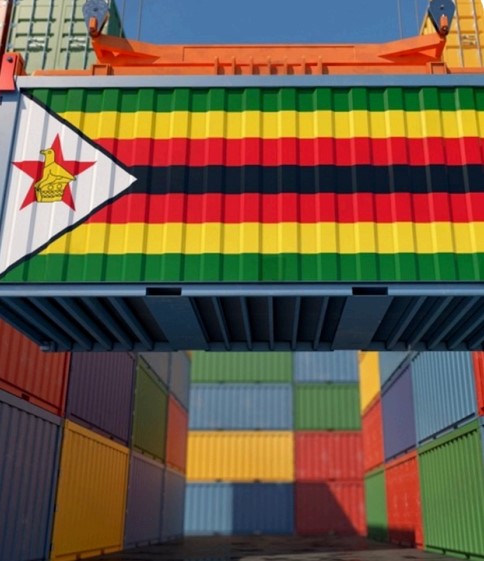
THE country’s trade and export vehicle, ZimTrade has said Zimbabwe must consider producing and trading closer to home as escalating tensions in the Middle East, particularly involving Iran, Israel and the United States, have undoubtedly unsettled global markets.
In their latest newsletter, they said while geographically distant, such developments carry direct implications for economies like Zimbabwe that remain closely tied to global supply chains for energy and key industrial inputs.
“For example, the Strait of Hormuz, a critical artery for global oil transit, has come into sharp focus and any threat to this route immediately pushes oil prices upward.
“Recent movements in Brent crude and the corresponding increase in domestic fuel prices are a clear indication of how quickly external shocks transmit into the local economy,” said ZimTrade.
“For Zimbabwe, rising fuel costs translate into higher production expenses, increased transport charges and upward pressure on prices across sectors. Manufacturing, mining and agriculture all feel the strain.”
It said this was not a new pattern, but the frequency and intensity of such disruptions are increasing, while what was changing is the global trading environment itself.
The country’s trade and export vehicle said supply chains are becoming less predictable, geopolitical tensions are reshaping trade routes and access to critical inputs was increasingly influenced by factors beyond pure market dynamics.
“In this environment, dependence on distant markets exposes economies to risks that are difficult to manage through domestic policy alone. This places renewed emphasis on localisation of investment and a stronger focus on trade within Africa,” said ZimTrade.
“Localisation in this context is about building productive capacity within Zimbabwe and across the continent. It speaks to increasing the share of goods that are produced, processed and consumed within regional markets. This approach reduces exposure to external volatility while strengthening domestic industries and creating more sustainable growth pathways.”
It said regional value chains become particularly important under these conditions and they allow countries to participate in different stages of production while remaining connected within a continental framework.
ZimTrade said instead of exporting raw materials and importing finished products at higher cost, production processes can be distributed across countries, with each contributing based on comparative advantage Zimbabwe’s economic structure provides a strong basis for this model.
It said the country has significant mineral resources, a diverse agricultural sector and an industrial base that retains capacity for expansion.
The country’s trade and export vehicle added: “Linking these strengths with regional partners can unlock greater value than operating in isolation. In the mining sector, there is scope to move beyond extraction towards processing and beneficiation within the region.”
It said minerals produced in Zimbabwe can feed into regional refining and manufacturing processes, reducing reliance on external markets that may be affected by geopolitical disruptions.
ZimTrade said many inputs, including fertilisers, are imported from outside the continent, leaving farmers exposed to global supply shocks.
While strengthening regional production and distribution systems for such inputs would improve reliability and reduce costs over time.
“Manufacturing stands to benefit from access to a broader market and a more integrated supply base. Firms can source intermediate goods from neighbouring countries, reduce lead times and improve competitiveness. At the same time, a larger market supports increased production volumes, making investment in industrial capacity more viable.”



 Online Reporter