

 admin
admin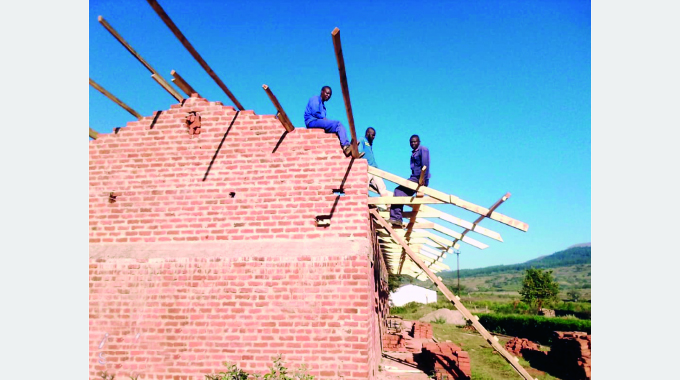
Josphat Yorodani
Some among the generality of the population may have often wondered why Zimbabwe always has a standing army even when the country is not at war.
The role of this arm of the security services sector is one which has always been misunderstood, giving rise to the need for clarification.
The Zimbabwe National Army (ZNA) is one arm of the Zimbabwe Defence Forces (ZDF) established in accordance with Sections 211 and 212 of the Constitution of Zimbabwe.
The function of the Defence Forces is to protect Zimbabwe, its people, its national interests and defend the country’s independence, sovereignty and territorial integrity and at the same time uphold the Constitution.
In executing its duties in line with its constitutional obligations, the ZNA undertakes Conventional Warfare, Military Aid to Civil Ministries (MACM), Military Aid to Civil Powers (MACP), Military Aid to Civil Communities (MACC) and contributes to regional and international peace and security.
As part of the ZDF, the ZNA is charged with the responsibility to protect the geographic entity called Zimbabwe, while the Air Force of Zimbabwe (AFZ) protects the national airspace. For the purposes of this instalment, focus will dwell on the ZNA.
The army is composed of infantry and specialised brigades and units to adequately defend the nation.
All formations of the ZNA draw their roles from the function of the defence forces as enshrined in the Constitution.
Of the multiple roles, the one that people are familiar with is that of conventional operations. In simple terms, it is the core function of the ZNA to ensure that Zimbabwe is defended from any threat of enemy actions and to repel whoever tries to destabilise the nation.
However, during peace time, besides doing their various training activities, soldiers spend most of their time undertaking the ZNA secondary roles which include MACM, MACP and MACC operations.
In these secondary roles, soldiers are requested to assist various ministries, communities and other Government departments when the need arises.
For example, in times of national disasters, soldiers provide first line assistance depending on their various competences, as it is easy to mobilise troops than any other group in emergency situations.
The fact that in the army one finds medical personnel of all specialisations, engineers, mechanics, technicians and other skills, enables the force to deploy all the requisite personnel in the shortest possible time.
When Chimanimani and Chipinge districts were devastated by Cyclone Idai in 2019, soldiers of various competences were quickly dispatched to assist affected communities.
Military personnel are also deployed in hospitals to complement available staff when they become overwhelmed or during job actions or pandemics.
The ZNA has also been at the forefront in transporting drought relief supplements to outlying areas because of the ability of military vehicles to navigate rugged terrain in remote areas.
Under the MACC ambit, the army undertakes community assistance projects to improve infrastructure that impacts positively on benefiting communities. Examples of such initiatives include construction of clinics, schools, roads and bridges among others.
Constructed by army artisans, some of the projects that are earmarked for handover include a maternity ward at Mberengwa District Hospital, a classroom block at Siphepha Primary School in Tsholotsho, five classroom blocks at Our Lady of Perpetual Help Primary School in Chinhoyi, one classroom block at Monyoroka Primary School in Chiredzi and two staff houses at Chakadini Clinic in Mahusekwa, Chihota.
Other projects are at St Albans Primary School in Buhera and Watershed Primary School in Bulilima where one classroom block was constructed at each of the schools. Two classroom blocks each at Mandoga Primary School in Marondera rural and St Marnocks Primary in Zvimba complete the list of the projects.
Communities are free to approach any army formations in their respective provinces with requests for assistance provided they meet the accepted criteria set by the Commander ZNA. For projects to commence under the MACC banner, communities will commit to providing all the materials needed while the army provides manpower to complete the task at no cost.
Once completed, projects are handed over to benefiting communities during the Zimbabwe Defence Forces Community Assistance Week, which is the week that precedes the Zimbabwe Defences Forces’ Day.
During the Zimbabwe Defence Forces Community Assistance Week, the defence forces carry out various outreach projects depending on the prevailing situation.
In 2021, a medical outreach programme to administer anti Covid-19 vaccination jabs was executed in some remote areas that the Ministry of Health and Child Care could not reach with ease.
During times of civil disturbances and disorder, the army provides Military Aid to Civil Powers. In accordance with the Maintenance of Peace and Order Act, the Army can be called in to assist the Zimbabwe Republic Police in controlling rowdy crowds.
They also provide security on key installations as well as assist in border control operations.
Zimbabwe being a member of the international community means that the army also gets involved in external commitments.
In contributing to regional and international peace obligations, the army deploys members on Southern African Development Community (SADC), African Union and the United Nations spearheaded military missions.
All these roles are summed up in the organisation’s mission statement which is “To defend the sovereignty, territorial integrity and national interests of Zimbabwe and to contribute to international peace and security.”
Therefore, the army is needed at all times as its obligations go beyond war functions.



 Online Reporter