Online Reporter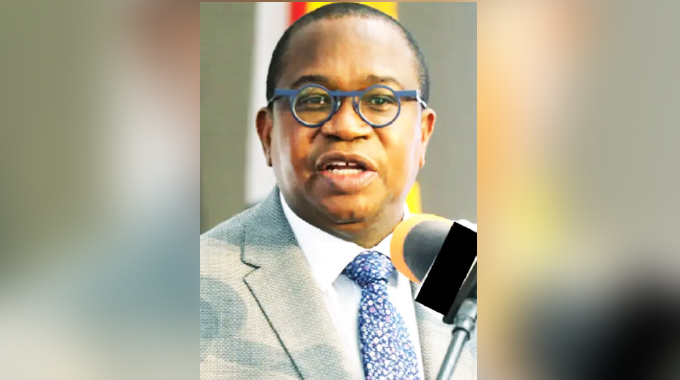
Mukudzei Chingwere, Zimpapers Writer
ZIMBABWE is now the fifth-largest economy in Southern Africa, following a major revision of its Gross Domestic Product (GDP) to capture previously unrecorded economic activity, particularly new businesses that started operating after 2019 as well as activity in the informal sector.
According to the 2023 Economic Census conducted by the Zimbabwe National Statistics Agency (ZimStat), the country’s GDP has been rebased to ZiG168,5 trillion — equivalent to US$44,4 billion — up from the initial estimate of ZiG133,7 trillion (US$35,2 billion).
The adjustment reflects expanded coverage of economic activity, particularly in the informal sector, and the inclusion of new business entities that have emerged since the last base year in 2019.
It also highlights years of silent growth that had gone unaccounted for and signals renewed momentum in Zimbabwe’s economic recovery.
The process of rebasing an economy involves adjusting GDP figures to reflect the current economic structure by including previously uncounted economic activities.
The revised GDP figures place Zimbabwe as the fifth-largest economy in the region, behind only South Africa (US$400 billion), Angola (US$115 billion), Tanzania (US$80 billion) and the Democratic Republic of Congo (US$71 billion), based on the 2024 projections by the International Monetary Fund (IMF.
There are 16 member states in the Southern African Development Community (SADC). Responding to questions during Tuesday’s post-Cabinet media briefing, Finance, Economic Development and Investment Promotion Minister Professor Mthuli Ncube said the updated GDP reflects parts of the economy that had previously been operating under the radar.
“There is a part of the economy that was not accounted for; this now captures that segment, which has been growing silently but was not being properly accounted for. We however, still believe that there is a lot that was left out because of the informality aspect, so we need to keep refining our methodology,” he said.
GDP measures the total value of goods and services produced within a country in a given year.
It is the most commonly used indicator of a country’s economic strength.
For the average citizen, a growing GDP can mean more job opportunities, improved public services and stronger government capacity to invest in areas such as health, education and infrastructure.
Minister Ncube said while the increase in GDP will not alter current expenditure commitments, it provides the Government with more room to grow its tax base and improve public service delivery.
“In terms of expenditure, we are not going to change that at all because we have already committed to certain projects,” he said.
“But what we need to figure out is how to grow tax revenues from this extra GDP.”
Prof Ncube added that Zimbabwe is not facing a debt sustainability crisis, but rather a liquidity challenge, which he said could be eased through the expanded economic base.
“As things stand, Zimbabwe is not in a debt sustainability situation or challenge but rather a liquidity issue because of the areas that need to be dealt with,” said Minister Ncube.
“Given this larger GDP base, it creates more opportunity and capacity to start servicing our external debt.”
He added that the Government is accelerating efforts to formalise parts of the economy and expand digital platforms to bring more businesses into the tax net.
“We are better at managing shocks to this economy,” he said.
“We are also bringing new systems for further digitalisation of the economy so that we can bring in all the players in the formal sector.”
While acknowledging inequality in the economy, he outlined the Government’s approach to addressing it through progressive taxation and social protection measures.
“We have inequality, it is never easy to deal with inequality but the way you deal with inequality is to try to use the taxation system, the rich pay more than the poor,” said Prof Ncube.
“Also use different ways such as social protection programmes to uplift those who are at the bottom of the pyramid.”
With the revised figures, Zimbabwe’s Gross National Income (GNI) per capita also rose from US$2 259 to US$2 859 in 2023, and is projected to exceed US$3 000 by 2025.
This growth in GNI per capita reflects improved national income levels and signals rising economic productivity.
While it does not mean every individual is earning more in direct terms, it shows that the overall economy is generating more income per person, bringing the country closer to attaining an upper-middle-income status.
On inflation, Minister Ncube assured the public that the updated GDP figures would not lead to rising prices, as the new data reflects activity that already exists in the economy.
“This will not affect inflation because what we are reporting now is already in the economy but had not been recorded so it is not going to push up inflation at all,” said Minister Ncube.
“We are doing very well on that front.”