Online Reporter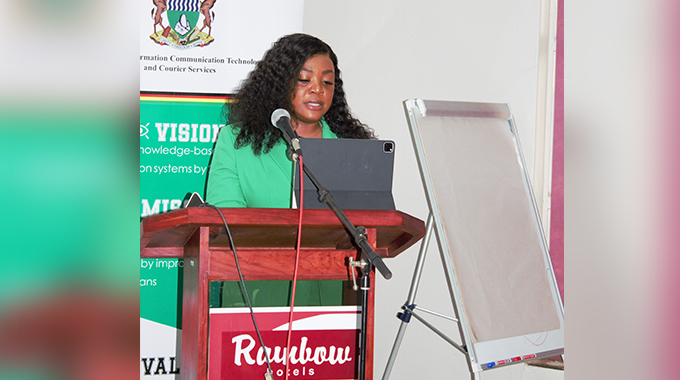
Jacqueline Ntaka, Feature
THE era of satellite-based Internet constellations presents a unique opportunity for nations across the globe to leapfrog traditional connectivity barriers and embrace a digitally inclusive future. In this context, the recent emphatic call from Minister of Information Communication Technology, Postal and Courier Services, Tatenda Mavetera, for Starlink to establish a ground station in Zimbabwe’s borders resonates with strategic foresight and a clear understanding of the transformative potential such an investment holds.
For a nation like Zimbabwe, where terrestrial infrastructure remains unevenly distributed and significant portions of the population, particularly in rural areas, face digital exclusion, Starlink offers a tangible solution to bridge this persistent divide. Minister Mavetera’s advocacy underscores Government’s recognition of this potential and its commitment to fostering an environment conducive to such technological advancements.
The establishment of a Starlink ground station, a vital link between the satellite constellation and the local internet infrastructure, within Zimbabwe would yield a cascade of benefits, both for Starlink’s operational efficiency and for the nation’s socio-economic development. Firstly, a local gateway would dramatically enhance the quality and reliability of Starlink services across the country. By reducing the distance data packets need to travel to reach the global internet backbone, latency would be significantly minimised, resulting in a faster, more responsive, and ultimately more user-friendly online experience for Zimbabweans.

Secondly, a ground station situated in Zimbabwe would facilitate direct peering and interconnection with local Internet Service Providers (ISPs) and telecommunications networks. This direct engagement would streamline data exchange, potentially lowering operational costs for Starlink and, crucially, making the service more affordable and accessible to Zimbabwean consumers. Integration with the existing digital ecosystem, rather than operating as a standalone entity, would foster a more cohesive and robust national internet infrastructure.
Furthermore, a physical presence in Zimbabwe would provide Starlink with invaluable insights into the specific needs of the local market. Understanding usage patterns, affordability constraints, and the unique challenges faced by Zimbabwean users is paramount for tailoring services and pricing models effectively. A local ground station would serve as an operational hub, enabling Starlink to adapt its offerings to better serve the Zimbabwean populace and achieve widespread adoption.
It would act as a powerful catalyst for economic growth across a multitude of sectors. Businesses, particularly Small and Medium-sized Enterprises (SMEs) that often struggle with limited connectivity, would gain access to global markets, e-commerce platforms, and online resources, fostering innovation, expanding their reach, and enhancing their competitiveness. The agricultural sector, a cornerstone of Zimbabwe’s economy, could leverage the high-speed internet for precision farming techniques, improving yields, optimising resource management, and ultimately contributing to food security.
Moreover, enhanced connectivity facilitated by Starlink would have a transformative impact on social development.
Educational institutions in remote areas, often hampered by inadequate internet access, would be empowered to deliver online learning resources, connect with global knowledge networks, and provide students with the digital skills necessary for the 21st Century. Healthcare facilities in under-served communities would gain access to telemedicine services, remote diagnostics, and online medical information, bridging the gap in healthcare access and improving patient outcomes.
While Zimbabwe itself would be a primary beneficiary of hosting a Starlink ground station, the positive ripple effects would extend significantly across the SADC region. Improved latency, increased capacity, economic opportunities, and enhanced network resilience would contribute to a more connected and digitally empowered Southern Africa, accelerating socio-economic development and fostering regional integration. Minister Mavetera’s call is not just for Zimbabwe’s benefit, but for the advancement of the entire SADC community in the digital age.
Jacqueline Ntaka is the CEO of Mviyo Technologies, a local tech company that provides custom software development, mobile applications and data analytics solutions. She can be contacted on [email protected]