Online Reporter
Takunda Gambiza
Herald Reporter
ZIMBABWE is accelerating efforts to translate climate commitments into measurable results as the Government and industry align policies, finance and reporting systems under the Nationally Determined Contribution (NDC 3.0).
Chief Director for Environment, Climate and Wildlife, Mr Washington Zhakata, represented by Acting Director Climate Change Management Department, Mr Lovemore Dhoba, said the country is entering a phase where climate action must be technically sound and globally competitive.
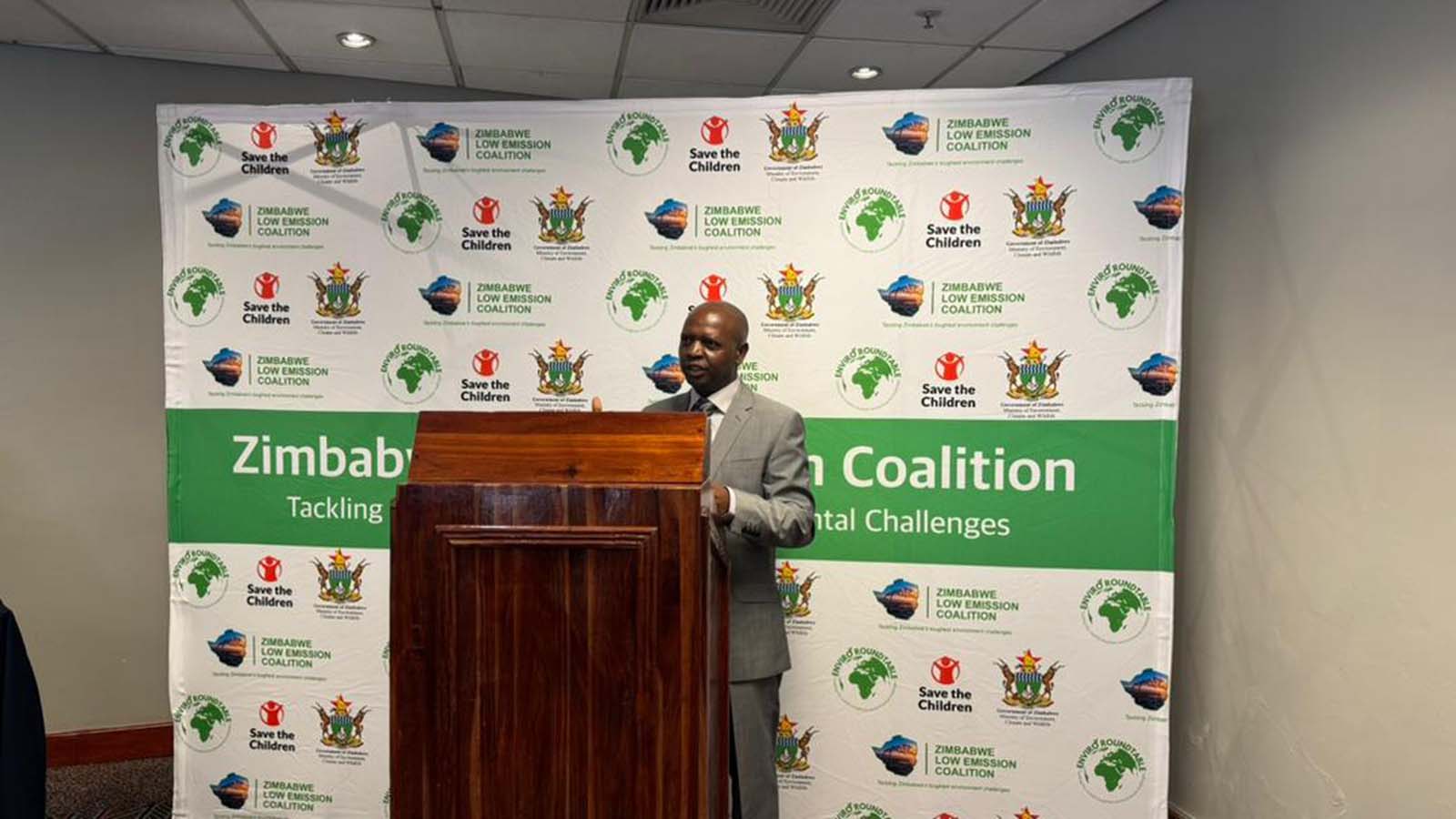
The remarks were made at a Zimbabwe Low Emission Coalition breakfast meeting that brought together Government and private sector players to strengthen collaboration on emission reduction and carbon reporting.
Mr Zhakata said climate policy must now deliver concrete outcomes tied to economic performance.
“Climate ambition is no longer a mere high-level policy statement; it is now a measurable technical requirement for national development and global trade,” he said.
He said Zimbabwe’s roadmap is anchored on long-term sustainability planning.
“The Long-Term Low Emissions Development Strategy (2020–2050) provides a pathway to reduce carbon emissions through energy efficiency, renewable energy adoption and optimised resource use,” he said.
Mr Zhakata said the Government is strengthening systems to attract green investment and improve coordination.
“We are enhancing policy, regulatory and institutional frameworks to ensure transparency while positioning Zimbabwe as a regional leader in climate action, particularly through carbon markets,” he said.
He said NDC 3.0 represents a shift to science-based implementation.
“We are moving from statements to results, with targets aligned to the Paris Agreement’s 1.5°C goal,” he said.
Mr Zhakata emphasised accountability in emissions management.
“Emission reduction must be measurable, verification must be rigorous, and reporting must be transparent as we operationalise targets at the entity level,” he said.
He warned that global trade now demands carbon disclosure.
“Carbon-intensive industries must disclose embedded emissions to remain competitive under mechanisms such as the Carbon Border Adjustment Mechanism,” he said.

Mr Zhakata said Zimbabwe is leveraging climate action for economic gain.
“We are developing strong monitoring systems so emissions can become an asset class capable of unlocking green finance and investment,” he said.
He highlighted the importance of new legislation.
“The Climate Change Bill will provide a legal framework for mainstreaming climate action, carbon trading and climate finance across sectors,” he said.
Mr Zhakata said reliable data will underpin progress.
“Data is the currency of the carbon market, and without credible systems our efforts cannot be recognised internationally,” he said.
Enviro Roundtable executive director Dr Ivan Manyonga said mobilising finance and expertise is critical to tackling environmental challenges.
“Our mission is to mobilise global capital and expertise towards solving Zimbabwe’s toughest environmental challenges,” he said.
He said industry is central to emission reduction efforts. “Through the Zimbabwe Low Emission Coalition, we are driving industrial decarbonisation, renewable energy deployment and capacity building for emissions tracking and science-based targets,” he said.
Dr Manyonga described the coalition as a collaborative platform.
“It is a national partnership between companies, public institutions and experts aimed at accelerating carbon disclosure in line with national commitments,” he said.
He said the initiative provides a pathway to long-term sustainability.

“The coalition establishes a roadmap for the private sector to transition to a low-carbon future and reach carbon neutrality by 2050,” he said.
Dr Manyonga said global pressure is forcing companies to adapt.
“Zimbabwean firms must produce accurate and auditable emissions reports to remain competitive in international markets,” he said.
He said collaboration is unlocking funding opportunities.
“Climate finance is increasingly directed towards coalitions implementing large-scale projects rather than individual entities,” he said.