

 Online Reporter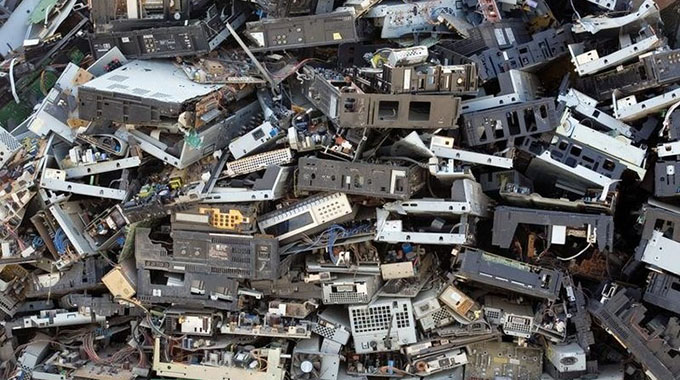
Ivan Zhakata
Herald Correspondent
Zimbabwe is taking urgent steps to tackle a growing electronic waste problem that threatens public health, the environment and the country’s clean energy ambitions.
Stakeholders from the Government, the private sector, development agencies, financiers, academia and civil society on Wednesday gathered at the Monomotapa Hotel for a Market Dialogue Workshop on Sustainable Solar E-Waste Management.
The workshop aimed to develop practical strategies for managing electronic waste, particularly lithium-ion and lead-acid batteries from solar installations and electric vehicles, as the country accelerates its transition to renewable energy.
Globally, e-waste is one of the fastest-growing waste streams.
In 2022, an estimated 62 million tonnes were generated, projected to rise to 82 million metric by 2030 if proper systems are not adopted.
Less than 25 percent of global e-waste is formally collected and recycled.
Zimbabwe generates an estimated 10 000 tonnes of e-waste annually, most of it unmanaged due to the absence of formal collection and recycling systems.
Across Africa, recycling rates often remain below one percent, leading to hazardous informal disposal practices.
UN-Habitat, in partnership with Action 24, is piloting a circular economy initiative focused on repairing, refurbishing and repurposing batteries.
The initiative seeks to convert discarded units into reliable energy storage solutions for peri-urban and rural households.
Dr Alex Cheleshe, UN-Habitat Zimbabwe programme manager and head of office, said the workshop represented a key step in efforts to improve living conditions in urban and peri-urban communities.
“By piloting this circular economy initiative, we are creating green jobs while ensuring Zimbabwe’s transition to green energy is inclusive and sustainable,” he said.
Mr Isaac Mwangi, UN-Habitat Project Officer for Energy and Environment, said that with the growing global challenge of electronic waste, promoting local innovation was very important.
“This project focuses on repairing and repurposing lithium-ion and lead-acid batteries, including those from electric vehicles, for home lighting and mobile charging,” he said.
“Through innovative circular models, we can bridge the energy access gap for rural and peri-urban communities while promoting waste resource recovery initiatives.”
Mr Archieford Chemhere, Action 24 country coordinator, said the workshop represented an important step toward building Zimbabwe’s capacity to tackle e-waste sustainably.
“By harnessing circular economy models, from repair to repurposing, we are transforming what is often seen as a burden into an opportunity for energy access, environmental protection and green job creation. We must work together to ensure the renewable energy transition is both inclusive and responsible.”
The workshop is expected to define stakeholder roles across the solar value chain and produce actionable recommendations to guide future policy, investment and partnerships in e-waste management.



